September 1, 2026
Sugar Land Pond Water Feature Clay Soil Drainage Steps 2026
Plan your Sugar Land pond water feature with clay soil drainage steps and 2026 rough ranges for greater Houston area yards. Review MUD rules, native Texas pla
Sugar Land Pond Water Feature Clay Soil Drainage Steps 2026
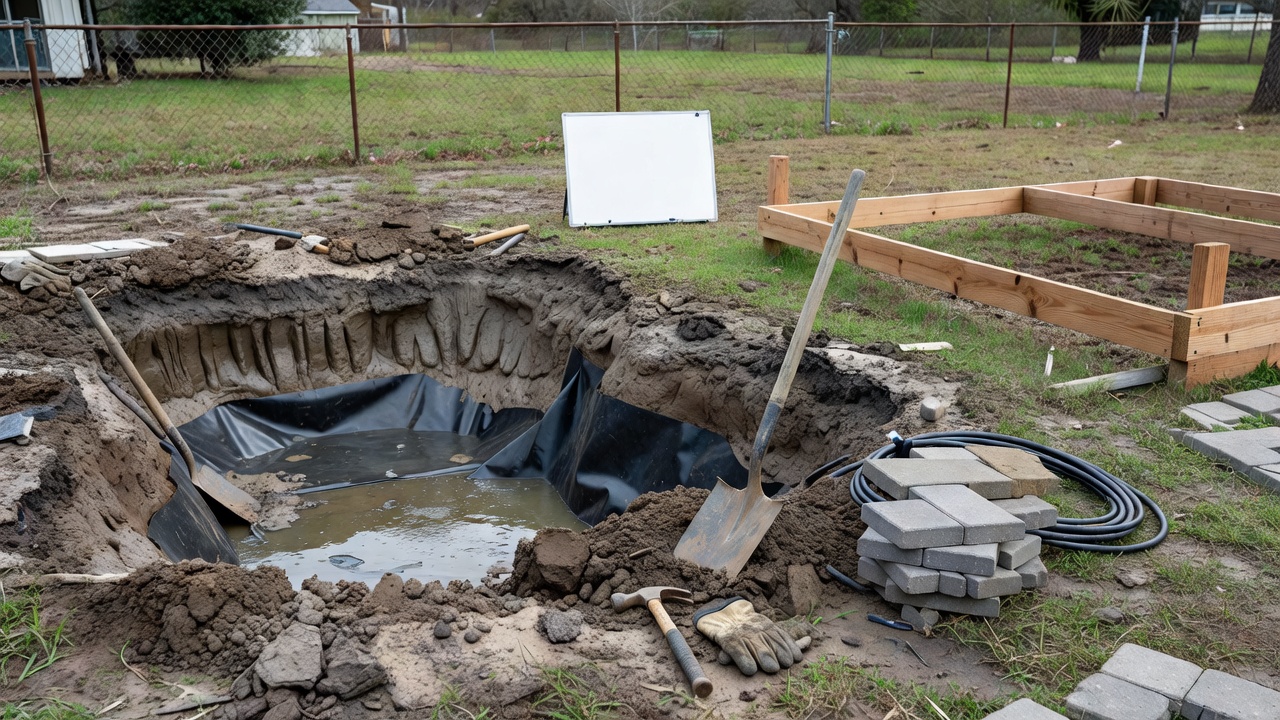
Start with clay soil checks before any pond water feature in Sugar Land. Clay holds water and shifts, so drainage steps decide whether your project lasts or floods.
Key takeaways
- Clay-soil aware planning starts with base prep and overflow routes.
- 2026 rough ranges cover materials, labor, and permit notes for greater Houston area yards.
- Always treat this as a planning estimate — not a quote; always get multiple written local quotes.
- Extra base depth and fabric layers prevent liner movement common in local clay.
- Native Texas plants reduce long-term irrigation needs in Sugar Land yards.
Check Your Yard Drainage First
Walk the low spots after rain. Note where water sits for hours.
- Measure slope from house to pond site.
- Mark existing French drains or swales.
- Test soil with a simple jar shake test.
- Photograph standing water for your records.
- Identify nearby storm drains or MUD outfalls.
- Note tree roots that could puncture liners later.
These six steps reveal if extra French drain work is needed before liner install. Sugar Land yards often sit on compacted clay that sheds water slowly, so skipping this check leads to repeated flooding around the feature.
2026 Rough Planning Ranges for Sugar Land
Public 2026 data shows pond water feature costs in Sugar Land run higher due to clay prep. Expect $12–$28 per square foot installed when drainage and native Texas plants are included.
- Liner and underlayment: 20–30% of total.
- Excavation and clay base work: 25–35%.
- Pump, filter, and plumbing: 15–25%.
- Native Texas plants and edging: 10–15%.
- Permit and inspection fees: 5–8%.
Compare pond water feature options in greater Houston area clay soil before locking numbers. Factor in potential MUD review fees that add to every Sugar Land project.
Clay Soil Prep Steps Specific to Sugar Land
Clay demands extra base depth. Skip this and the liner will shift.
- Remove 12–18 inches of top clay.
- Add 6 inches of crushed limestone base.
- Compact in two layers.
- Slope the base 1–2% toward the overflow.
- Install geotextile fabric before liner.
- Backfill edges with amended soil mix.
Do this sequence or plan for future repairs. Many Sugar Land lots require an additional 4 inches of base when the clay content exceeds 40 percent, a common condition in the area.
MUD and HOA Permit Notes
Sugar Land MUDs and HOAs require drainage plans for any pond water feature. Submit site sketches showing overflow to street or approved outfall.
- Confirm TDLR / TCEQ licensing on any pump work.
- Check for backflow preventer rules.
- Allow 4–6 weeks for review.
- Keep copies of approved permits with your export PDF.
- Verify HOA restrictions on pond size and visible equipment.
Review official TCEQ contractor licensing requirements before hiring anyone for electrical or plumbing portions. Review Sugar Land pond clay soil steps for 2026 planning to see sample permit language.
Native Texas Plants for Pond Edges
Native Texas plants handle clay and local rainfall better than imports.
- Pickerelweed for shallow zones.
- Gulf muhly along the bank.
- Texas sedge in wet clay pockets.
- Cardinal flower for color near the filter.
- Switchgrass for erosion control on slopes.
These five reduce maintenance and support local drainage patterns. See recommended natives from the Lady Bird Johnson Wildflower Center database when matching plants to your exact soil test results.
Plan your pond water feature native plants project in greater Houston area clay soil to match plant lists to your soil test.
Liner Selection and Clay Soil Interactions
Clay movement stresses liners more than sandy soils. Choose materials that tolerate shifting without tearing.
- 45-mil EPDM offers flexibility in expanding clay.
- 30-mil HDPE works when base is perfectly compacted.
- Add 2 inches of sand cushion under the liner.
- Overlap seams by at least 6 inches and seal with manufacturer tape.
- Test for leaks before adding water or plants.
Installers in the greater Houston area often recommend EPDM for Sugar Land because clay expansion can reach 20 percent volume change after heavy rains. Skip the cushion layer and expect premature wear within three seasons.
Drainage Overflow and Pump Choices
| Option | Clay Soil Fit | 2026 Rough Add-On Cost | Maintenance Level |
|---|---|---|---|
| Gravity overflow to swale | High | $800–$1,400 | Low |
| Pump with auto shutoff | Medium | $1,200–$2,100 | Medium |
| Recirculating bio-filter | Low | $2,000–$3,500 | High |
Choose gravity first in Sugar Land clay. It fails less during heavy rain. Add a secondary pump only when lot slope prevents natural flow. USDA NRCS soil resources confirm that Sugar Land clay types retain moisture longer, increasing the need for reliable overflow routes.
Compare Against Other Backyard Projects
Pond water feature projects compete with paver patios and sprinkler systems for the same yard space and budget.
- Paver patio costs sugar land start with clay soil prep and drainage realities for 2026.
- Compare sprinkler system vs pond options for Pearland yards with clay soil drainage needs.
Run both estimates before you dig. Many homeowners discover that combining a small pond with a paver patio edge saves on separate drainage work.
Seasonal Maintenance for Clay Soil Ponds
Clay soil changes with seasons, so maintenance must match.
- Spring: Clear debris from overflow and check liner edges for cracks.
- Summer: Top up water levels weekly and prune native Texas plants.
- Fall: Remove leaves before they settle on the liner.
- Winter: Lower water level 6 inches to allow for expansion.
- Year-round: Inspect pump filters monthly during wet periods.
Follow this checklist to avoid common Sugar Land failures like clogged overflows after tropical storms.
Next Steps
Export the PDF from Backyard Planner with your clay-soil aware materials list and MUD notes. Then gather three written bids from TDLR-licensed contractors who know Sugar Land drainage rules.
Start your planning estimate on the main site.
FAQ
How deep should a Sugar Land pond go in clay soil?
Aim for 18–24 inches in the deepest zone. Shallower depths increase freeze and shift risk in local clay.
Do I need a permit for a pond water feature in Sugar Land?
Most MUDs and HOAs require one if the feature holds more than 200 gallons or ties into drainage. Submit plans early.
Which native Texas plants work best around pond edges?
Pickerelweed, Gulf muhly, Texas sedge, cardinal flower, and switchgrass handle clay and wet conditions without extra irrigation.
What drainage step fails most often in greater Houston area ponds?
Missing the 1–2% base slope toward the overflow causes liner heave after the first big rain.
Is the 2026 range a final price?
No. These are rough planning ranges only. Planning estimate — not a quote; always get multiple written local quotes from licensed pros.