August 29, 2026
Paver Patio Costs Sugar Land 2026 Clay Soil Prep
Paver patio costs sugar land start with clay soil prep and drainage realities for 2026. Review rough planning ranges, MUD permits, and TDLR rules before you c
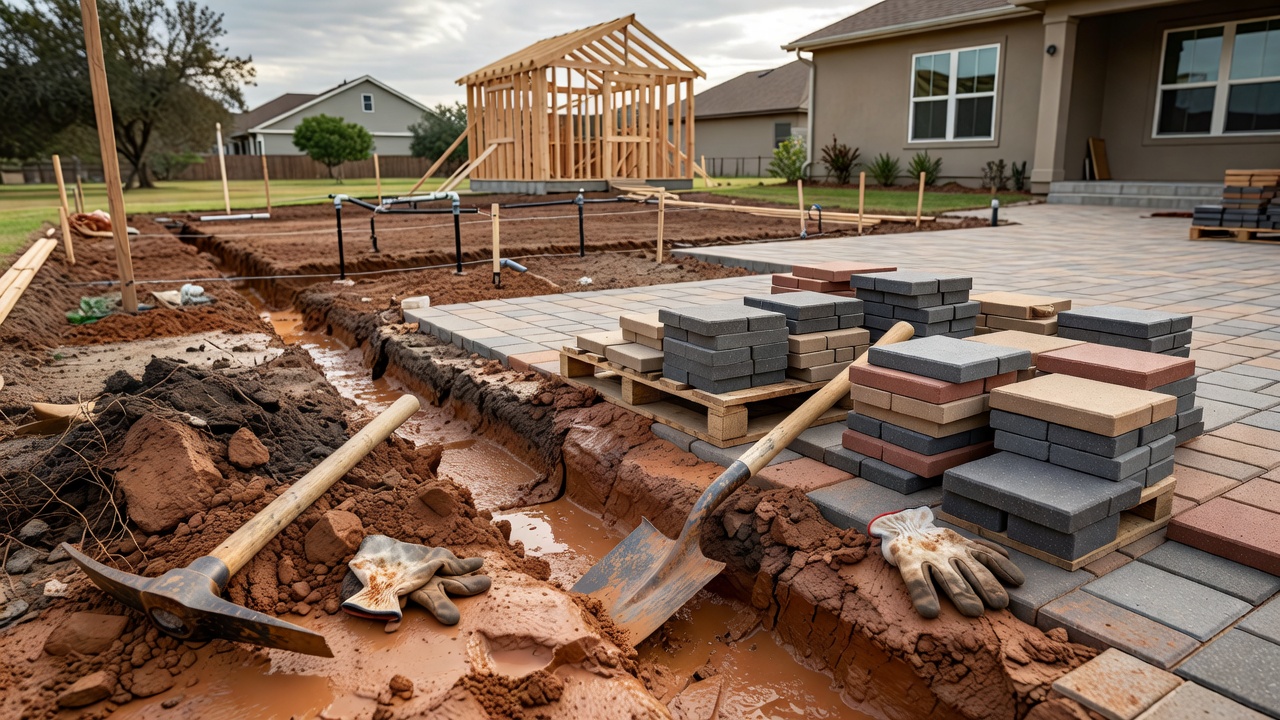
Paver Patio Costs Sugar Land 2026 Clay Soil Prep
Paver patio costs sugar land begin with extra base prep for local clay soil and drainage fixes. Expect 2026 rough planning ranges that run higher than flat national numbers because of MUD rules and permit steps.
Key takeaways
- Clay soil demands deeper base excavation and drainage layers
- MUD and HOA reviews add weeks to the timeline
- Export a PDF planning estimate before you collect bids
- Always verify TDLR licensing on every crew
- Test drainage with a hose before final base compaction
Paver Patio Costs Sugar Land 2026 Ranges
Start by measuring your yard and noting slope toward the street. Clay soil in Sugar Land holds water, so every estimate adds 4–6 inches of crushed base plus geotextile fabric.
- Measure square footage first
- Add 15 percent for waste and cuts
- Factor in 2 percent slope for drainage
- Check HOA color rules before ordering pavers
- Note underground utilities marked by 811
- Account for seasonal price swings in limestone during wet months
- Include edging restraint costs that prevent lateral movement on swelling clay
Run the numbers on Backyard Planner to generate your own materials list. The tool stays independent and never refers contractors. Rough planning ranges for 2026 sit between eight and twenty-five dollars per square foot once clay prep and drainage layers enter the calculation.
Clay Soil Prep Steps for Sugar Land Yards
Clay soil prep comes before any paver goes down. Skip this layer and water pools against the house. Houston-area clay expands when wet and shrinks when dry, which cracks thin bases within two seasons.
- Excavate 8–12 inches below finish grade
- Install geotextile fabric over native clay
- Add and compact 4 inches of crushed limestone
- Repeat with another 4 inches and re-compact
- Slope base 1/4 inch per foot away from structures
- Proof-roll the final surface with a loaded truck to spot soft spots
Do this sequence even on small patios. Sugar Land MUDs often require proof of drainage before final inspection. Each lift must reach 95 percent compaction to resist future heave.
Drainage Checks Before You Pour Base
Drainage failures show up after the first heavy rain. Test your lot with a hose before finalizing the layout. Standing water on clay turns the base into mud and lifts pavers within months.
- Run water at the high point for 10 minutes
- Watch where it collects near the foundation
- Mark low spots with stakes
- Plan a French drain if water stays longer than 30 minutes
- Route downspouts away from the new patio edge
- Install a catch basin at the low corner if slope is under one percent
Compare your notes to the Paver Patio vs Pond Water Feature Houston Clay Soil guide for trade-offs on water management. Texas A&M AgriLife Extension offers free soil drainage fact sheets that explain clay behavior in greater Houston yards.
MUD and HOA Permit Notes for Sugar Land
Most Sugar Land neighborhoods sit inside a MUD. Submit plans early. Review the TCEQ MUD information page for current district boundaries and filing requirements.
| Permit Type | Typical Review Time | Required Documents | Clay Soil Note |
|---|---|---|---|
| MUD drainage review | 10–14 days | Site plan and elevations | Extra base depth required |
| HOA architectural | 7–21 days | Color and material samples | Paver thickness minimums |
| City building | 5–10 days | Electrical for lights | Drainage report if slope changes |
Print the checklist and attach it to your export. Planning estimate — not a quote; always get multiple written local quotes from crews familiar with these MUDs.
2026 Materials and Labor Breakdown
Public 2026 data shows paver patios in the greater Houston area need thicker bases than sandy coastal lots.
- Pavers: 60–70 percent of material cost
- Base rock and sand: 20–25 percent
- Geotextile and edging: 5–8 percent
- Labor for excavation and compaction: 35–45 percent of total
- Delivery and equipment rental: 8–12 percent
Export the Excel file from the planner for exact cutting lists. The list updates with current local supplier prices.
Common Mistakes in Sugar Land Clay
Homeowners often skip the fabric or use river rock instead of crushed base. Both choices fail within two seasons.
- Never compact clay directly under pavers
- Avoid thin 2-inch bases on drive-on areas
- Do not ignore the 811 locate before digging
- Skip cheap polymeric sand that cracks in Houston heat
- Never assume HOA approval without samples
- Ignore seasonal water table rise after spring rains
Review the Sugar Land Pond Clay Soil Steps for 2026 Planning article if you also want water features integrated.
Verifying TDLR Licensing Before Hiring
Every crew working on drainage or irrigation must hold current TDLR credentials. Check the TDLR license search before signing any contract.
- Ask for the license number in writing
- Confirm the license covers irrigation or landscape work
- Verify no active complaints on the public record
- Request proof of general liability insurance
- Match the company name exactly to the license holder
Unlicensed work can void your MUD approval and leave you liable for future drainage issues.
Long-Term Maintenance for Clay Soil Patios
Clay movement continues after installation. Annual checks prevent small cracks from becoming full resets.
- Inspect joints every spring for sand loss
- Reapply polymeric sand only after power washing and drying
- Seal pavers every two years with a breathable product
- Reroute sprinklers so they never hit the patio edge
- Monitor tree roots that lift sections over time
- Keep records of all drainage work for future MUD inspections
These steps keep 2026 planning ranges from turning into repeated repair costs.
Next Steps After You Run the Numbers
Use the planner to create your PDF, then gather three bids from TDLR-licensed crews. Bring the printed drainage notes and MUD checklist to every meeting.
- Confirm crew insurance and references
- Ask for clay-soil base photos from past jobs
- Verify permit filing fees in the contract
- Schedule the work after spring rains to test drainage
Conclusion
Paver patio costs sugar land stay realistic only when clay soil prep and MUD drainage rules sit inside the first estimate. Run your own planning numbers today, export the PDF, and compare every bid against the clay-soil aware checklist before signing.
Next steps
- Open Backyard Planner at https://backyardplanning.app
- Enter your Sugar Land lot size and slope
- Export the 2026 materials list
- Call three licensed crews with the printed MUD notes
- Schedule soil test if water lingers after hose test
- Mark utilities through the Call 811 service at https://www.call811.com/ at least two days before excavation
FAQ
How much extra does clay soil add to paver patio costs sugar land?
Clay soil prep usually adds 20–30 percent to base depth and material volume compared with sandy lots. The planner flags these steps automatically.
Do Sugar Land MUDs require separate drainage plans?
Yes. Most MUDs want a simple site plan showing slope and any French drains before they sign off. Include that page in your permit packet.
What TDLR license should paver crews hold?
Look for Irrigation or Landscape Irrigator licenses when drainage is involved, plus general contractor registration. Verify numbers on the TDLR site before work starts.
Can I use the same base design for a Sugar Land fence extension?
No. Fence posts need different footings. See the Pearland Fence Extension Clay Soil Drainage Checks 2026 guide for separate steps.
How often should I re-compact the base in Houston clay?
Compact in 4-inch lifts with a plate compactor after each layer. One pass on the final lift is not enough for clay that swells.