August 29, 2026
Sugar Land Pond Clay Soil Steps for 2026 Planning
Plan a Sugar Land pond water feature with clay-soil aware steps, drainage checks, and 2026 rough planning ranges. Review MUD rules before you start. Planning
Sugar Land Pond Clay Soil Steps for 2026 Planning
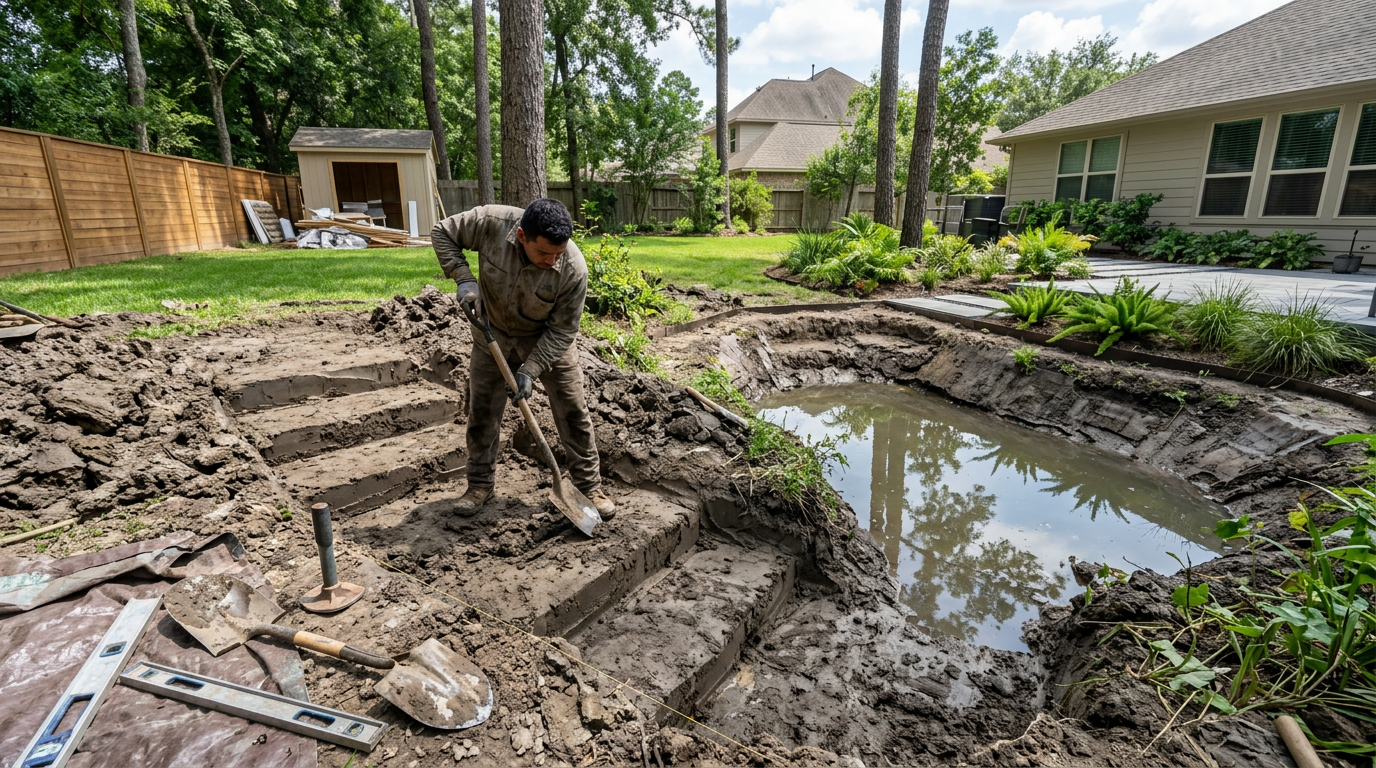
Start with your Sugar Land yard's clay soil when planning a pond water feature. Clay holds water but cracks when dry, so every step must address drainage and base prep to avoid leaks or shifting.
Key takeaways
- Clay soil demands extra excavation and liner protection
- Check MUD and HOA rules first
- Use native Texas plants for lower maintenance
- Export a planning estimate before calling contractors
Check Local Rules Before Digging
Sugar Land MUD districts and HOAs often require permits for any water feature over a certain size. Contact your MUD office and review HOA guidelines to confirm setbacks and liner standards. Follow TCEQ permitting guidelines for state-level water feature rules that apply across the greater Houston area.
- Verify property lines and utility locates
- Confirm maximum pond depth allowed
- Note electrical requirements for pumps
- Document existing drainage patterns
- Identify any protected wetlands or flood zones
- Gather neighbor notification forms if required
Clay Soil Prep Steps
Clay expands and contracts with moisture changes, so proper base work prevents liner failure. Test your soil compaction before ordering materials.
- Remove topsoil to reach stable subgrade
- Add 4-6 inches of compacted sand or gravel base
- Install geotextile fabric before the liner
- Slope the bottom toward a drain point
- Test water levels for 48 hours before planting
- Backfill edges with clay-soil aware berms
Drainage Realities in Sugar Land Yards
Poor drainage turns a pond into a mosquito problem or causes overflow into neighbors' yards. Plan for overflow pipes and French drains tied to your lot's natural slope. Review USDA soil survey data to map your specific clay layers.
- Route overflow to street or approved swale
- Install a bottom drain valve for seasonal emptying
- Add a skimmer to catch debris
- Slope surrounding grade away from the house
- Install check valves on all pipes
- Schedule quarterly drain inspections
Soil Testing and Site Assessment
Before final design, test soil pH and percolation rates. Clay in Sugar Land often sits over denser subsoil that slows water movement.
- Dig three test holes at proposed pond corners
- Measure water drop over 24 hours
- Note any rock or root obstructions
- Record sun hours for plant selection
- Photograph the site from multiple angles
- Log seasonal standing water locations
2026 Rough Planning Ranges
These figures come from public 2026 data for greater Houston area projects and serve as a planning estimate — not a quote. Actual bids vary by size and site conditions.
| Item | Low Range | High Range |
|---|---|---|
| Basic 10x10 ft pond | $4,800 | $9,200 |
| Liner and underlay | $1,200 | $2,800 |
| Pump and filtration | $800 | $1,900 |
| Native plant package | $600 | $1,400 |
| Electrical trench work | $450 | $1,100 |
Choose Native Texas Plants
Native plants handle Houston heat and clay soil better than imports. They also reduce fertilizer runoff into the pond. Consult Texas A&M native plant recommendations for varieties proven in greater Houston area clay.
- Pickerelweed for shallow edges
- Texas sedge for bank stabilization
- Gulf coast iris for color
- Cardinal flower for pollinators
- Buttonbush for deeper zones
- Inland sea oats for shade edges
See detailed plant lists in Pond Water Feature Native Plants Planning for Houston Yards.
Compare Pond vs Other Features
A pond changes yard use differently than a paver patio or fence extension. Review trade-offs before committing.
- Pond adds sound and wildlife but needs weekly checks
- Fence extension gives privacy with less maintenance
- Sprinkler system pairs well with pond overflow
- Gazebo shed offers storage without water management
Compare options in Pond vs Fence Cypress Clay Soil: 2026 Planning Ranges and Katy Pond Drainage Planning for Clay Soil Yards 2026.
Electrical Setup and Pump Choices
Pumps and lights require GFCI protection and proper burial depth in clay soil. Plan conduit runs before liner installation.
- Size pump for your pond volume plus 10 percent
- Bury conduit below frost line where applicable
- Use waterproof junction boxes
- Install timer controls for energy savings
- Test all circuits before backfilling
Export Your Planning Materials
Run the numbers for your specific lot in the greater Houston area. Backyard Planner generates a PDF with materials lists, cutting lists, and permit notes tailored to clay-soil aware projects.
Visit Backyard Planner to create your export.
Ongoing Maintenance Steps
Clay soil ponds need seasonal attention to prevent algae and liner damage. Build these tasks into your yearly schedule.
- Remove debris weekly during leaf drop
- Check liner edges after heavy rains
- Clean pump filters monthly
- Divide plants every two years
- Monitor water levels during drought
- Treat algae only with approved products
Next Steps
- Measure your yard and note sun exposure
- Call your MUD for permit forms
- Export the PDF and compare three written bids
- Schedule soil test if standing water persists after rain
- Contact TDLR licensed electricians for pump wiring
Always treat these numbers as a planning estimate — not a quote. Get multiple written bids from TDLR-licensed contractors familiar with Sugar Land MUD rules.
FAQ
How deep should a Sugar Land pond be in clay soil?
Most backyard ponds stay 18-24 inches deep to reduce liner stress from clay movement.
Do I need a permit for a pond in Sugar Land?
Yes. Most MUDs and HOAs require permits for ponds larger than 100 square feet or those with electrical components.
What plants work best around clay-soil ponds?
Native Texas plants such as pickerelweed and Gulf coast iris tolerate wet clay edges without extra fertilizer.
How much extra base prep does clay require?
Expect 4-6 inches of compacted sand or gravel plus geotextile fabric before the liner.
Can I link a pond to my sprinkler system?
Yes. Overflow from the pond can feed nearby zones, but install backflow prevention and check Sugar Land MUD rules first.