August 29, 2026
Katy Pond Drainage Planning for Clay Soil Yards 2026
Katy pond drainage requires clay soil prep and MUD compliance for greater Houston area water features. Use these 2026 planning ranges and steps to prepare rea
Katy Pond Drainage Planning for Clay Soil Yards 2026
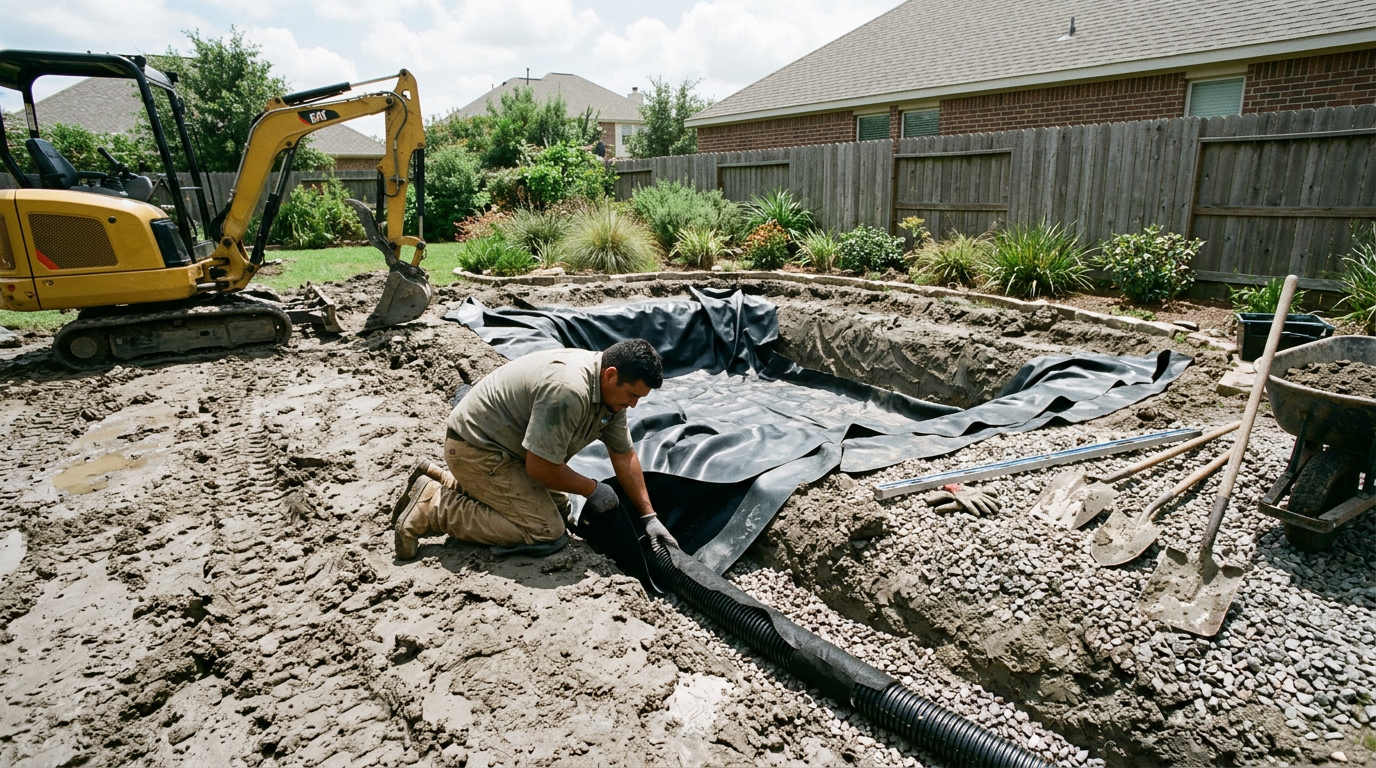
Katy pond drainage starts with clay soil that holds water and drains slowly. You must add extra base layers and test slopes before any liner goes in. This guide gives 2026 rough planning ranges and clay-soil aware steps for greater Houston area yards.
Run the numbers first with Backyard Planner. Export the PDF that lists materials, labor, and permit notes, then compare bids from TDLR licensed pros who know your MUD.
Key takeaways
- Clay soil prep adds 30-50% to base costs in Katy
- MUD rules often require 10-foot setbacks from property lines
- Native Texas plants reduce long-term irrigation needs
- Planning estimate — not a quote; always verify with local bids
- Overflow routing must avoid neighbor lots per local district rules
Verify Katy MUD and HOA Rules First
Contact your local MUD office before you dig. Most Katy MUDs require drainage plans that route overflow away from neighboring lots. Check current filing fees and inspection timelines directly with the district.
- Submit site sketch showing pond location and outlet pipe
- Confirm setback distances from fences and utilities
- Check if HOA needs stamped drawings for water features
- Note any seasonal water restrictions in your district
- Request written confirmation of approved outlet locations
- Verify electrical requirements for any pump near the feature
Review official district requirements through the TCEQ municipal utility district guidelines. See how similar rules apply in nearby areas with the Pond Water Feature Woodlands clay soil drainage planning.
Test Clay Soil Drainage on Your Lot
Dig test holes 18 inches deep in three spots around the planned pond. Fill with water and time how long it takes to drop two inches. Repeat after a heavy rain to capture real conditions.
- Record drainage rate on paper for each hole
- Mark low spots that collect runoff during rain
- Note existing swales or French drains nearby
- Measure slope from house to pond site with a level
- Photograph each hole for your records before backfilling
- Compare rates to the 1-inch-per-hour threshold common in Katy clay
Poor drainage in clay means you add gravel and fabric layers before the liner. Document everything for your MUD submission.
Factor in Katy Rainfall and Flood Zones
Katy receives frequent heavy downpours that can overwhelm small features. Map your lot against Harris County flood maps to avoid placing the pond in a low-lying drainage path.
- Review historical rainfall data for 2025-2026 patterns
- Calculate overflow pipe capacity for 2-inch hourly storms
- Elevate the pond edge 4-6 inches above surrounding grade
- Install a secondary spillway if the lot slopes toward neighbors
- Budget extra for French drain extensions during wet seasons
These steps keep water from backing up against foundations or crossing property lines.
Pick Native Texas Plants for Edges
Native plants handle Katy clay and cut irrigation needs after year one. Choose species that tolerate wet feet near the waterline and resist local pests.
- Pickerelweed for shallow margins
- Gulf muhly for drier slopes above the liner
- Cardinal flower along overflow paths
- Inland sea oats for shade edges
- Switchgrass to stabilize clay banks during storms
- Frogfruit as ground cover between rocks
Find suitable species through the Lady Bird Johnson Wildflower Center plant database. Link these choices to sprinkler plans using the Sprinkler System Drainage Katy Clay Soil Planning guide.
Plan Base Prep and Liner Steps
Clay soil shifts when wet, so you excavate deeper and add a compacted base. Follow these numbered steps.
- Remove topsoil and stockpile for later use
- Dig 12-18 inches below finished grade
- Lay 4 inches of crushed limestone and compact in lifts
- Add geotextile fabric before the liner
- Install underlayment and 45-mil EPDM liner
- Backfill edges with clay-soil aware mix of sand and gravel
- Compact final 6 inches by hand to avoid liner tears
Measure your yard accurately first with the Measure Backyard for Planning Step-by-Step Methods.
Choose Pump and Filtration for Local Conditions
Pumps must handle sediment from clay runoff without clogging. Size the unit for your pond volume plus 20 percent extra capacity for Katy storms.
- Select submersible pumps rated for 2000-4000 GPH in small features
- Add a pre-filter basket to catch fine clay particles
- Route discharge through a bio-filter with native plants
- Install a timer that runs during daylight only
- Plan electrical conduit depth below frost line even in mild winters
- Budget annual filter media replacement at $150-300
Review 2026 Rough Planning Ranges
Pond and water feature costs in Katy vary by size and drainage work. These are planning ranges only.
| Feature Size | Base Prep Cost | Liner & Plants | Pump & Filter | Total Range |
|---|---|---|---|---|
| Under 200 sq ft | $1,800–$3,200 | $2,100–$4,500 | $800–$1,600 | $4,200–$8,500 |
| 200–400 sq ft | $3,400–$6,100 | $3,800–$7,200 | $1,200–$2,400 | $7,900–$14,500 |
| Over 400 sq ft | $6,500–$11,000 | $5,200–$9,800 | $1,800–$3,500 | $12,800–$22,000 |
Add $1,200–$2,800 for MUD permit and inspection fees. Clay soil prep drives the largest variable.
Compare Drainage Needs Against Other Projects
Pond drainage often overlaps with fence or patio work. Check these trade-offs before you choose.
- Pond liner requires separate overflow pipe unlike sprinkler trenches
- Clay soil prep for ponds uses deeper gravel than paver patios
- Shared drainage swales can serve both pond and fence extension
- Electrical runs for pumps add conduit costs absent in simple patios
Review the Clay Soil Prep Paver Patio Steps for Houston Yards to see how prep differs.
Export Your Materials and Permit List
Use Backyard Planner to generate the PDF and Excel files with cutting lists and supplier quantities. Include these items in every export.
- EPDM liner square footage plus 10% overlap
- Crushed limestone tons based on base depth
- Native plant counts by zone
- Outlet pipe diameter and length
- MUD permit application checklist
- Pump model and filter media quantities
Get Multiple Local Quotes
Show the exported PDF to three TDLR licensed contractors who work in your MUD. Ask each to price the clay soil base and drainage separately.
Next Steps
- Run your lot dimensions through Backyard Planner today
- Call your MUD for current drainage rules
- Schedule soil tests before final design
- Collect three written bids that reference the exported lists
- Review native plant sources at local nurseries
- Map flood zones using county resources before excavation
Planning estimate — not a quote. Always confirm details with licensed Houston-area professionals.
FAQ
How deep should a Katy pond liner sit in clay soil?
Most liners sit 18–24 inches below grade after the gravel base. Shallower depths risk shifting during wet seasons.
Do Katy MUDs require overflow plans for small water features?
Yes. Even 100-square-foot ponds need an outlet pipe that directs water to the street or approved swale.
Which native Texas plants work best around pond edges?
Pickerelweed and cardinal flower handle constant moisture while gulf muhly stabilizes drier clay banks.
What extra cost does clay soil prep add in 2026?
Expect $3–$6 per square foot more for deeper excavation and gravel compared with sandy soil yards.
Can I combine pond drainage with a new sprinkler system?
You can share some trenching, but the pond needs its own gravity outlet separate from sprinkler valves.