August 29, 2026
Clay Soil Prep Paver Patio Steps for Houston Yards
Clay soil prep paver patio steps for greater Houston area homes start with drainage realities and MUD rules. Review 2026 planning ranges, clay-soil aware meth
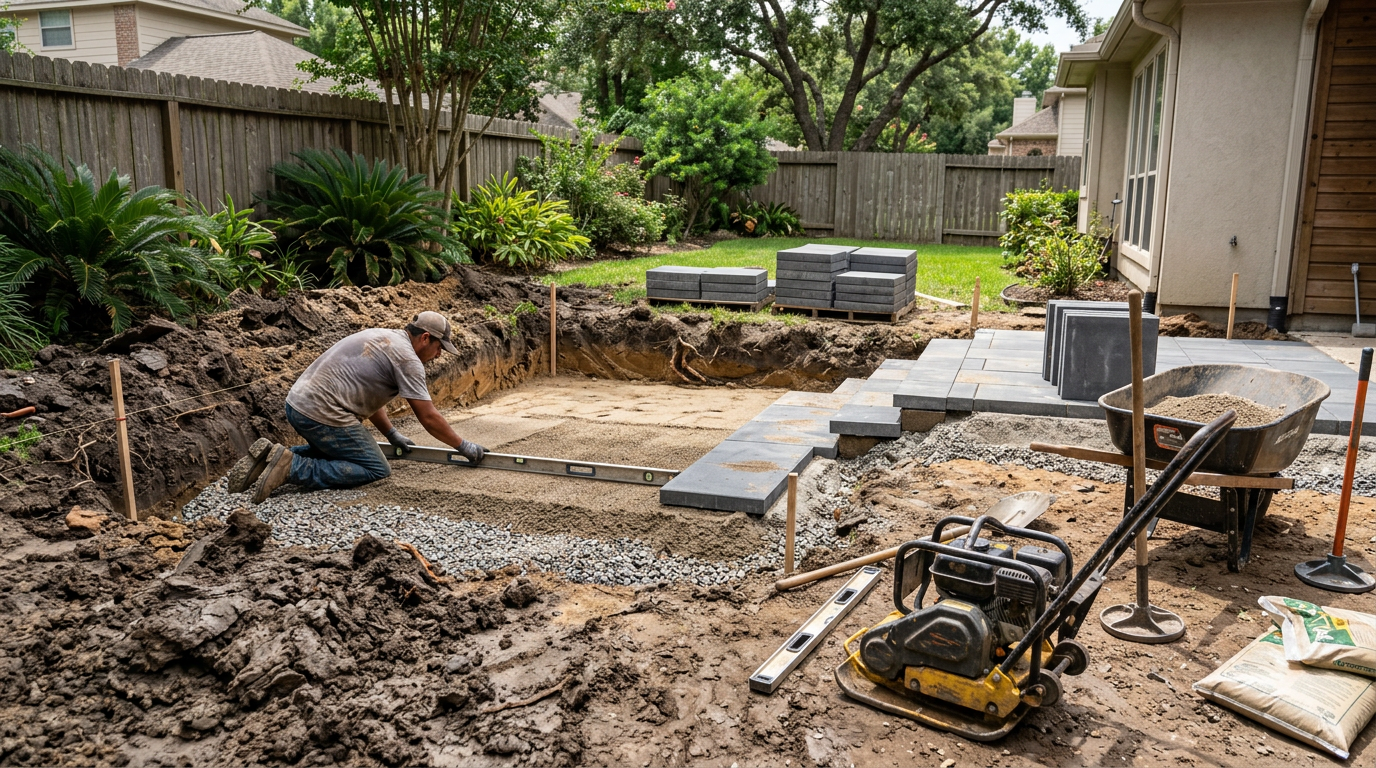
Clay Soil Prep Paver Patio Steps for Houston Yards
Clay soil in the greater Houston area shifts with moisture and demands extra base work before any paver patio goes down. Start by testing your soil and mapping drainage paths so water moves away from the house and out of the MUD or HOA zone.
This is a planning estimate — not a quote; always get multiple written local quotes from licensed pros. Run the numbers first with Backyard Planner to see rough 2026 ranges before you measure the site.
Key takeaways
- Clay soil needs 6–12 inches of compacted base in most Cypress and Katy yards.
- Drainage must slope 1–2 percent away from structures.
- Permits often require TDLR licensed contractors and MUD approval.
- Native Texas plants around the patio edges reduce runoff.
- Always verify compaction density with a nuclear gauge or proof roll test.
Why Clay Soil Demands Extra Prep in Greater Houston
Greater Houston clay holds water and expands, which cracks pavers if the base is thin. Local drainage realities force you to add gravel layers and fabric that national guides skip. Heavy rains common to the region turn untreated clay into a sponge that pushes patios upward within two seasons.
Test your soil with a simple jar method before any digging. Heavy clay shows as sticky lumps that dry into hard clods. Many Pearland and Woodlands lots sit on Houston Black or Lake Charles series soils that require the full prep sequence.
Soil Testing Methods Before Digging
Accurate testing prevents rework after excavation starts. Begin with a visual inspection of existing drainage patterns around your lot.
- Dig three test holes 12 inches deep across the proposed patio area.
- Fill each hole with water and time how long it takes to drain.
- Record the results on a simple site sketch.
- Note any standing water after 24 hours.
Quick soil test checklist
- Jar shake test for clay percentage.
- Ribbon test for plasticity.
- Percolation timing at three locations.
- Photos of each hole for your permit packet.
Use the USDA Web Soil Survey to cross-check your findings against official maps for your zip code. This step adds context to the clay content you already measured.
Step-by-Step Clay Soil Prep for Paver Patio
Follow these actions in order for your yard.
- Mark the patio outline and check for underground lines.
- Remove 8–14 inches of topsoil and clay.
- Slope the subgrade 1–2 percent toward a drain line.
- Lay geotextile fabric over the exposed clay.
- Add and compact 4 inches of crushed limestone.
- Repeat with another 4 inches and compact again.
- Install edge restraints before the final sand layer.
Do this
- Compact each gravel lift in two directions.
- Use a plate compactor rated for clay subgrades.
- Proof-roll the finished base with a loaded truck before sand placement.
Not this
- Skip fabric and let clay mix with base material.
- Leave low spots that trap water against the house.
- Compact only once and assume density is sufficient.
Drainage Realities and MUD Rules
MUD districts in Sugar Land and Pearland often require French drains or swales around new patios. Clay soil slows percolation, so plan outlets that tie into existing street drainage. Many projects also need a construction general permit when disturbance exceeds one acre or when the site drains to a regulated waterway.
Check your specific MUD or HOA packet early. Many demand drawings that show slope and outfall points.
Compare paver patio vs sprinkler system in Houston clay soil to see how irrigation lines interact with patio drainage. Review the TCEQ construction stormwater requirements before finalizing any drain tie-in.
2026 Rough Planning Ranges
Public 2026 data shows clay-soil aware prep adds cost in the greater Houston area.
| Item | Low Range | High Range | Notes |
|---|---|---|---|
| Base gravel (per sq ft) | $3 | $7 | Includes fabric and compaction |
| Drainage add-on | $2 | $5 | French drain or swale |
| Permit and inspection | $400 | $1,200 | MUD or HOA fees |
| Total prep (per sq ft) | $6 | $14 | Before pavers or sand |
These figures come from local bids and exclude labor taxes. Factor in an extra 15 percent contingency for sites with high water tables.
Materials Checklist
- Geotextile fabric rolls sized for your layout.
- Crushed limestone #57 or #67.
- Plate compactor rental.
- 4-inch perforated drain pipe.
- Edge paver restraints and spikes.
- Level and string line for slope checks.
- Rental nuclear density gauge or proof-roll equipment.
- Marking paint and survey flags.
Count these items before you order so the delivery matches the cut list from your export. Keep a spare roll of fabric on site for any unexpected soft spots uncovered during excavation.
Common Prep Mistakes
- Under-compacting the base leads to settlement within one season.
- Ignoring HOA rules on visible drains delays approval.
- Placing pavers before the final sand screed creates uneven joints.
- Forgetting to slope the subgrade traps water under the patio.
- Ordering base material without first confirming delivery truck access on narrow driveways.
Measure Your Site First
Accurate measurements prevent material shortages on clay-soil jobs. Use the step-by-step methods in this guide to record dimensions and slope before you buy gravel.
Measure backyard for planning step-by-step methods shows how to mark high and low points around your future patio. Record every measurement twice and average the results.
When to Hire Licensed Help
TDLR licensed contractors must pull permits for most paver patios over 200 square feet in the greater Houston area. TCEQ rules also cover any drainage that ties into stormwater systems. Verify credentials directly through the state board before signing any contract.
Review paver patio costs Cypress 2026 clay soil ranges to compare your measured area against current planning ranges. Always confirm the contractor carries current TDLR and liability coverage.
Impact of Clay Soil on Long-Term Patio Durability
Clay movement continues for years after installation if the base is insufficient. Patios built without the full gravel depth often show lippage and cracking by year three. Adding the extra base and fabric layer reduces callbacks and keeps the surface level longer in the greater Houston area.
Homeowners who skip testing frequently discover the problem only after the first heavy spring rain. Re-leveling an existing patio costs far more than proper prep from the start.
Durability trade-off list
- Thin base: lower upfront cost but frequent repairs.
- Full clay-soil prep: higher initial outlay but 15-plus years of service.
- Drainage integration: prevents water damage to adjacent structures.
- No drainage tie-in: risk of MUD fines and neighbor complaints.
Next Steps
- Export the PDF from Backyard Planner with your lot size and zip code.
- Contact your MUD or HOA for the latest permit checklist.
- Schedule three site visits with TDLR licensed contractors.
- Verify each bid includes clay-soil base depth and drainage details.
- Re-check all measurements after the first rain event on your lot.
Start with the planning estimate — not a quote — then compare written bids that match your measured layout.
FAQ
How deep should the gravel base be for clay soil in Katy?
Most Katy yards need 8–12 inches of compacted crushed limestone over fabric when the subgrade is heavy clay.
Do I need a permit for a paver patio in Sugar Land?
Yes. Sugar Land MUD and many HOAs require permits plus drainage plans for patios larger than 120 square feet.
What slope prevents water from pooling on clay?
Aim for 1–2 percent slope across the entire patio surface and direct runoff to a swale or drain line.
Can I use native Texas plants around the patio edges?
Yes. Plants such as muhly grass and black-eyed Susan reduce runoff and help stabilize clay soil near the pavers.
How long does clay soil prep take before pavers can be set?
Allow two to four days for excavation, base installation, and compaction on a typical 300-square-foot patio.