August 29, 2026
Paver Patio vs Sprinkler System in Houston Clay Soil
Compare paver patio vs sprinkler system for greater Houston area yards. Factor clay soil prep, drainage planning, 2026 ranges, and HOA notes before choosing.
Paver Patio vs Sprinkler System in Houston Clay Soil
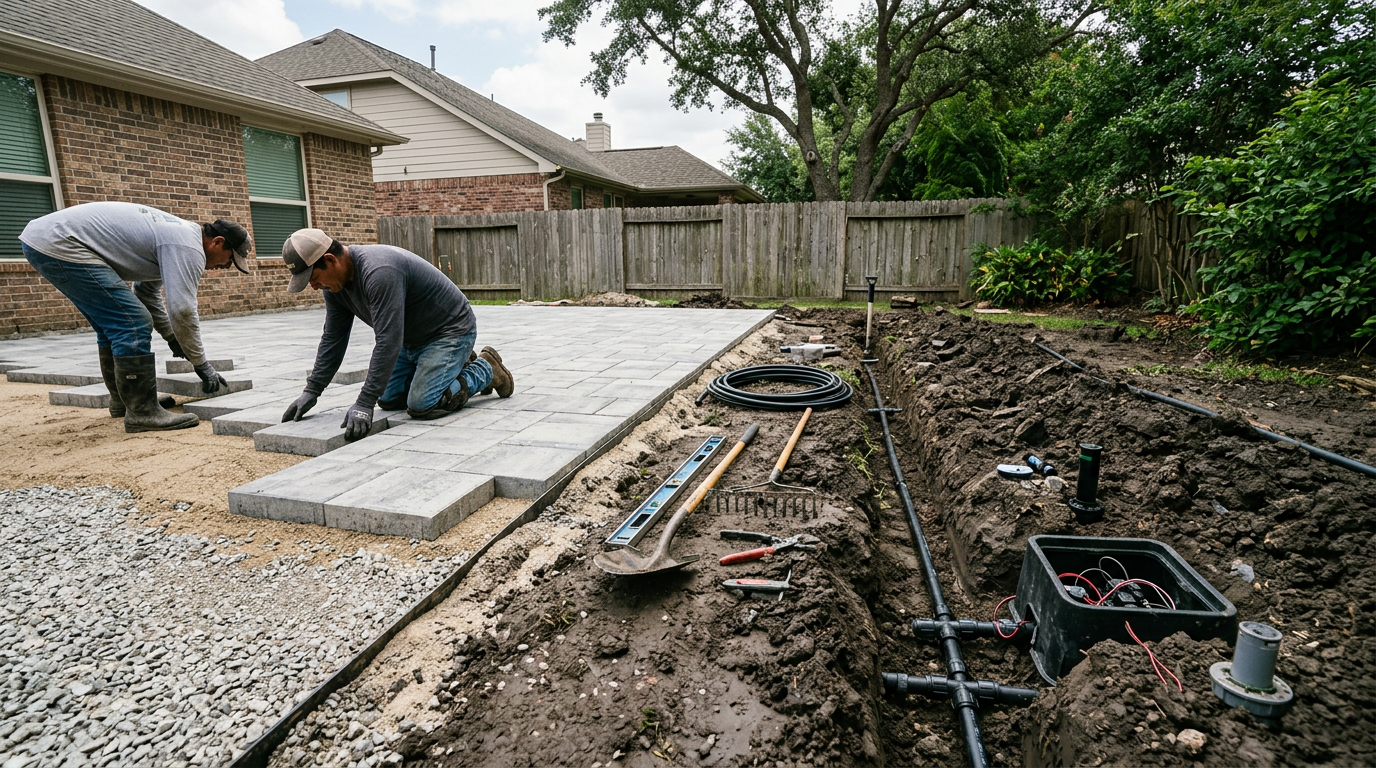
Paver patio vs sprinkler system decisions in the greater Houston area start with your yard's clay soil and drainage limits. A paver patio adds usable space while a sprinkler system supports grass, yet both demand extra base work that local soil requires.
Run a planning estimate first to see rough 2026 ranges for your neighborhood. Always treat these as planning estimates—not a quote—and get multiple written local quotes from TDLR licensed pros.
Key takeaways
- Clay soil adds base prep and drainage steps to every project.
- Paver patios often cost more upfront but need less ongoing water.
- Sprinkler systems tie into MUD rules and native Texas plants.
- Measure your yard before comparing options.
- HOA or MUD permits affect both choices.
Clay Soil Demands for Each Option
Clay soil in Cypress, Katy, and Pearland expands and contracts with moisture. This forces deeper excavation and better drainage layers under both paver patios and sprinkler lines. Homeowners often underestimate how the heavy clay holds water and shifts foundations over time, leading to cracked pavers or uneven sprinkler coverage.
- Add 4–6 inches of compacted base for pavers.
- Slope sprinkler zones away from foundations.
- Test soil percolation before any install.
- Use geotextile fabric under paver bases.
- Route sprinkler valves to avoid low spots.
- Install 8–12 inch trenches in extreme clay areas.
- Backfill with amended soil mixes around sprinkler heads.
- Monitor for heave after heavy rains in first season.
Drainage Planning Steps
Drainage planning prevents pooling that ruins pavers or drowns grass. Follow these clay-soil aware steps for either project. Poor drainage in greater Houston area yards often triggers MUD complaints or neighbor disputes.
- Map existing slopes with a laser level.
- Identify MUD or HOA outlet points.
- Plan French drains or swales first.
- Grade finished surfaces at 1–2% away from house.
- Install check valves on sprinkler heads.
- Add catch basins near patio edges.
- Verify outlet pipes clear debris after storms.
Measure backyard for planning step-by-step methods before finalizing drainage routes. Review TCEQ irrigation licensing requirements to confirm any contractor holds proper credentials for drainage work.
2026 Rough Planning Ranges
Costs vary by size and site access. These are clay-soil aware planning ranges only. Neighborhoods like Sugar Land and The Woodlands often see higher labor adders due to access limits and permit layers.
- Paver patio: $12–$28 per square foot installed.
- Sprinkler system: $3,500–$9,000 for typical 5,000 sq ft yard.
- Extra drainage work: $1,500–$4,000 added to either.
- Permit fees: $200–$600 depending on city.
- Soil amendment surcharge: $800–$2,200 for heavy clay.
- Native plant integration: $600–$1,800 extra on sprinkler jobs.
Review detailed paver patio costs Cypress 2026 clay soil ranges for your specific zip code.
Side-by-Side Comparison
| Factor | Paver Patio | Sprinkler System |
|---|---|---|
| Upfront cost | Higher per sq ft | Lower per zone |
| Maintenance | Sweep and seal every 2–3 years | Seasonal adjustments and repairs |
| Water use | Low once installed | High during summer |
| Drainage needs | Critical under base | Critical at valves and heads |
| HOA impact | Often requires material samples | Usually just backflow test |
| Long-term durability | 15–25 years with proper base | 10–15 years with winterization |
Long-Term Maintenance and Water Use
Maintenance differences become clear after the first Houston summer. Paver patios need occasional sealing but avoid weekly watering, while sprinkler systems require regular checks for clogs and pressure drops caused by clay settling.
- Seal pavers every 24–36 months to resist stains.
- Winterize sprinklers before first freeze.
- Replace paver sand joints after heavy storms.
- Flush sprinkler lines annually to remove sediment.
- Monitor for root intrusion near both installs.
- Budget $300–$600 yearly for either upkeep.
Houston Permitting Center guidelines outline ongoing inspection triggers for irrigation upgrades.
HOA and MUD Permit Notes
Most greater Houston area neighborhoods require approval before breaking ground. Check rules early to avoid rework. Fence extensions or pond additions nearby can trigger extra reviews when paired with these projects.
- Submit paver color and pattern samples.
- Provide sprinkler layout showing backflow preventer.
- Confirm TDLR licensing on every bid.
- Note any MUD drainage easements on your lot.
- Allow 3–6 weeks for review cycles.
- Include native Texas plants list for sprinkler zones.
- Resubmit if drainage plan changes post-approval.
See sprinkler system drainage Katy clay soil planning for Katy-specific MUD examples. Check Pond Water Feature Woodlands clay soil drainage planning if combining water features.
Measuring Your Yard Accurately
Accurate measurements prevent budget surprises. Do this before comparing paver patio vs sprinkler system options.
- Sketch lot boundaries.
- Record slope percentages at four corners.
- Mark utility locates.
- Measure usable flat areas only.
- Note tree drip lines and downspouts.
- Photograph existing drainage issues.
- Log square footage for each zone type.
Decision Checklist
Use this list to decide which project fits your priorities.
- Need entertaining space? Lean toward paver patio.
- Want to keep lawn for kids or pets? Choose sprinkler system.
- Limited water budget? Pavers win.
- Existing drainage problems? Fix first.
- HOA approval timeline tight? Start with sprinkler system.
- Clay soil already amended? Either works better.
- Future fence extension planned? Coordinate layouts now.
Common Mistakes to Avoid
- Skipping extra base depth in clay.
- Ignoring downspout discharge points.
- Assuming city rules match MUD rules.
- Using national cost data instead of local ranges.
- Starting work without written HOA sign-off.
- Overlooking native Texas plants that reduce sprinkler demand.
Next Steps
Visit Backyard Planner to build your own clay-soil aware estimate for paver patio vs sprinkler system choices. Export the PDF with materials and permit notes, then compare against three written bids from licensed local contractors.
FAQ
Does clay soil change the paver patio vs sprinkler system choice?
Yes. Clay requires deeper base and drainage work for both, but pavers need more excavation.
How long does HOA approval take in Sugar Land or Katy?
Expect 3–6 weeks once you submit complete drawings and samples.
Can I combine both projects?
Yes, but complete drainage planning first so sprinkler lines do not conflict with paver bases.
What licensing should contractors carry?
Look for current TDLR irrigation and TCEQ backflow licenses on every bid.
Are these 2026 ranges exact?
No. These are planning estimates—not a quote. Always obtain multiple written local quotes.