August 29, 2026
Sprinkler System Drainage Katy Clay Soil Planning
Plan sprinkler system drainage katy in clay soil with MUD rules, native Texas plants, and 2026 rough ranges. Follow clay-soil aware steps for your Katy yard b
Sprinkler System Drainage Katy Clay Soil Planning
Katy clay soil demands extra slope and base work for any sprinkler system drainage. Start with soil tests and site mapping before you draw lines.
Backyard Planner gives rough 2026 planning ranges for the greater Houston area. These numbers stay clay-soil aware and flag MUD or HOA permit needs.
Key takeaways
- Test soil first to set slope and valve placement.
- Route water away from foundations and into approved drains.
- Use native Texas plants in zones to cut runoff.
- Export a planning estimate — not a quote — before calling pros.
- Check TDLR and TCEQ licensing on every bid.
Test Katy Clay Soil Before Design
Katy yards sit on heavy clay that holds water and cracks when dry. Dig test holes at three spots to check percolation rates. Clay layers often sit just below the top few inches, so shallow tests miss the real drainage problem.
- Measure water drop over one hour in each hole.
- Note standing water after rain events.
- Record topsoil depth versus subsoil clay.
- Mark low spots that pool near the house.
- Log fence lines and existing sprinkler heads.
- Compare results to nearby lots to spot patterns.
- Repeat tests after a dry spell for contrast.
Do this before any layout. Clay changes every 10 feet in many Katy neighborhoods. Texas A&M soil testing resources explain how local clay affects water movement.
Map Drainage to Meet MUD and HOA Rules
Katy MUD districts control where roof and yard water can exit. HOA rules often add setbacks from streets and neighbors. Poor mapping leads to rework once inspectors visit.
- Walk the property with a level and string line.
- Sketch flow arrows toward the street or approved swale.
- Note required 5-foot setbacks from property lines.
- Flag any buried utility easements.
- List permit numbers needed for your MUD.
- Measure fall across the full width of the yard.
- Identify neighbor lots that could receive redirected flow.
Submit the sketch to your MUD office early. Changes after install cost extra. Check Harris County flood rules at harriscountyfws.org for additional drainage notes.
Select Components for Clay-Soil Aware Systems
Clay demands larger valves and better backflow prevention. Standard kits fail faster here because sediment builds up in low spots.
- Choose pressure-regulated heads rated for clay.
- Install swing joints at every riser.
- Use schedule 40 pipe with glued joints.
- Add check valves on low heads to stop drain-back.
- Pick rotors with stainless stems for grit resistance.
- Size valves one size larger than sandy-soil plans.
- Include a master valve to reduce constant pressure on lines.
Match head spacing to your measured percolation rate.
Estimate 2026 Costs with Local Factors
Clay prep and drainage add 20-30 percent over sandy-soil jobs in Katy. Public 2026 data shows these rough planning ranges for a 5,000-square-foot yard.
| Item | Low Range | High Range | Clay Add-on |
|---|---|---|---|
| Trenching and pipe | $1,200 | $2,400 | +$600 |
| Valves and backflow | $800 | $1,600 | +$300 |
| Drainage swales | $400 | $1,200 | +$500 |
| Controller and wiring | $600 | $1,100 | +$200 |
These stay planning estimates — not a quote. Always get three written bids from licensed local crews.
Step Through Installation for Proper Flow
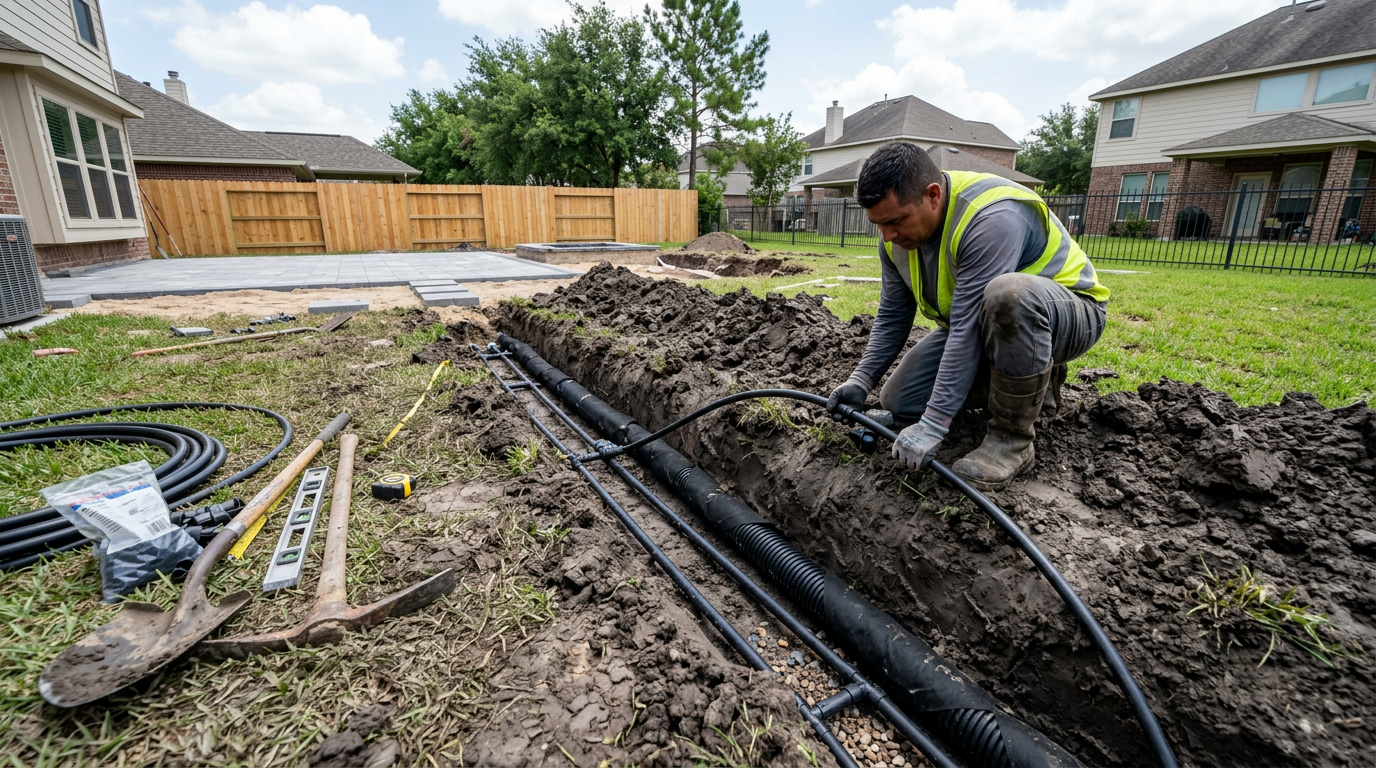
Follow the slope plan during install. Clay settles unevenly if you skip steps.
- Mark heads and valve boxes with spray paint.
- Trench to 12-inch minimum depth on 1 percent fall.
- Lay pipe on 2 inches of gravel base.
- Glue and pressure-test every zone.
- Backfill in 4-inch lifts and tamp by hand.
- Grade final surface away from the house 6 inches in 10 feet.
- Install cleanouts at every low point for future flushing.
Test each zone for 10 minutes and fix low spots the same day.
Adjust Sprinkler Timing for Katy Weather Patterns
Katy receives sudden heavy rains that can overwhelm even well-planned systems. Seasonal timing changes reduce runoff and protect clay structure.
- Shorten summer cycles to 15 minutes twice a week.
- Extend spring and fall cycles but add extra days between runs.
- Skip watering entirely for 48 hours after storms over one inch.
- Use rain sensors tied to your controller.
- Monitor soil moisture at 4-inch depth before each cycle.
- Shift morning start times earlier in humid months to limit evaporation.
These adjustments keep water from pooling on the surface.
Integrate Native Texas Plants in Zones
Native Texas plants handle Katy clay and need less irrigation once established. Place them in the outer zones.
- Muhly grass along swales for root stability.
- Black-eyed Susan in full-sun beds.
- Texas sage near fence lines.
- Inland sea oats under tree cover.
- Frogfruit as ground cover in wet pockets.
- Group plants by water need to avoid overwatering clay pockets.
- Replace high-water turf strips with natives near drainage lines.
Check Permits and Licensing Requirements
Katy requires permits for any new irrigation tied to drainage changes. Skip this step and face fines.
- Verify the installer holds current TDLR license.
- Confirm TCEQ backflow certification.
- Pull MUD encroachment permit if trenching crosses easements.
- Submit HOA landscape plan if required.
- Keep copies of all stamped drawings.
- Renew permits if work spans multiple seasons.
Never start digging until permits clear. Review current rules on the TDLR irrigation page.
Conclusion
Run the numbers for your Katy lot first. Export the PDF with materials lists and permit notes, then compare against real bids from licensed pros who know your MUD or HOA rules.
Next steps
- Dig three test holes this weekend.
- Sketch drainage flow on graph paper.
- Pull your MUD permit checklist online.
- Run the Backyard Planner Sprinkler System tool for your address.
- Schedule three site visits with licensed irrigators.
- Review rain sensor settings against current forecasts.
FAQ
How deep should trenches run in Katy clay?
Twelve inches minimum with 1 percent fall toward the outlet. Deeper helps in heavy clay pockets.
Do I need a permit for sprinkler drainage work?
Yes. Katy MUD and most HOAs require permits. Licensed irrigators pull them for you.
What native Texas plants work best near drains?
Muhly grass and frogfruit tolerate wet clay. Place them in the outer zones only.
How much extra does clay prep add to 2026 costs?
Expect 20-30 percent more for base material and slope work on a typical Katy lot.
Can I reuse my old sprinkler heads?
Only if they still pass pressure and coverage tests. Clay grit usually wears seals faster than sandy soil.