August 29, 2026
Pond Water Feature Native Plants Planning for Houston Yards
Plan your pond water feature native plants project in greater Houston area clay soil with 2026 rough planning ranges and drainage steps. Always a planning est
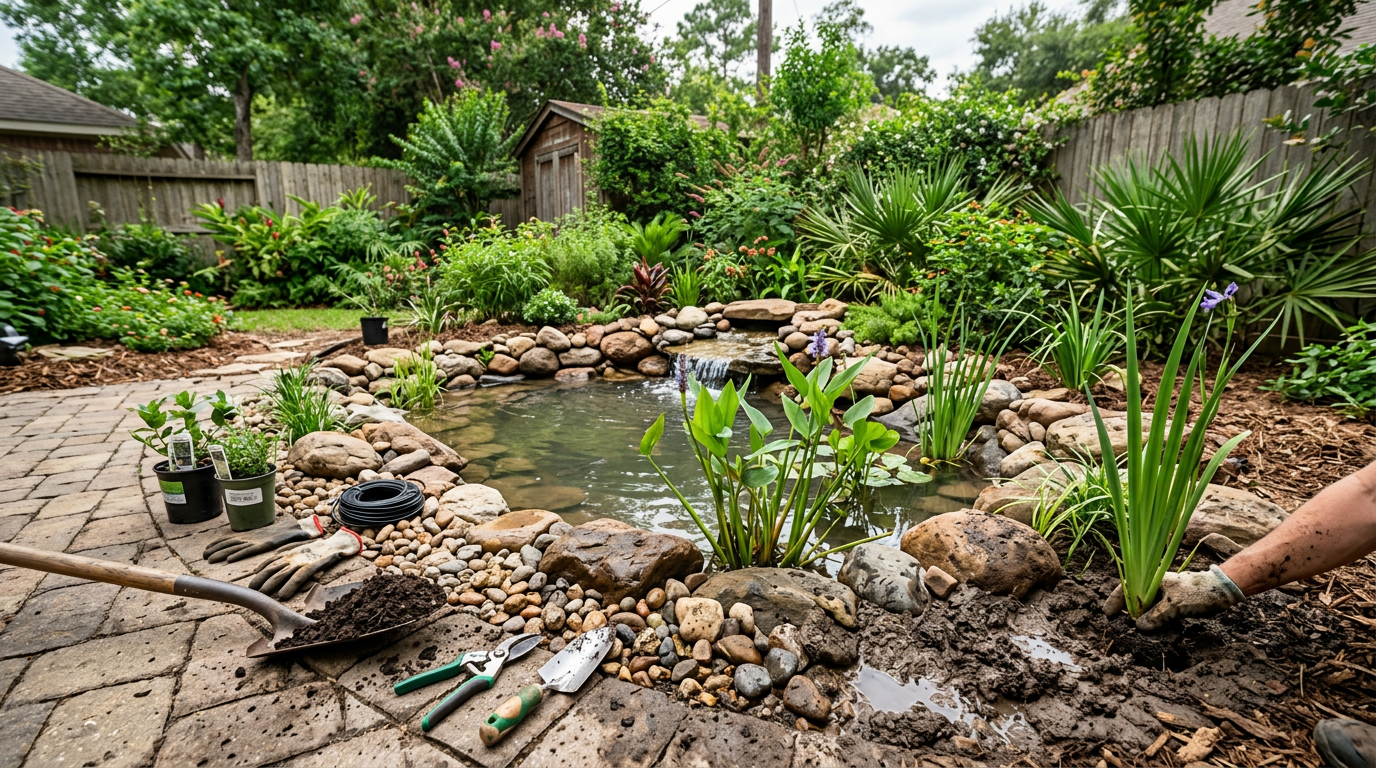
Pond Water Feature Native Plants Planning for Houston Yards
Start by testing drainage on your clay soil lot before picking native Texas plants for a Pond / Water Feature. Greater Houston area yards need extra base work and MUD checks to avoid standing water issues.
Backyard Planner delivers 2026 rough planning ranges tuned for local conditions. Run the numbers for your neighborhood first.
Key takeaways
- Clay soil prep adds 20-40% to base costs
- Native plants reduce long-term irrigation needs
- MUD and HOA rules apply in most Cypress, Katy, and Woodlands zones
- Export PDF lists before contacting licensed pros
Clay Soil Demands for Houston Ponds
Clay holds water but cracks when dry. This creates leaks and shifting around pond liners. Plan extra excavation and drainage layers from day one.
- Dig test holes 24 inches deep in three spots
- Check for slow percolation after heavy rain
- Add 6-12 inches of sand and gravel base
- Slope the bottom toward a French drain outlet
- Compact every 4 inches to prevent settling
These steps appear in every clay-soil aware estimate for greater Houston area projects. Use the USDA Web Soil Survey tool to confirm your exact soil type before breaking ground.
Selecting Native Texas Plants
Choose plants adapted to wet roots and Houston heat. They stabilize banks and filter runoff without constant fertilizer.
- Pickerelweed for shallow edges
- Gulf muhly for drier slopes
- Cardinal flower near inflows
- Blue flag iris in 2-6 inch water
- Switchgrass for windbreaks
Match plant zones to your pond depth map. Katy pond drainage planning for clay soil yards 2026 shows how local drainage changes plant placement. Consult Texas Parks and Wildlife native plant lists for region-specific options that handle periodic drought.
2026 Rough Planning Ranges
Expect $12–$28 per square foot installed for a basic Pond / Water Feature in clay soil. Larger features with native plant beds push toward the higher end.
| Component | Low Range | High Range | Clay Soil Add-on |
|---|---|---|---|
| Liner and underlay | $3 | $6 | +$1.50 |
| Excavation and base | $4 | $9 | +$3 |
| Native plants and edging | $2 | $5 | +$1 |
| Pump and filtration | $3 | $8 | +$0.50 |
These are planning estimates — not a quote. Get three written bids from TDLR-licensed contractors.
Drainage Steps Before Planting
Poor drainage kills native plants and voids warranties. Follow this sequence.
- Install overflow pipe to street or approved swale
- Slope yard 1% away from house foundation
- Place gravel trenches under plant beds
- Test pump flow after 30 minutes
- Verify no water pools near property lines
Check local MUD rules before finalizing layout.
Permit and Licensing Checklist
Most greater Houston area ponds need MUD or HOA approval. Skip this step and face removal orders.
- Confirm your MUD or HOA pond size limit
- Submit site plan showing drainage path
- Verify contractor holds current TDLR license
- File TCEQ notice if disturbing over one acre
- Keep copies of all approvals for five years
Review the official TDLR licensing database to confirm credentials before signing any agreement.
Houston Climate Impact on Native Plant Ponds
Houston summers bring intense heat and sudden downpours that stress liners and plants. Winter freezes can crack poorly prepared clay bases. Factor these extremes into your 2026 timeline.
- Install shade structures over shallow plant zones during peak summer
- Choose plants with deep root systems for erosion control after storms
- Add aerators to prevent algae blooms in warm months
- Mulch beds heavily before first freeze
- Monitor water levels weekly during drought periods
This new section expands on why local climate data must guide every Pond / Water Feature decision in the greater Houston area.
Common Mistakes to Avoid
- Using non-native plants that require extra water
- Skipping clay soil compaction tests
- Placing pond too close to septic fields
- Ignoring HOA fence height rules around water
- Buying cheap liners that fail in Texas sun
Next Steps After the Estimate
- Export the PDF materials and cutting list from Backyard Planner
- Compare against bids from three licensed local crews
- Schedule soil percolation test during dry season
- Mark utility lines before any digging
- Choose plants from Texas native suppliers only
The primary keyword pond water feature native plants belongs in your final comparison. Run the clay-soil aware estimate for your address today at https://backyardplanning.app.
FAQ
How deep should a Houston pond be for native plants?
Keep marginal shelves at 6-12 inches and main basin at 24-36 inches. Clay soil requires extra liner protection at every depth change.
Do native Texas plants work in clay soil ponds?
Yes, but only after drainage layers are added. Pickerelweed and iris tolerate the heavy soil once water flow is controlled.
What permits cover Pond / Water Feature projects?
Check your local MUD, HOA, and city rules first. TDLR licensing applies to any electrical or plumbing work.
How much extra does clay soil prep add?
Plan 25-40% more for base excavation and gravel compared to sandy lots. The 2026 ranges above already reflect this.
Can I link a pond to my existing sprinkler system?
Only with backflow protection and separate zoning. See Pearland sprinkler system clay soil planning 2026 for compatible layouts.