August 29, 2026
Paver Patio vs Pond Water Feature Houston Clay Soil
Compare paver patio vs pond water feature options in greater Houston area clay soil with 2026 planning ranges, drainage steps, and MUD rules. Review clay-soil
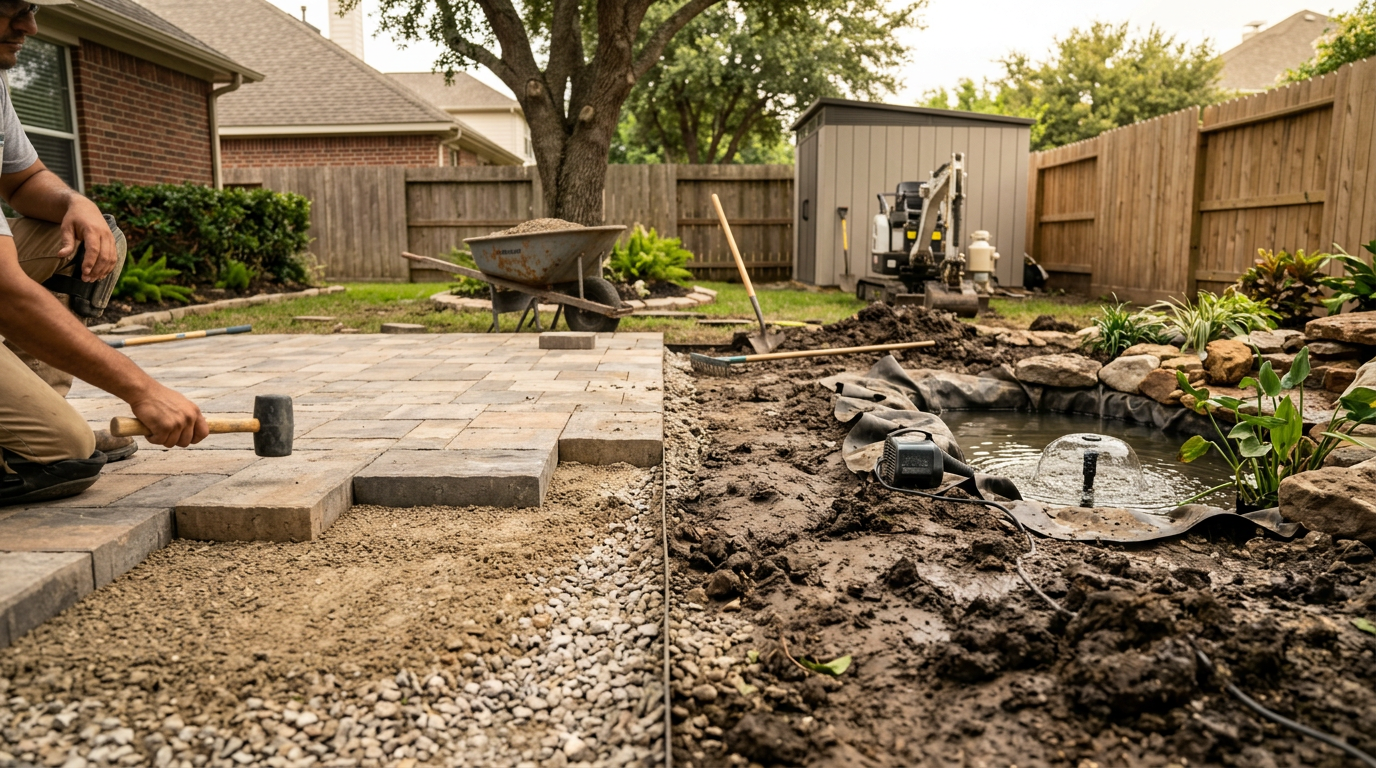
Paver Patio vs Pond Water Feature in Houston Clay Soil
Paver patios handle heavy clay better than ponds when drainage comes first. Ponds demand extra liner and pump work that clay soil often fights.
Key takeaways
- Clay soil prep adds cost to both projects in Cypress, Katy, and Pearland.
- Drainage steps differ sharply between hardscape and water features.
- MUD and HOA rules apply before any digging starts.
- Export a planning estimate from Backyard Planner before you call contractors.
- Native Texas plants stabilize pond edges but require seasonal checks.
Clay Soil Drainage Realities for Both Projects
Clay holds water and expands. This forces extra base work for paver patios and careful liner placement for ponds.
- Test soil percolation at three spots before choosing.
- Add 4–6 inches of gravel base under pavers in most greater Houston area yards.
- Install French drains around pond edges to move water away from the house.
- Slope the finished grade 1–2 percent away from structures.
- Avoid low spots that trap rainwater on clay.
- Account for seasonal expansion that can crack rigid pond edges.
Do this first: dig test holes and note how long water sits. Not this: assume national drainage advice works here.
Check Houston Permitting Center guidelines for local drainage plan requirements before finalizing layout.
Paver Patio Planning Steps in Greater Houston Area
Start with the clay. Backyard Planner shows the 2026 range of $8–$25 per square foot and flags the extra base prep and drainage steps that local soil demands.
- Measure the exact area and mark utilities.
- Check your MUD or HOA for hardscape permits.
- Plan a 6-inch compacted base plus sand setting bed.
- Choose pavers rated for freeze-thaw if you want longevity.
- Add edging to keep the base from shifting.
- Verify slope direction matches street drainage in your neighborhood.
Review 2026 rough planning ranges for similar projects in Katy MUD zones
Pond Water Feature Clay Soil Checks
Ponds need stable liners and constant water movement. Clay can shift and crack liners if the hole is not properly prepared.
- Dig 18–24 inches deep minimum for most backyard ponds.
- Line the excavation with geotextile before the rubber liner.
- Add a pump and filter sized for your volume.
- Use native Texas plants around the edge for stability.
- Route overflow to a dry well or storm drain.
- Install a skimmer to reduce debris buildup from nearby trees.
Plan your pond water feature native plants project in greater Houston area clay soil
2026 Rough Planning Ranges Side by Side
| Feature | Low Range (per sq ft or unit) | High Range (per sq ft or unit) | Clay Soil Add-on | Drainage Focus |
|---|---|---|---|---|
| Paver Patio | $8 | $25 | Extra base and edging | Slope and French drain |
| Pond / Water Feature | $15 | $40 | Liner and pump housing | Overflow and pump lines |
| Fence Extension | $12 | $28 | Post depth checks | Minimal extra |
These are planning estimates — not a quote. Always get multiple written local quotes from TDLR-licensed pros.
Permit and MUD Requirements
Both projects often need approval. Houston-area MUDs and HOAs review drainage plans before work begins.
- Submit site plans showing existing grades and new drainage.
- Confirm TDLR licensing for any irrigation tie-ins.
- Check TCEQ rules if your pond exceeds certain volumes.
- File with the Houston Permitting Center when required.
- Review HOA covenants for material color restrictions on pavers.
Investigate katy pond drainage planning for clay soil yards 2026
See TCEQ water feature regulations for state-level volume and discharge limits that apply in the greater Houston area.
Maintenance and Plant Trade-offs
Pavers need occasional cleaning and resealing. Ponds require weekly pump checks and seasonal plant trimming.
- Sweep pavers monthly to prevent moss on clay-adjacent surfaces.
- Clean pond filters every 7–10 days in summer.
- Replace native Texas plants that die off after the first year.
- Budget for electricity on pond pumps year-round.
- Reapply sealer to pavers every two to three years in humid conditions.
- Monitor water levels weekly during drought periods common to Sugar Land and Pearland.
Compare paver patio vs gazebo choices for Houston clay soil yards
Long-Term Durability and Upkeep in Clay Soil
Clay movement affects both options over five to ten years. Paver patios can settle unevenly without proper base depth while pond liners stretch or tear if edges heave.
- Inspect paver joints annually and refill with polymeric sand after heavy rains.
- Winterize pond pumps by removing and storing them indoors.
- Add aeration stones to ponds to prevent algae in standing water.
- Replace cracked pavers individually rather than entire sections.
- Track pump runtime hours to predict motor replacement every four to six years.
- Test soil pH around pond edges before adding new native Texas plants.
Woodlands and Cypress yards often see faster clay expansion after summer storms, so schedule checks after every major rain event.
Decision Rule for Your Yard
Choose a paver patio if you want low daily upkeep and solid drainage control. Choose a pond if you accept pump maintenance and have room for overflow routing.
Run the numbers for your neighborhood first. Export the PDF with materials lists and permit notes, then compare against real bids from licensed pros who know your MUD or HOA rules.
Next Steps
- Visit Backyard Planner and enter your zip code.
- Export the clay-soil aware planning estimate for both options.
- Call two TDLR-licensed contractors for written bids.
- Verify MUD and HOA rules before signing anything.
- Schedule soil tests during the next dry week.
- Compare overflow routing options against your lot slope.
FAQ
How much does clay soil prep add to each project?
Expect 15–30 percent extra base material and labor for paver patios and deeper excavation plus liner protection for ponds in the greater Houston area.
Do I need a permit for a small backyard pond?
Many MUDs and HOAs require permits once the pond exceeds 100 square feet or holds more than a few hundred gallons. Check your local rules first.
Which option drains better on clay?
Paver patios with proper slope and French drains move water faster than ponds, which must hold water.
Can I combine both features?
Yes, but place the pond on the lowest part of the yard and keep pavers on higher, well-drained sections to avoid clay heave issues.
Where do I get 2026 cost ranges for my specific neighborhood?
Use Backyard Planner to generate a planning estimate — not a quote — tuned for greater Houston area clay soil and drainage conditions.