August 29, 2026
Investigating Gazebo Shed Costs Katy MUDs 2026
Review 2026 rough planning ranges for gazebo sheds in Katy MUD zones with clay-soil prep, drainage steps, and permit notes. Planning estimate not a quote for
Investigating Gazebo Shed Costs Katy MUDs 2026
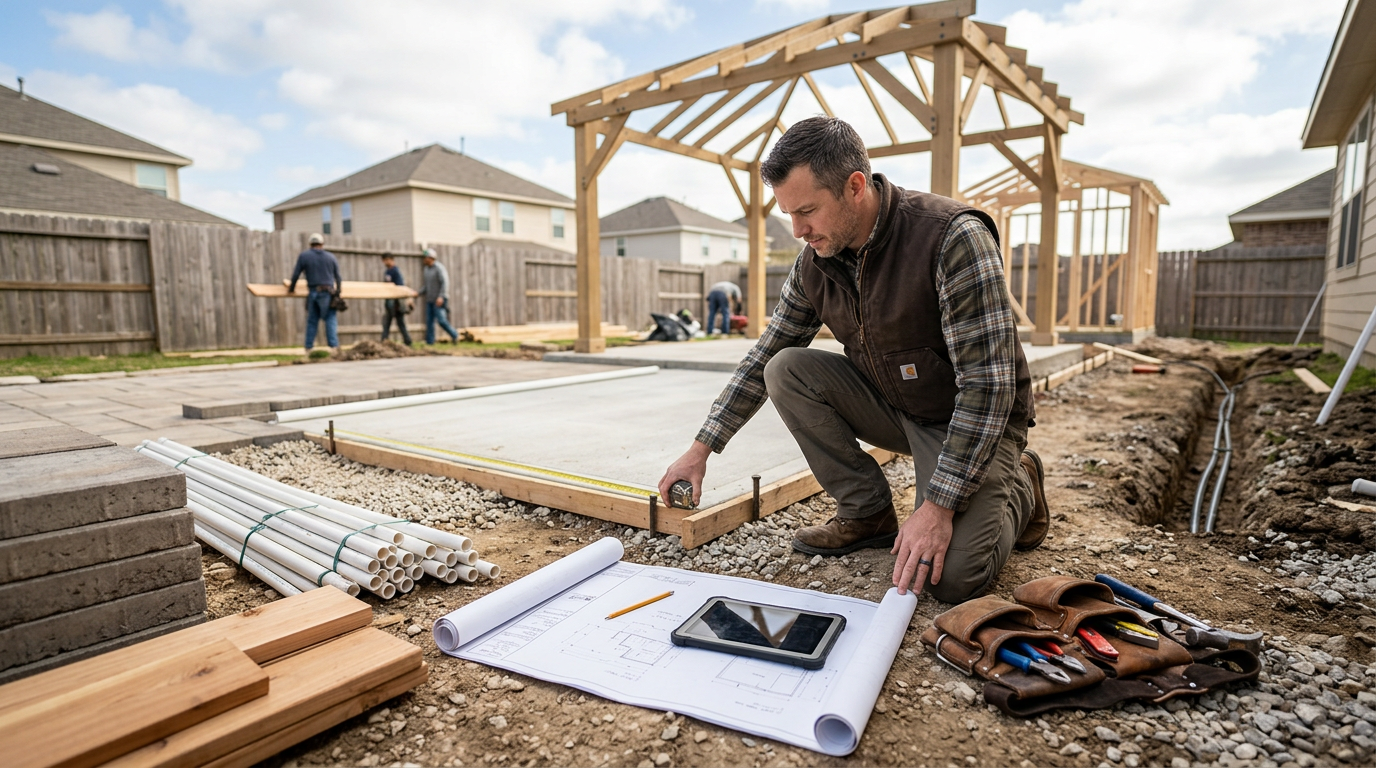
Katy clay soil forces extra base work on any gazebo shed. Expect 2026 rough planning ranges of $18–$38 per square foot once you add drainage fixes and MUD reviews.
Run your own numbers first. Export a PDF materials list from Backyard Planner before you contact licensed builders.
Clay Soil Prep Steps for Katy Gazebo Sheds
Start every project by testing drainage. Katy yards sit on heavy clay that holds water and expands when wet.
- Dig test holes 18 inches deep in three spots across the planned footprint
- Check how fast water drains after a hose test lasting five minutes
- Add 4–6 inches of crushed limestone base where water pools for more than an hour
- Slope the final grade 1 percent away from the structure on all sides
- Install French drains if the lot sits below street level or near a ditch
- Compact each layer of base material in 2-inch lifts to prevent settling
- Cover the base with geotextile fabric before laying pavers or concrete
Do this before you pour footings. Skip the step and you will fight standing water every spring. Texas A&M AgriLife clay soil resources explain how local soils behave after heavy rains and why extra base depth matters in the greater Houston area.
MUD Permit Rules You Must Follow
Katy MUD districts review every shed over 120 square feet. Submit plans early to avoid rework.
- Confirm your exact MUD boundary on the district map at the county appraisal site
- Gather TDLR licensing numbers for the builder before signing any contract
- Include a simple site plan showing setbacks from property lines and easements
- Note any HOA overlay rules that add extra height or material limits
- Pay the review fee before excavation starts and keep the receipt
- Schedule a pre-construction inspection if the MUD requires it
Missing one item delays the whole job by weeks. Check the official TDLR licensing database to confirm active status before work begins.
2026 Rough Planning Ranges Breakdown
Costs vary by size and soil fixes. These are planning ranges only.
| Size (sq ft) | Basic Build | With Clay Prep & Drainage | MUD Permit Add-on |
|---|---|---|---|
| 120–200 | $2,400–$5,200 | $3,600–$7,800 | $450–$850 |
| 200–300 | $4,000–$8,400 | $6,000–$12,600 | $550–$950 |
| 300–400 | $5,700–$11,600 | $8,500–$17,400 | $650–$1,050 |
Add 10–15 percent if you need engineered footings for wind load. Factor in 2026 lumber and concrete price swings common in the greater Houston area.
Choosing the Right Location for Drainage Success
Placement affects both cost and long-term performance. Low spots increase drainage expenses.
- Map existing swales and downspout paths before choosing the site
- Keep the structure at least 10 feet from the house foundation
- Avoid areas within 5 feet of underground utilities marked by 811
- Position the door away from prevailing winds to reduce water entry
- Leave room for future expansion of the base if soil continues to settle
- Check shade patterns to decide if gutters will be needed on the roof
Poor placement forces later fixes that cost more than doing it right the first time.
Comparing Gazebo Shed vs Paver Patio Options
Many Katy homeowners weigh both projects. Compare paver patio vs gazebo choices for your yard layout.
- Gazebo shed gives storage plus shade in one structure
- Paver patio needs less vertical clearance from power lines
- Both require the same clay base depth and compaction steps
- Sheds trigger more MUD paperwork than flat patios
- Patios drain easier on flat lots with minimal slope work
- Shed roofs add runoff that must be directed away from neighbors
Choose based on storage needs first.
TDLR Licensing Checks Before You Hire
Verify every contractor holds current TDLR registration. Ask for the number on the first call.
- Search the TDLR database for active status before any deposit
- Confirm liability insurance limits meet MUD requirements
- Request three recent Katy references with similar clay soil jobs
- Review written scope that lists clay soil prep and drainage details
- Never pay full deposit before permits clear and inspections pass
- Ask about warranty on base settlement in heavy clay
Drainage Fixes Common in Katy MUD Zones
Poor drainage ruins sheds fast. Plan these items into the budget.
- Extend downspouts 6 feet from the foundation using solid pipe
- Add 4-inch perforated pipe under the base wrapped in fabric
- Use native Texas plants in swales to slow runoff naturally
- Raise the shed floor 6 inches above surrounding grade
- Install gutter guards to reduce debris that clogs drains
- Test the full system after the first heavy rain of the season
Review TCEQ drainage guidelines for Texas properties to understand local runoff rules that apply in MUD districts.
Next Steps After You Gather Ranges
- Export the PDF with materials and cutting lists from the tool
- Mark your lot corners and measure setbacks from all boundaries
- Call your MUD office for current fee schedule and required forms
- Get three written bids from TDLR-licensed pros who know Katy clay
- Compare bids against the planning ranges you calculated earlier
- Schedule soil tests if the lot has known drainage history
Woodlands gazebo shed MUD permit steps follow the same clay-soil logic if you later move.
Key Takeaways
- Clay soil prep adds $6–$12 per square foot in Katy
- MUD review adds time and fees that vary by district
- Always treat numbers as planning estimates not a quote
- TDLR licensing protects you on every job you approve
- Native drainage solutions last longer than quick fixes
- Location choices drive both cost and future maintenance
Planning estimate — not a quote; always get multiple written local quotes.
Common Questions About Katy Gazebo Shed Projects
How long does MUD review take in Katy?
Most districts reply in 10–21 business days once the full packet arrives.
Do I need a separate permit for the concrete base?
Yes. The base counts as a structure in most MUD rules.
Can I use gravel instead of crushed limestone?
Gravel drains slower in clay. Limestone compacts tighter and lasts longer.
What happens if I skip the drainage test?
Water collects under the floor and warps wood or lifts pavers within two seasons.
Are HOA rules stricter than MUD rules?
Sometimes. Check both before you draw the final plan.