August 29, 2026
Paver Patio vs Gazebo in Houston Clay Soil Yards
Compare paver patio vs gazebo choices for Houston clay soil yards with 2026 planning ranges, clay-soil prep steps, drainage notes, and HOA permitting realitie
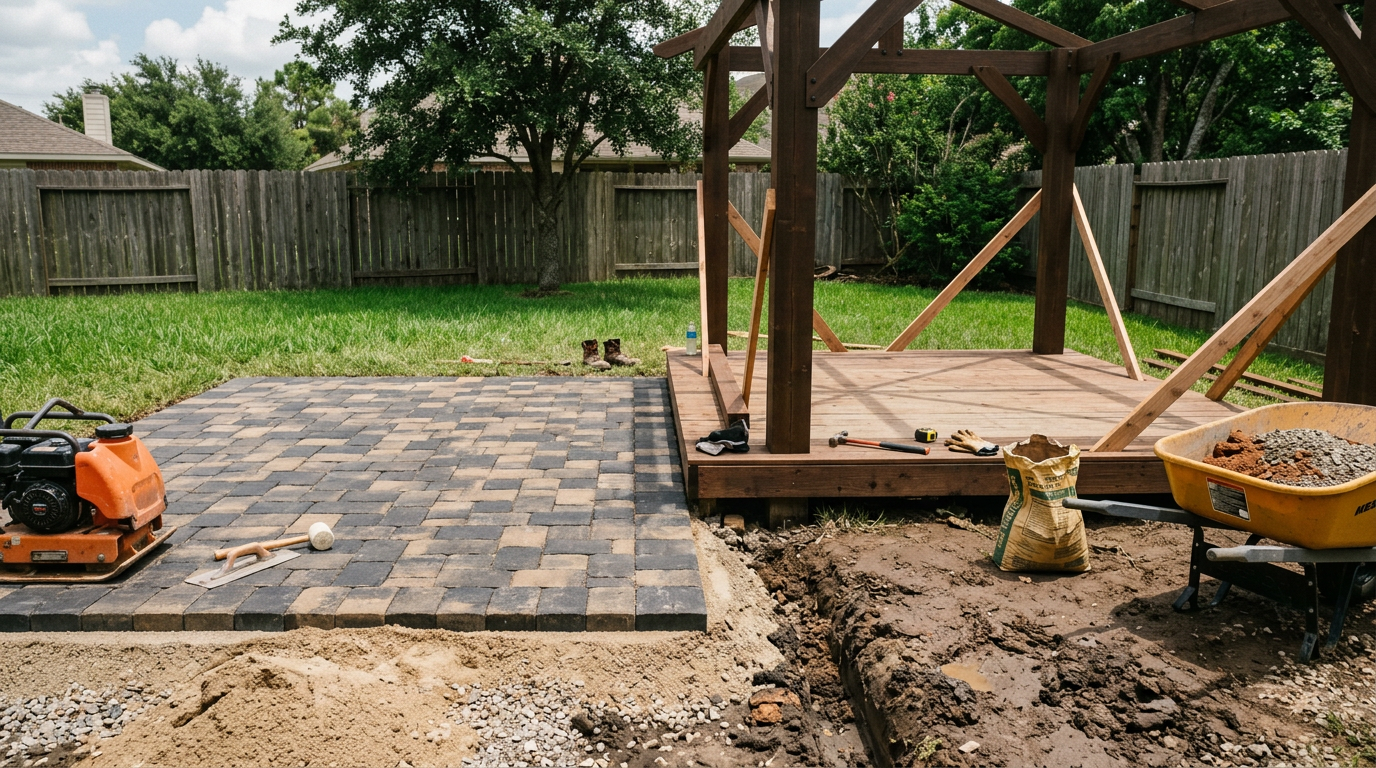
Paver Patio vs Gazebo in Houston Clay Soil Yards
Decide between a Paver Patio and a Gazebo / Shed by weighing your need for open seating against covered storage. Both options demand extra clay-soil prep and drainage work in greater Houston area yards.
Clay soil expands and contracts, so every project starts with base stabilization and water routing. Run the numbers first with a planning estimate — not a quote.
Key takeaways
- Clay soil prep adds 20-40% to base costs for both projects.
- Drainage realities force French drains or swales on most lots.
- HOA and MUD rules often require 30-60 day reviews.
- 2026 planning ranges stay rough until you measure your site.
- Native Texas plants help manage runoff near either structure.
Clay Soil Prep Steps for Each Option
Paver Patio work begins with excavation to 8-12 inches. Gazebo / Shed builds need piers or footings sunk below the active clay zone. The sequence stays identical but depths and reinforcements differ because pavers spread loads while sheds concentrate them on posts.
- Remove topsoil and replace with 6 inches of crushed limestone.
- Compact in 2-inch lifts with a plate compactor.
- Install geotextile fabric before base material.
- Slope the sub-base 1/4 inch per foot away from structures.
- Test compaction to 95% standard proctor density.
- Add 2 inches of decomposed granite for paver leveling beds.
- Install rebar cages in pier holes for Gazebo / Shed footings.
Follow the same sequence for both projects but adjust depth for the Gazebo / Shed load. Review USDA guidelines on expansive clay soils before you start. Clay soil prep paver patio steps for Houston yards show the exact order.
2026 Rough Planning Ranges
Greater Houston area prices reflect current public 2026 data for materials and labor. Neighborhoods like Cypress and Katy see higher drainage add-ons because of flat lots and slow percolation.
| Feature | Paver Patio Range | Gazebo / Shed Range |
|---|---|---|
| Base prep per sq ft | $4–$8 | $3–$7 |
| Materials per sq ft | $6–$12 | $8–$15 |
| Labor per sq ft | $5–$9 | $6–$10 |
| Drainage add-on | $1,200–$3,500 | $1,800–$4,200 |
| Total typical 300 sq ft | $8,100–$24,900 | $9,600–$28,500 |
These remain planning estimates — not quotes. Paver patio costs Cypress 2026 clay soil ranges and Gazebo shed costs Pearland 2026 planning ranges break down line items further.
Drainage Realities You Face
Houston clay holds water. Standing moisture under pavers causes heaving. Under a Gazebo / Shed it rots posts. Follow EPA recommendations for managing stormwater runoff to avoid neighbor complaints or MUD fines.
- Route downspouts to a pop-up emitter 10 feet away.
- Add a 4-inch French drain along the low side.
- Slope finished grade 6 inches over 10 feet.
- Use permeable pavers only where MUD allows.
- Connect to existing yard drains if present.
- Install silt fencing during construction to control sediment.
- Test soil percolation rates at three locations before final grading.
Skip these steps and you repair the project within two seasons.
HOA and MUD Permitting Checklist
Most neighborhoods require paperwork before any digging. Sugar Land and Pearland HOAs often add extra drainage drawings.
- Submit site plan showing setbacks and drainage.
- Include material specs and color samples.
- Pay review fees of $150–$400.
- Wait for MUD approval on water flow changes.
- Schedule inspection after base compaction.
- Provide contractor TDLR license numbers with the application.
Check your specific HOA rules early. Check TDLR licensing requirements directly on their site. TDLR / TCEQ licensing applies to any irrigation tie-ins.
Space and Use Trade-Offs
- Paver Patio gives flat open area for furniture and grills.
- Gazebo / Shed adds roof and walls for tools or shade.
- Measure your yard first to avoid layout conflicts.
- Measure backyard for planning step-by-step methods keeps dimensions accurate.
- A 12x20 Paver Patio fits most Cypress lots while preserving lawn space.
- The same footprint for a Gazebo / Shed blocks more views and airflow.
A 12x20 Paver Patio fits most Cypress lots. The same footprint for a Gazebo / Shed blocks more views and airflow.
Material Choices for Clay Soil Durability
Material selection changes how long each option lasts in Houston clay. Paver Patio surfaces need flexible joints while Gazebo / Shed frames need corrosion resistance.
- Choose concrete pavers over clay bricks because they tolerate minor movement.
- Use polymeric sand in joints to reduce weed growth and water infiltration.
- Select pressure-treated pine rated for ground contact on Gazebo / Shed posts.
- Add metal flashing at post bases to block moisture wicking.
- Install 4-inch gravel rings around shed footings for extra drainage.
- Avoid untreated cedar in direct soil contact.
- Specify stainless steel fasteners in coastal humidity zones like Pearland.
These choices keep the planning estimate realistic and reduce five-year repair calls.
When to Choose Paver Patio
Pick this when you want daily outdoor living space. It costs less per square foot once drainage is solved.
Do this:
- Install 2-inch pavers over 6 inches of base.
- Add seating walls for extra function.
- Keep 3 feet of clearance from fences.
- Edge with concrete mow strip to contain gravel migration.
Not this:
- Lay pavers directly on clay.
- Ignore slope toward the house.
- Skip the fabric layer.
- Use sand base only without limestone stabilization.
When to Choose Gazebo / Shed
Choose this for storage or protected seating. It protects equipment from summer rain.
Do this:
- Set piers 24 inches deep with rebar.
- Use pressure-treated posts.
- Anchor roof ties to code.
- Add gutters that tie into the yard drainage plan.
Not this:
- Place on grade beams only.
- Forget vapor barrier under floor.
- Build without MUD sign-off.
- Use untreated lumber for any ground-level framing.
Long-Term Maintenance Differences
Both structures need yearly checks but the tasks differ. Paver Patio surfaces require occasional resetting while Gazebo / Shed roofs need leak inspections.
- Re-sand paver joints every two years after heavy rains.
- Power-wash pavers annually to remove clay stains.
- Inspect Gazebo / Shed piers for settlement each spring.
- Re-stain or seal wood surfaces every three years.
- Clear French drains of roots twice a year.
- Monitor for cracks in paver base after drought cycles.
Track these tasks in a simple spreadsheet to stay ahead of problems.
Next Steps
- Export your materials and labor list from Backyard Planner at https://backyardplanning.app.
- Collect three written bids from TDLR-licensed contractors.
- Verify HOA and MUD requirements in writing.
- Schedule soil test if drainage looks questionable.
- Re-run the planning estimate after bids arrive.
- Compare bids against the exported cutting lists before signing.
FAQ
How much extra does clay soil prep add to each project?
Expect 25-40% added to base costs for excavation, fabric, and limestone in greater Houston area yards.
Do both projects need the same drainage work?
Paver Patio and Gazebo / Shed both require French drains or swales when the lot slopes toward the house.
What permits apply in Katy or Sugar Land?
Most MUD districts and HOAs require site plans and drainage details. TDLR licensing covers any licensed work.
Can I mix both features on one lot?
Yes, but measure setbacks first and plan separate drainage paths to avoid runoff conflicts.
Where do 2026 ranges come from?
Ranges pull from current public 2026 data on local material and labor trends adjusted for clay-soil aware methods.