August 29, 2026
Woodlands Gazebo Shed MUD Permits 2026 Guide
Handle Woodlands gazebo shed MUD permits in 2026 with clay-soil aware steps, drainage checks, and TDLR licensing notes for greater Houston area yards before a
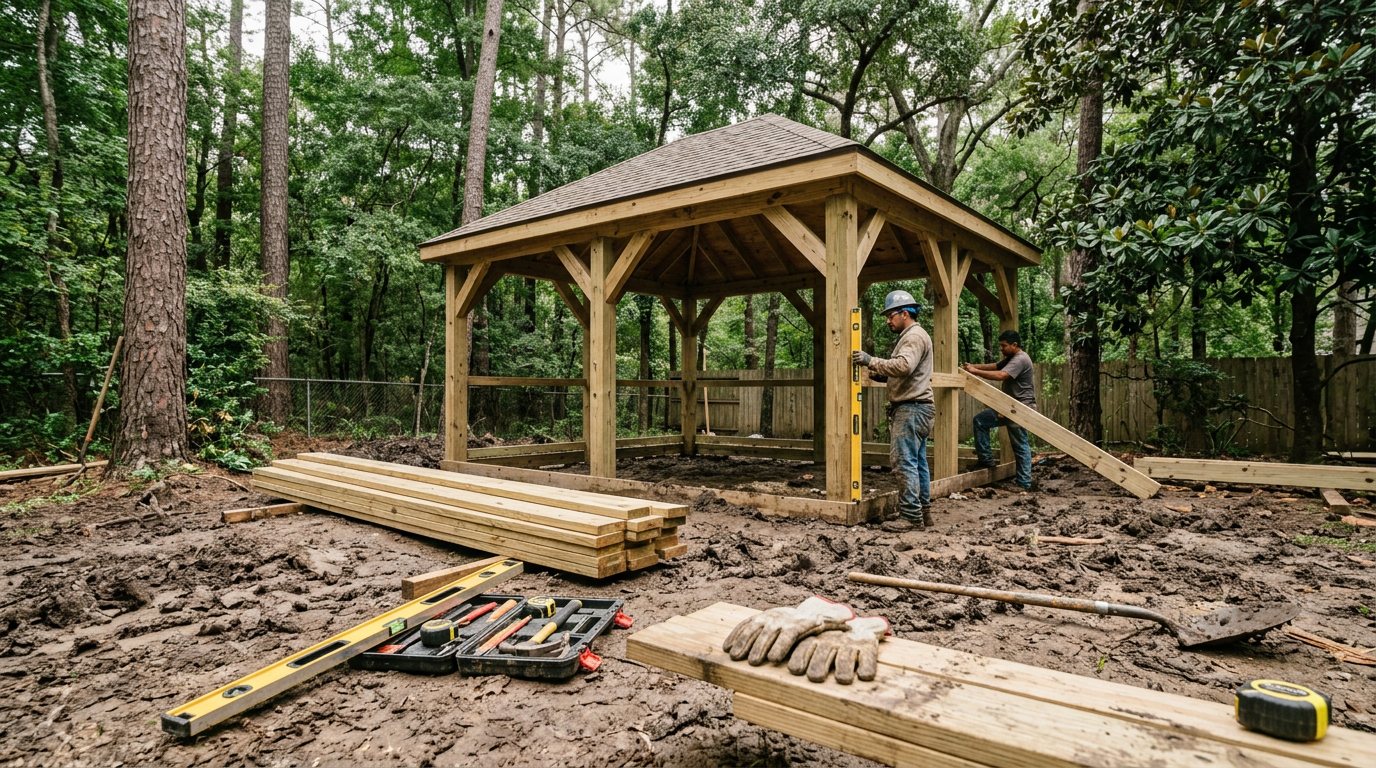
Woodlands Gazebo Shed MUD Permits 2026 Guide
Start by checking your specific MUD district rules before any Woodlands gazebo shed project. Clay soil and local drainage requirements add steps that affect both timeline and cost. This planning estimate — not a quote — uses public 2026 data to outline the permit path for greater Houston area homeowners.
Key takeaways
- Verify MUD and HOA rules first
- Factor extra clay soil prep into every estimate
- Confirm TDLR licensing on every contractor bid
- Export materials lists before meeting inspectors
Woodlands Gazebo Shed MUD Permits Basics
The Woodlands sits inside multiple MUD districts that each set their own rules for structures over a certain size. A gazebo or shed often triggers drainage review because of the area's clay soil. Run the numbers with Backyard Planner first so you know the rough ranges before you talk to any licensed pro.
Submit site plans that show setbacks, roof runoff direction, and base material. Most MUD offices require a simple drainage sketch even for small sheds. Skip this step and your permit gets rejected on the first review. Property records in neighborhoods like Sterling Ridge or Creekside often list the exact MUD contact on the annual tax statement.
Review the district map online before drawing anything. Some Woodlands sections fall under one MUD while adjacent streets belong to another. Crossing district lines changes the drainage form you need and the inspection sequence.
Clay Soil Prep Steps for Any Woodlands Build
Clay soil in the greater Houston area expands and contracts with moisture. Gazebo and shed foundations need extra base depth to stay level. Follow these steps:
- Test soil moisture at three spots on the site
- Remove at least 6 inches of top clay before adding gravel
- Install a 4-inch perforated drain pipe on the low side
- Compact each gravel lift in 4-inch layers
- Slope the finished grade 6 inches away from the structure
Do this work before the slab or piers go in. Skipping compaction leads to settling within two seasons. Local crews often add a geotextile fabric layer between clay and gravel to prevent mixing.
Test the finished base with a long level across multiple directions. Any low spot will collect water and push against the foundation during heavy rains common in The Woodlands.
2026 Planning Ranges for Gazebo Shed Projects
Public 2026 data shows these rough planning ranges for Woodlands builds on clay soil. Costs vary by size, materials, and MUD drainage demands.
- Small shed under 120 sq ft: $4,200–$9,800
- Medium gazebo 120–200 sq ft: $8,500–$18,000
- Larger shed with electrical: $11,000–$24,500
- Custom gazebo with seating: $15,000–$31,000
These figures include clay-soil aware base prep and basic permit fees. They remain planning estimates — not quotes. Add 15–20 percent if your lot sits in a flood zone overlay that requires extra elevation.
Break the numbers further by component. Base preparation alone runs $2–$4 per square foot on typical Woodlands clay. Roofing and framing add another $3–$7 depending on material choice.
Drainage Requirements in The Woodlands
MUD rules often demand that roof water does not cross property lines. Clay soil slows absorption, so plan for it.
- Route downspouts to a French drain or rain garden
- Use native Texas plants around the structure for extra absorption
- Keep finished floor 6–8 inches above surrounding grade
- Document the drainage path on your permit drawings
Compare similar projects in nearby areas with this Pond Water Feature Woodlands guide. Check the Texas A&M AgriLife Extension soil resources for plant lists that handle heavy clay and periodic flooding.
TDLR and TCEQ Licensing Checks
Any contractor installing electrical or plumbing must hold current TDLR or TCEQ credentials. Verify the license number on the state site before signing anything.
- Ask for the license number in writing
- Check status at tdlr.texas.gov
- Confirm the license covers the exact work scope
- Keep copies with your permit packet
MUD inspectors will flag unlicensed work during final review. TCEQ handles any irrigation tie-ins if the shed includes a hose bib.
HOA vs MUD Rules Comparison
| Rule Type | Typical Woodlands HOA | Typical MUD District |
|---|---|---|
| Size limit | Often 200 sq ft max | Varies by district |
| Drainage plan | Required if near fence | Always required |
| Color restrictions | Strict palette rules | None |
| Inspection timing | Before concrete | After base prep |
| Fee range 2026 | $150–$450 | $200–$600 |
Review both sets of rules early. A structure that passes HOA review can still fail MUD drainage review. The comparison table shows why separate submissions are required even when the same drawing set is used.
Common Permit Pitfalls to Avoid
- Assuming your lot has no MUD oversight
- Using standard national plans without clay soil notes
- Skipping the required 48-hour drainage inspection
- Hiring crews without TDLR licensing on file
- Starting work before both HOA and MUD sign off
Each missed step adds weeks and extra fees. One Woodlands homeowner lost three weeks because the initial sketch showed runoff crossing the side property line.
Verifying Your Specific MUD District Boundaries
Locate the exact district that covers your address before any drawing begins. The process takes under an hour and prevents later rework.
- Pull your latest water bill for the district name and phone number
- Search the district name plus “MUD map” on the county appraisal site
- Enter your address in the online parcel viewer
- Note any overlapping flood or drainage easements
- Call the district office to confirm current 2026 fee schedule
This extra check catches cases where one side of the street belongs to a different MUD with stricter runoff rules.
Electrical and Plumbing Considerations for Woodlands Sheds
Even basic sheds now include outlets or lighting in many Woodlands plans. Permanent wiring triggers additional TDLR review and may require a separate electrical permit.
- Size the panel for future expansion rather than minimum code
- Bury conduit at least 18 inches in clay soil areas
- Slope conduit runs to avoid water entry points
- Label every circuit on the permit drawing
Plumbing for a hose bib adds another inspection layer. Route the line below the frost line even though The Woodlands rarely sees hard freezes.
Next Steps Before You Apply
- Pull your property survey and MUD map
- Run a planning estimate for your exact lot size
- List required materials and labor on a spreadsheet
- Contact the MUD office with your drainage sketch
- Get three written bids from licensed local contractors
Export the full PDF with permit notes from Backyard Planner so you arrive at every meeting with the same numbers.
Compare your Woodlands plan against this Gazebo Shed Costs Pearland guide for more clay-soil examples. Also review this Paver Patio vs Gazebo article to weigh foundation trade-offs. For official drainage guidance, consult the TCEQ construction general permit page.
FAQ
Do all Woodlands lots fall under MUD rules?
Most do. Check your property tax records or call the district office listed on your water bill.
How long does a typical gazebo shed permit take?
Expect 10–25 business days once both HOA and MUD receive complete drainage drawings.
Can I build a shed without a permit under 100 square feet?
Some MUD districts waive permits under that size, but drainage rules still apply if water flows toward neighbors.
What happens if I skip clay soil prep?
The structure settles unevenly within one or two wet seasons and may fail the final MUD inspection.
Do I need a licensed electrician for a simple shed?
Any permanent wiring requires a TDLR-licensed electrician. Battery lights or extension cords do not trigger the rule.