August 29, 2026
Sprinkler System vs Pond in Pearland Clay Soil Yards
Compare sprinkler system vs pond options for Pearland yards with clay soil drainage needs, 2026 planning ranges, MUD rules, and native Texas plants. Planning
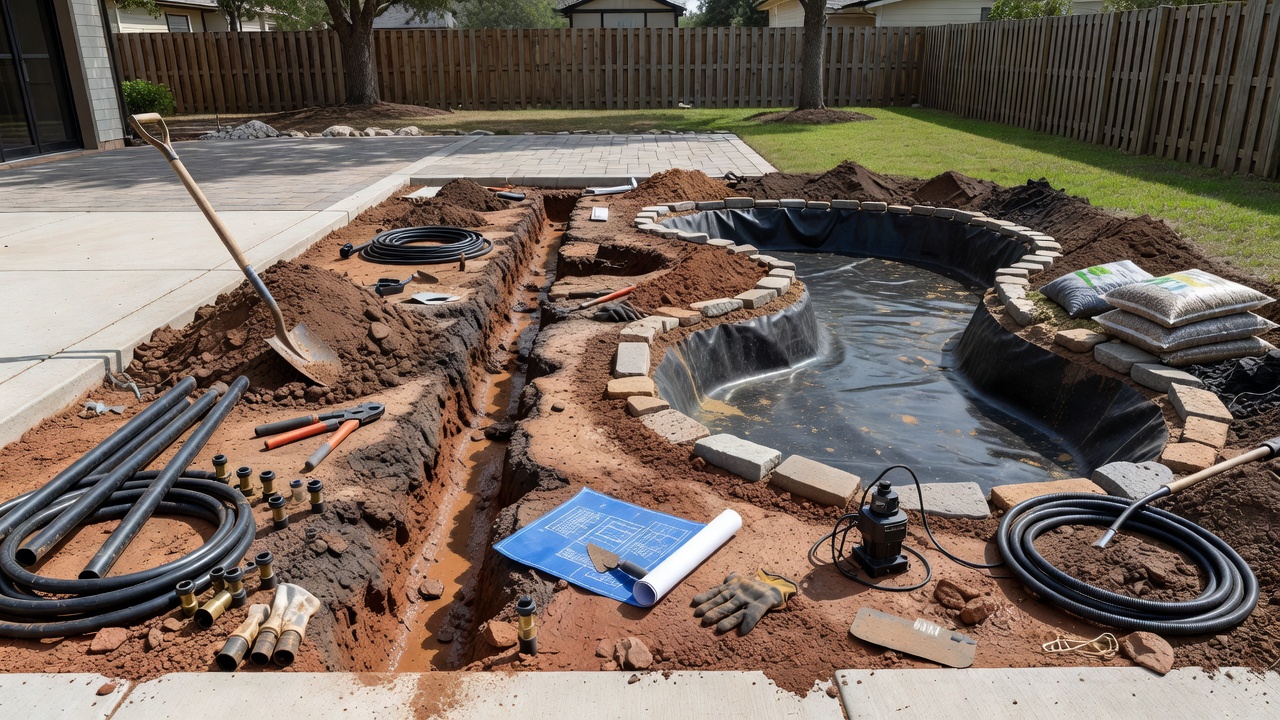
Sprinkler System vs Pond in Pearland Clay Soil Yards
Pearland homeowners face a direct choice between a sprinkler system and a pond when planning backyard water features. Clay soil and local drainage rules tilt the decision toward systems that control runoff rather than hold water. Run the numbers for your lot before you contact contractors.
Key takeaways
- Clay soil in Pearland demands extra base prep for either option.
- Sprinkler systems use less excavation than ponds.
- Ponds require TDLR and MUD checks on water retention.
- Native Texas plants cut long-term irrigation needs.
- Both projects need drainage checks before permits.
- Settlement risks rise when clay expands and contracts around liners or lines.
Clay Soil Drainage Checks for Pearland Yards
Start every project with a drainage test on your specific lot. Clay holds water and expands, so standing water around a pond creates heaving risks. Sprinkler lines need deeper trenches with proper slope to avoid clogs. Poor drainage planning leads to repeated repairs within two seasons.
- Test soil percolation in at least three spots.
- Map existing downspouts and low spots.
- Note MUD or HOA setbacks from property lines.
- Record seasonal water table levels if available.
- Measure total square footage of turf or bed areas.
- Identify utility easements that block trenching routes.
- Check slope direction toward street or approved outfall.
2026 Planning Ranges for Each Option
Public 2026 data shows rough planning ranges for greater Houston area projects. These remain planning estimates — not a quote. Actual bids vary by lot size and permit requirements. Factor in the extra 15 to 40 percent clay prep cost that appears in most Pearland bids.
| Feature | Low Range per sq ft | High Range per sq ft | Extra Clay Soil Cost |
|---|---|---|---|
| Sprinkler System | $3.50 | $7.00 | +15-25% base prep |
| Pond Water Feature | $12 | $28 | +30-40% liner & drainage |
Use these ranges only to compare scope. Export a materials list from Backyard Planner to match against local bids.
Sprinkler System Steps for Clay Soil
Installers in Pearland follow clay-aware trenching to prevent settling. Skipping the gravel base step causes lines to shift after the first heavy rain.
- Mark heads and zones on a scaled lot map.
- Dig trenches 12-18 inches deep with 1% slope.
- Add 4 inches of gravel base under lines.
- Install pressure-regulated heads rated for clay.
- Backfill with native soil mixed with sand.
- Test zones for even coverage before final grade.
- Install rain sensor tied to controller per local rules.
Cypress Sprinkler System Clay Soil Steps for 2026 shows the same sequence used across the greater Houston area.
Pond Water Feature Steps for Clay Soil
Ponds add liner and overflow requirements that increase clay prep. Liner punctures from expanding clay remain the top failure point in local installs.
- Excavate to required depth plus 12 inches of base.
- Compact clay subgrade and add geotextile fabric.
- Install EPDM liner with underlayment.
- Build overflow pipe tied to storm drain or French drain.
- Edge with native Texas plants to stabilize banks.
- Add aeration pump sized for surface area to control algae.
Settlement and Erosion Risks in Clay Soil Projects
Clay in Pearland expands when wet and shrinks when dry, stressing both buried lines and pond liners. Homeowners who skip compaction steps often see cracks within 18 months. Sprinkler trenches settle faster than pond basins because they lack the weight of water.
- Compact subgrade in 6-inch lifts before backfill.
- Use flexible pipe joints near trees where roots move soil.
- Slope final grade away from structures by 6 inches over 10 feet.
- Install French drains around pond edges if water table sits above liner bottom.
- Monitor for low spots after first winter freeze-thaw cycle.
Review NRCS soil survey data for Pearland before final design to anticipate shrink-swell potential.
MUD and HOA Permit Notes
Pearland MUD districts often require separate review for water features. Sprinkler systems usually need only a standard irrigation permit. Ponds trigger additional drainage and water-use reviews. Missing a single MUD filing can delay start dates by six weeks.
- Submit site plan showing setbacks and overflow.
- Confirm TDLR licensing for any irrigation or pond contractor.
- Check TCEQ rules on pond discharge if using aerators.
- Obtain HOA approval before MUD filing.
- Include as-built drawings in final MUD packet.
Review TCEQ irrigation licensing requirements before hiring any installer. Review Cypress sprinkler system MUD permit notes clay soil 2026 for similar paperwork steps.
Native Texas Plants for Either Choice
Native plants reduce irrigation demand and stabilize clay edges. They also lower long-term water bills once established. Choose species rated for Houston clay and full sun exposure.
- Muhly grass for sprinkler zone borders.
- Texas frogfruit around pond margins.
- Blackfoot daisy in full sun beds.
- Inland sea oats for shaded drainage swales.
- Gulf muhly for fall color and low water use.
- Switchgrass for erosion control on slopes.
Consult Texas A&M native plant guides for soil-specific variety lists. Plan your pond water feature native plants project in greater Houston area clay soil with 2026 rough planning ranges and drainage steps.
Maintenance and Water Use Trade-offs
Sprinkler systems run on timers and use municipal water. Ponds recycle water but need algae control and liner checks. Clay soil increases evaporation loss in both cases. Track actual usage for the first year to adjust zones or plantings.
- Sprinkler: monthly head cleaning, annual valve service.
- Pond: quarterly liner inspection, fish or plant balance checks.
- Both: winterize lines before first freeze.
- Add smart controller to sprinkler to cut water use 20-30 percent.
Irrigation vs Water Feature Water Usage in Clay Soil
Sprinkler systems deliver measured volumes on schedule while ponds lose water through evaporation and minor leaks. In Pearland clay, both options require more frequent top-offs than sandy soils. Track monthly usage against your water bill to spot problems early.
- Sprinkler zones average 0.5 to 1 inch per week during peak summer.
- Pond surface loses 0.25 inch per day in July heat.
- Native plant borders cut sprinkler runtime by 15 percent after year two.
- Aeration in ponds reduces algae but adds small electrical load.
- Rain sensors prevent sprinkler operation during storms.
Next Steps for Pearland Homeowners
Run your lot through Backyard Planner for a clay-soil aware export. Compare the PDF materials list against three written bids from TDLR-licensed pros familiar with your MUD. Start with drainage mapping, then decide between the sprinkler system vs pond based on your actual water table and HOA rules.
FAQ
Does clay soil change sprinkler system vs pond costs in Pearland?
Yes. Extra base prep and drainage work raise both options 15-40% above flat-ground installs.
Which option needs fewer MUD permits?
Sprinkler systems usually need only an irrigation permit. Ponds require additional drainage and water retention review.
Can native Texas plants replace part of a sprinkler system?
Native plants reduce turf area and irrigation zones, lowering overall water use in clay soil yards.
How often should I recheck drainage after installation?
Inspect sprinkler lines and pond overflows each spring and after major storms.
Is Backyard Planner a contractor referral service?
No. It supplies independent 2026 planning ranges and exports only. Always obtain multiple written local quotes.