August 29, 2026
Cypress Sprinkler System MUD Permit Notes Clay Soil 2026
Plan your Cypress sprinkler system with 2026 MUD permit notes and clay-soil aware steps. Review drainage checks, TDLR licensing, and rough planning ranges for
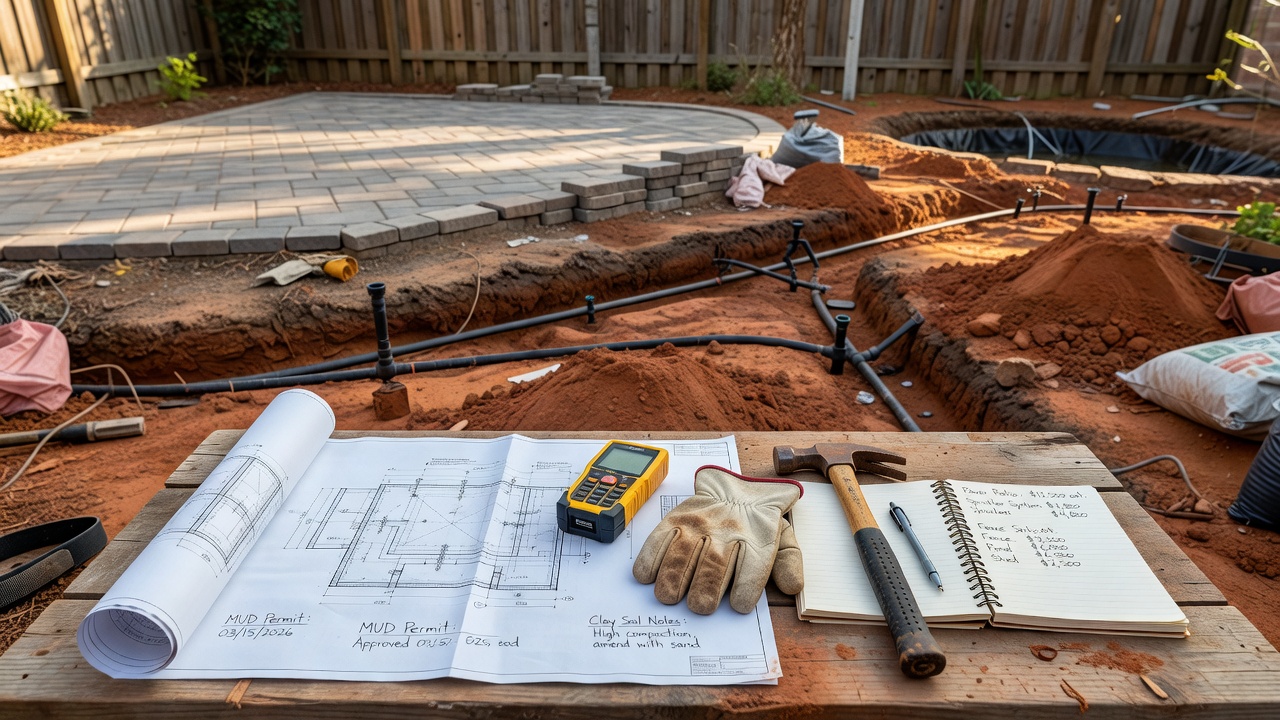
Cypress Sprinkler System MUD Permit Notes Clay Soil 2026
Cypress homeowners face clay soil that holds water and shifts easily. A sprinkler system here starts with MUD permit checks and extra drainage steps before any trenching.
This guide gives 2026 rough planning ranges tuned for local conditions. It is a planning estimate — not a quote; always get multiple written local quotes from TDLR licensed pros.
Key takeaways
- Clay soil demands 4–6 inches of extra base prep in most Cypress yards.
- MUD rules often require backflow preventers and drainage plans.
- TDLR licensing applies to irrigation work in the greater Houston area.
- Native Texas plants reduce long-term water needs.
- Export materials lists from Backyard Planner before bidding.
- Measure zones twice to avoid overspray on foundations.
- Factor seasonal watering restrictions into controller settings.
Check MUD Rules First in Cypress
Cypress MUDs control water use and drainage. Start here to avoid rework.
- Contact your specific MUD office for current 2026 forms.
- Submit site plans that show clay soil drainage paths.
- Confirm backflow device rules before buying parts.
- Note any HOA overlays that add extra steps.
- Verify if your MUD requires separate TCEQ coordination for larger installs.
- Request written confirmation of approved outfall locations.
Do this: call the MUD two weeks before design. Not this: assume county rules cover everything.
Review TCEQ guidelines on MUD permitting for baseline district authority before submitting plans.
Clay Soil Drainage Steps for Sprinkler Systems
Clay holds water and can flood low spots. Plan drainage before heads go in.
- Test soil percolation in three yard locations.
- Add 4–6 inches of gravel base under main lines.
- Slope laterals toward street or approved outfall.
- Install French drains near heavy clay zones.
- Use native Texas plants in beds to cut runoff.
- Install check valves on every zone to prevent backflow during power loss.
- Map low spots with a laser level before trenching.
Compare drainage needs with similar Cypress projects.
Follow Texas A&M recommendations for clay soil drainage when selecting amendments and slopes.
TDLR Licensing Requirements
Texas requires licensed irrigators for new systems. Skip this and permits fail.
- Verify the contractor holds a current TDLR irrigation license.
- Keep the license number on all MUD paperwork.
- Confirm the company carries required insurance.
- Ask for proof before signing any agreement.
- Request copies of past MUD-approved projects in Cypress.
Review the official TDLR irrigation rules directly for license verification steps.
Review licensing notes for nearby Pearland sprinkler work.
HOA and Additional Permitting Layers
Many Cypress neighborhoods layer HOA rules on top of MUD requirements. These often address appearance, noise, and water use.
-
Submit irrigation plans to the HOA architectural committee first.
-
Confirm restrictions on above-ground timers or visible valves.
-
Check for limits on daily watering hours during summer.
-
Obtain written HOA sign-off before MUD submission.
-
Budget extra time for revisions if the HOA rejects head placement near streets.
-
Compare your HOA packet against MUD forms to spot conflicts early.
-
Keep records of all approvals in one folder for the contractor.
2026 Rough Planning Ranges
Costs vary with yard size and soil prep. These are public 2026 data ranges only.
| Item | Low Range | High Range | Clay Soil Add-on |
|---|---|---|---|
| Basic zone install | $1,800 | $3,200 | +$600 |
| Drainage upgrades | $900 | $1,800 | +$400 |
| MUD permit & inspection | $250 | $450 | +$100 |
| Smart controller | $350 | $650 | None |
| Backflow preventer upgrade | $150 | $350 | +$75 |
| Percolation testing | $200 | $400 | Included |
Add 10–15 percent for rush MUD reviews during peak spring months.
Permit Document Checklist
Gather these items before the first MUD visit.
- Property survey with clay soil notes
- Sprinkler layout showing drainage slopes
- Backflow preventer specs
- Contractor TDLR license copy
- HOA approval letter if required
- Native plant list for beds
- Percolation test results from three locations
- Photos of current drainage patterns
Common Mistakes to Avoid
- Skipping percolation tests in heavy clay
- Placing heads too close to foundations
- Ignoring MUD outfall rules
- Using non-TDLR labor on permitted work
- Forgetting seasonal watering restrictions
- Overlooking HOA color or height rules for controllers
- Failing to slope laterals away from the house
Selecting Sprinkler Components for Clay Soil
Clay soil changes how water moves, so component choices matter.
- Choose rotors with adjustable arcs to match irregular beds.
- Install pressure regulators on every zone to prevent misting.
- Use swing joints at every head to allow soil movement.
- Select drip lines for narrow planting strips instead of spray heads.
- Add rain sensors that meet current TDLR specs.
- Plan for future expansion with extra zone valves.
Test one zone at a time after installation to confirm even coverage on clay.
Next Steps After Planning
Run your numbers first. Export the PDF with materials and permit notes from Backyard Planner. Then compare bids from three licensed local contractors who know Cypress MUD rules.
- Measure your yard zones today.
- Call your MUD for 2026 forms this week.
- Test soil drainage in two spots.
- Shortlist TDLR licensed firms.
- Review clay-soil aware estimates before signing.
- Submit HOA packet at the same time as MUD forms.
- Schedule percolation tests before final design lock.
FAQ
Do Cypress MUDs require permits for every sprinkler system?
Most do. Call your specific district to confirm current 2026 rules and drainage plan needs.
How does clay soil change sprinkler layout?
Clay slows drainage, so add gravel bases and slope lines toward approved outfalls.
What TDLR rules apply to Cypress irrigation work?
Licensed irrigators must pull permits and install backflow prevention per state code.
Can I skip MUD review if the system stays under 1,000 square feet?
No. Cypress MUDs review most residential installs regardless of size.
Where do I find native Texas plants for clay soil beds?
Local nurseries stock them. They cut water use and help meet MUD drainage goals.
How long does the full Cypress permitting process usually take?
Expect four to six weeks when both MUD and HOA reviews run in sequence.