August 29, 2026
Pond Water Feature vs Gazebo Shed Houston Clay Soil
Compare pond water feature vs gazebo shed in greater Houston area clay soil. Get 2026 planning ranges, drainage steps, MUD rules, native Texas plants, and cla
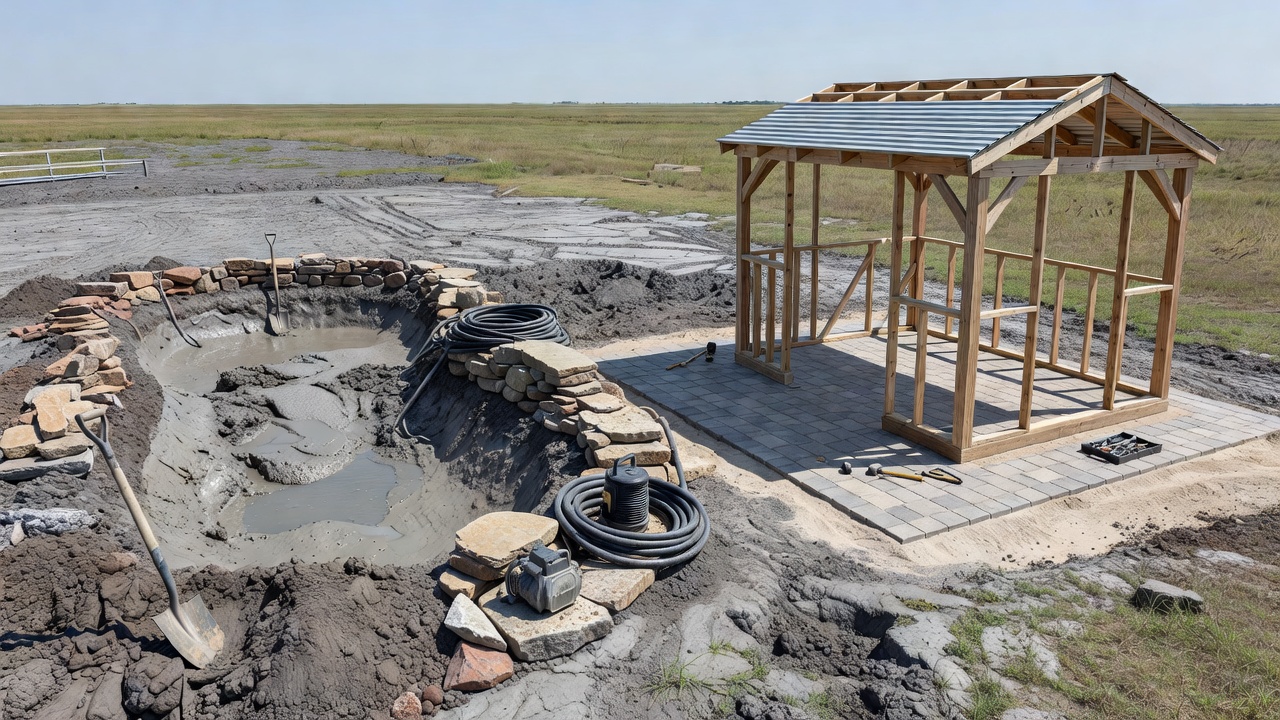
Pond Water Feature vs Gazebo Shed Houston Clay Soil
Clay soil in the greater Houston area forces extra base prep and drainage work for both pond water features and gazebo sheds. Start with your yard's slope and MUD rules to see which project fits your space and budget.
Key takeaways
- Clay expands and contracts, so both projects need deeper base layers than sandy soil.
- Pond water features add liner and pump costs while gazebo sheds focus on foundation stability.
- 2026 planning ranges stay rough estimates only.
- Always verify HOA or MUD permits first.
Clay Soil Drainage Realities for Both Projects
Greater Houston clay holds water and shifts with seasons. This affects every decision.
- Test soil drainage by digging a 12-inch hole and timing water absorption.
- Add 4-6 inches of crushed limestone base under both structures.
- Slope finished grade away from the house at 6 inches per 10 feet.
- Install French drains around pond liners to handle overflow.
- Compact soil in 6-inch lifts to reduce future settling.
- Check seasonal water table depth before excavation begins.
- Avoid placing either project in low spots that collect runoff.
Plan your Sugar Land pond with clay-soil aware steps.
Local soil maps from the USDA Natural Resources Conservation Service show most greater Houston yards sit on expansive clays that require these steps. See their Houston County soil survey for your exact series before final layout.
2026 Rough Planning Ranges
Public 2026 data shows wide spreads because of site access and permit fees.
| Project | Low End | High End | Main Cost Drivers |
|---|---|---|---|
| Pond Water Feature (10x12 ft) | $4,800 | $12,500 | Liner, pump, native plants, excavation |
| Gazebo Shed (10x12 ft) | $6,200 | $14,800 | Foundation piers, framing, roof, doors |
| Both with drainage upgrades | +$1,800 | +$3,400 | Extra base, French drains, grading |
Ranges cover materials and labor in Cypress, Katy, and Pearland. These remain planning estimates — not quotes.
Permitting Steps with MUD or HOA
Most greater Houston neighborhoods fall under MUD or HOA oversight.
- Pull your property survey and locate utilities.
- Submit plans to the MUD or HOA for drainage review.
- Confirm TDLR licensing for any irrigation tie-ins.
- Schedule TCEQ-compliant backflow testing if adding a pump.
- Obtain final inspection sign-off before backfilling.
Review Woodlands gazebo shed MUD permit steps.
Texas Department of Licensing and Regulation maintains current licensing lookup tools at tdlr.texas.gov so you can verify every contractor before signing.
Native Texas Plants for Pond Features
Native plants cut maintenance in clay soil.
- Pickerelweed handles wet edges without extra fertilizer.
- Gulf muhly grass stabilizes banks during heavy rains.
- Cardinal flower attracts pollinators and tolerates periodic flooding.
- Avoid invasive species that clog local waterways.
- Plant in 2-gallon containers for faster root establishment.
- Space plants 12-18 inches apart along the waterline.
- Choose species rated for USDA hardiness zone 9a.
See pond water feature native plants planning.
Texas A&M AgriLife Extension provides detailed planting calendars and soil amendment guidance at aggie-horticulture.tamu.edu for Houston-area water features.
Gazebo Shed Placement on Clay Soil
Location choices affect long-term stability.
- Place sheds on the highest point of your lot when possible.
- Use concrete piers sunk below the active clay zone.
- Leave 3 feet of clearance around the structure for drainage swales.
- Orient doors away from prevailing southeast winds.
- Add gutters that route water to a pop-up emitter 10 feet away.
- Anchor piers with rebar tied into the clay subgrade.
Check Pearland gazebo shed costs and MUD notes.
Decision Factors Checklist
Run this list before choosing.
- Yard slope under 5 percent favors a pond.
- Need for storage pushes toward a gazebo shed.
- Existing drainage issues require upgrades for either option.
- HOA height limits often cap sheds at 10 feet.
- Pump electricity access adds $400-$800 to pond costs.
- Future expansion plans favor modular shed designs.
- Proximity to electrical service matters more for ponds.
- Wind exposure increases roof load requirements on sheds.
Trade-offs by Neighborhood
- Cypress lots with poor drainage lean toward smaller ponds with strong French drain systems.
- Katy MUDs frequently require extra grading for sheds.
- Sugar Land yards near bayous need native plant buffers on ponds.
- Pearland clay often needs pier foundations for any shed over 100 square feet.
- Woodlands properties with mature trees limit pond sunlight exposure.
Maintenance Differences in Houston Climate
Ongoing care varies sharply between the two options in greater Houston humidity and storms.
- Pond water features need quarterly pump filter cleaning and annual liner inspection for root punctures.
- Gazebo sheds require annual roof sealant checks and gutter clearing after oak pollen season.
- Both demand vegetation control within 5 feet to prevent clay heave.
- Pond algae blooms spike in summer; plan for barley straw or beneficial bacteria treatments.
- Shed foundations settle unevenly; monitor door alignment each spring.
- Winter freezes are rare but can crack pond equipment if not winterized.
- Budget $150-$300 yearly for pond supplies versus $75-$150 for shed upkeep.
Irrigation and Pump Considerations
Ponds add electrical and water-use layers that sheds avoid.
- Size the pump for turnover every 1-2 hours based on gallons held.
- Route discharge lines to avoid MUD storm drains during heavy rain.
- Install GFCI outlets rated for outdoor wet locations.
- Native plants reduce evaporation losses compared with turf around the edge.
- Automatic fill valves prevent liner exposure during dry spells.
Next Steps
- Export a PDF from Backyard Planner with your lot size and zip code.
- Compare the materials list against three written bids from TDLR-licensed contractors who know your MUD rules.
- Verify current 2026 ranges with local suppliers before locking materials.
- Walk the proposed site after a heavy rain to confirm drainage paths.
- Planning estimate — not a quote; always get multiple written local quotes.
Start your estimate at Backyard Planner.
FAQ
How deep should the base go in Houston clay?
Most projects need 8-12 inches of compacted base plus a geotextile layer.
Do both projects need the same drainage?
Ponds need overflow protection; sheds need perimeter swales. Both benefit from French drains.
What 2026 range applies to a 200-square-foot pond?
Expect $9,600 to $22,000 depending on liner type and plant count.
Can I skip HOA review for a small shed?
No. Most greater Houston HOAs require approval regardless of size.
Which project lasts longer on clay soil?
A properly founded gazebo shed usually outlasts a pond liner by 10-15 years.