November 8, 2026
Sprinkler System After Paver Patio Houston Clay Timeline 2026
Plan sprinkler system after paver patio Houston clay soil projects in 2026. Review drainage steps, MUD rules, and rough planning ranges before you start in th
Sprinkler System After Paver Patio Houston Clay Timeline 2026
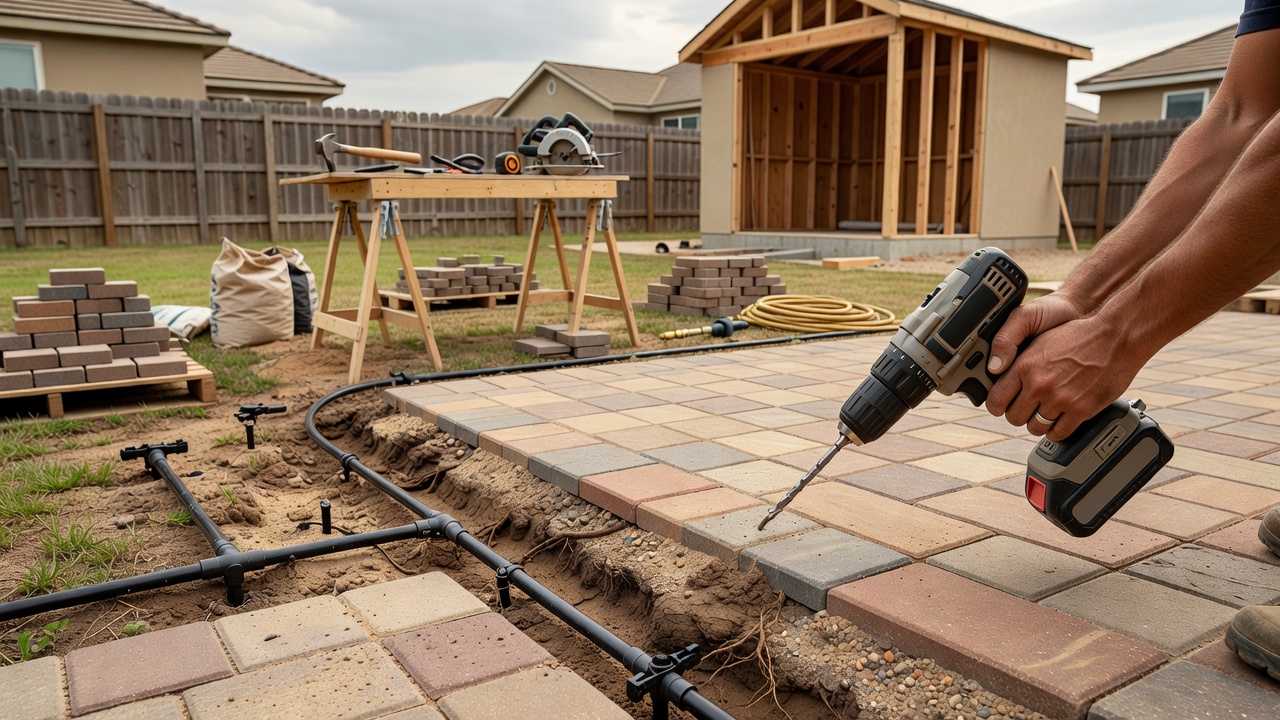
Install the sprinkler system after a paver patio in Houston clay requires careful trenching to protect new drainage layers. Clay soil holds water and shifts, so you must add extra base depth and slope checks before any heads go in. Run a planning estimate first to map the full sequence.
Backyard Planner gives 2026 rough planning ranges tuned for greater Houston area yards. These numbers cover clay-soil aware prep and flag TDLR licensing needs. Always treat the output as a planning estimate — not a quote.
- Clay soil demands deeper trenches.
- Drainage must slope away from pavers.
- Permit checks come before any digging.
- Native Texas plants reduce water use.
- Export Excel lists before calling crews.
Clay Soil Drainage Steps After Pavers
Clay in Cypress and Katy expands when wet and cracks when dry. You need to slope every trench at least one inch per ten feet to move water off the patio base. Extra base prep prevents future settling that cracks paver edges.
- Dig trenches outside the paver edge first.
- Add 4-6 inches of sand backfill around pipe.
- Install check valves at low points.
- Test flow before backfilling.
- Re-grade the surface to match existing slope.
- Compact soil in 6-inch lifts to reduce movement.
- Verify slope with a laser level on every run.
- Avoid crossing paver joints without protective sleeves.
Review paver patio vs sprinkler sugar land clay choices for 2026 to see how drainage order changes costs. Local crews often note that clay requires 20 percent more base material than sandy soils.
Permit Timing Rules
MUD districts in Katy and Sugar Land often require 2-4 weeks for utility locates. HOA rules in The Woodlands add another layer of review for valve placement. Start the process early to avoid weather delays during spring rains.
- Submit site sketch with paver layout.
- Confirm TDLR license on every crew.
- Schedule inspection after rough-in.
- Keep records of all drainage changes.
- Notify neighbors if shared lines cross property lines.
Check current licensing rules on the Texas Department of Licensing and Regulation website.
2026 Rough Planning Ranges
Expect $4–$9 per square foot for a basic system on clay after pavers. The range rises when you add drip zones for new beds. Labor often accounts for half the total because hand digging protects existing paver bases.
| Project Element | Low Range | High Range | Clay Add-On |
|---|---|---|---|
| Trenching and pipe | $1.80 | $3.20 | +$0.60 |
| Heads and valves | $1.40 | $2.80 | +$0.40 |
| Controller and wiring | $0.60 | $1.40 | +$0.20 |
| Drainage correction | $0.80 | $2.10 | included |
| Backfill and restoration | $0.50 | $1.30 | +$0.30 |
These figures come from public 2026 data and stay clay-soil aware. They do not replace written bids from licensed local pros.
Sequencing Sprinklers Around Existing Pavers
Work outward from the patio to limit damage to the base. Start at the highest point and move downhill. Hand tools reduce vibration that can shift paver sand joints.
- Mark heads on paper first.
- Hand-dig near paver edges.
- Use sleeve pipe under any crossing paths.
- Pressure test before backfill.
- Restore mulch or sod in strips.
- Run a full system cycle the next day.
See how fence extension around sprinklers Houston handles similar sequencing on clay.
MUD and HOA Checks Before Trenching
Call your MUD office before the first shovel. Many require a locate ticket and a drainage plan. Failure to check can result in fines or forced removal of new lines.
- Katy MUD often asks for valve box locations.
- Sugar Land HOA may limit head height near fences.
- The Woodlands reviews run times for common areas.
- Keep copies of every approval.
- Update your site plan if any utility conflicts appear.
Link to woodlands fence extension drainage after sprinklers 2026 for more permit examples. Always confirm current MUD rules directly with the district office.
Native Texas Plants for Lower Water Use
Pair the new system with drought-tolerant beds to cut future bills. Clay holds moisture longer, so over-watering is the main risk. Choose plants that match your zone run times to avoid root rot.
- Muhly grass needs deep infrequent cycles.
- Blackfoot daisy tolerates poor drainage edges.
- Texas sage works on south-facing strips.
- Avoid turf in narrow side yards.
- Plant in clusters to match sprinkler patterns.
Check cypress pond 2026 ranges with native texas plants for plant lists that match sprinkler zones. The Lady Bird Johnson Wildflower Center maintains detailed native plant databases for Texas clay conditions at their plant resource page.
Export Excel Lists for Materials
Pull a full materials and labor sheet before you meet contractors. The export includes cutting lengths and permit notes. Use it to compare bids line by line.
- Pipe sizes by zone.
- Head counts with spacing.
- Valve box quantities.
- Drainage gravel totals.
- Labor hours broken by task.
- Controller model options.
- Spare head and fitting counts.
Use the export excel lists for houston backyard planning tool to generate your sheet in minutes.
Water Pressure and Zone Design on Clay
Clay soil changes how water moves through the root zone. Design zones so each runs long enough to penetrate but short enough to prevent pooling. Test static pressure at the meter first.
- Divide large yards into 4-6 zones.
- Use pressure-regulated heads on clay edges.
- Place rotors on slopes to reduce runoff.
- Add rain sensors to meet local codes.
- Map shady areas separately from full sun.
- Adjust for seasonal rainfall patterns.
Texas A&M AgriLife Extension offers free soil moisture guides at their irrigation resources. These help match zone timing to actual clay retention rates.
Common Sequencing Mistakes
- Trenching across paver base without sleeves.
- Ignoring MUD locate deadlines.
- Placing heads too close to clay edges.
- Skipping slope tests after backfill.
- Choosing non-TDLR crews.
- Overlapping zones that flood low spots.
- Forgetting to mark existing utility lines.
Key Takeaways
- Start with drainage slope on clay.
- Pull permits early.
- Match native plants to zones.
- Export lists before bids.
- Test pressure and adjust zones.
- Treat every number as a planning estimate — not a quote.
Next Steps
- Run your own planning estimate on the Backyard Planner site.
- Export the Excel file with materials and permit notes.
- Compare it against three written bids from TDLR-licensed crews who know your MUD or HOA rules.
- Schedule locates through your local MUD before any digging.
FAQ
How long does sprinkler installation take after pavers in Houston clay?
Most yards need 3–5 days once permits clear. Clay trenching adds one extra day for drainage correction.
Do I need MUD approval for sprinklers after a patio?
Yes. Katy and Sugar Land MUDs require locates and drainage sketches before any digging near pavers.
Can I use the same controller for new zones?
Check capacity first. Most 2026 controllers handle four extra zones without replacement.
What native plants work best with clay and sprinklers?
Muhly grass and blackfoot daisy handle the wet-dry cycle of Houston clay when watered on deep cycles.
Is the Backyard Planner output a final quote?
No. The numbers are a planning estimate — not a quote. Always get multiple written bids from local licensed contractors.