October 28, 2026
Fence Extension Around Sprinklers Houston: Clay Soil Steps
Plan a fence extension around sprinklers Houston with clay-soil aware steps for drainage, MUD permits and 2026 ranges in the greater Houston area. Run your pl
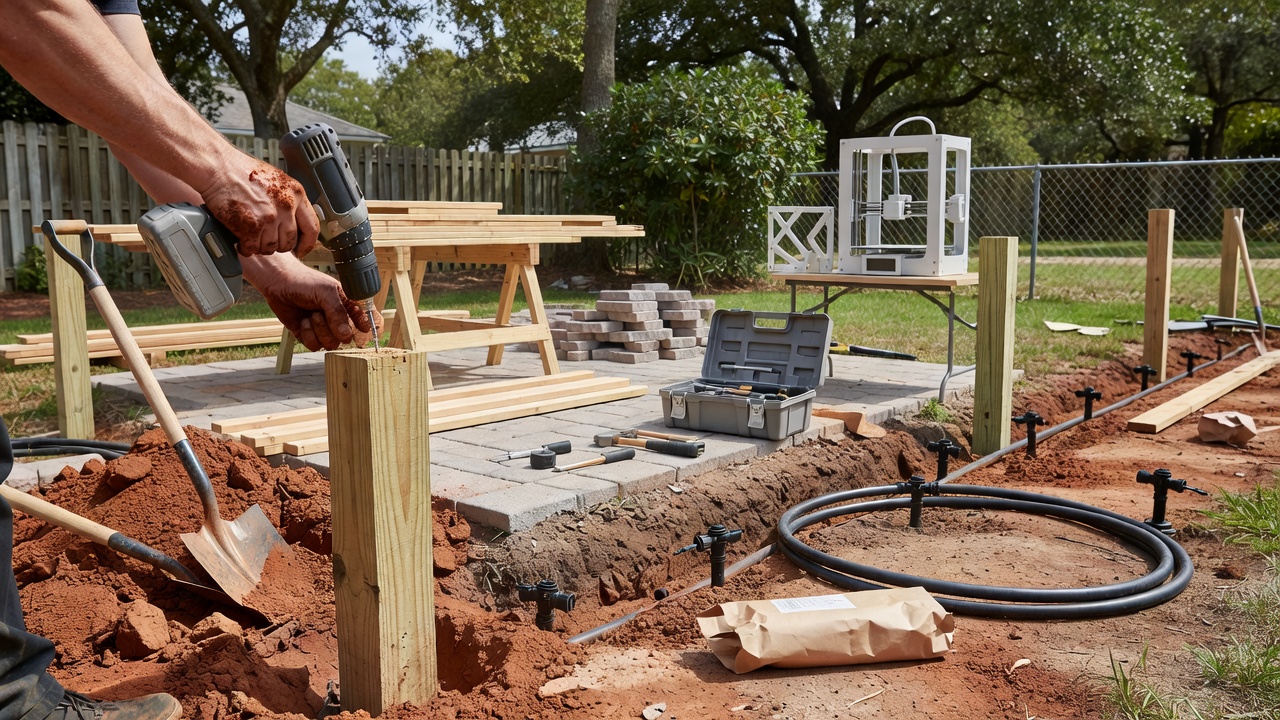
Fence Extension Around Sprinklers Houston: Clay Soil Steps
Start by mapping every sprinkler head and line before you extend any fence. A fence extension around sprinklers Houston demands extra care with clay soil prep and drainage to avoid flooding or broken irrigation.
Key takeaways
- Map all sprinkler zones first.
- Add 6–12 inches of base material for clay soil.
- Check MUD and HOA rules before digging.
- Use 2026 rough planning ranges only.
- Export a materials list for local bids.
Map Sprinkler Zones Before Any Fence Work
Walk your yard and mark every head, valve and pipe. Note the spray pattern and zone controller settings. In Cypress or Katy yards, lines often run parallel to property boundaries, so measure twice.
- Locate main line and lateral runs.
- Measure distance from each head to property lines.
- Photograph existing trenches.
- Record zone numbers on a simple sketch.
- Note any low spots where water collects after rain.
- Flag heads with bright tape for visibility during excavation.
This map prevents later damage when posts go in. Edge cases include corner lots where multiple zones meet or slopes that change spray direction.
Check Clay Soil Prep and Drainage Realities
Greater Houston area clay holds water and expands. Every fence extension around sprinklers Houston needs extra base depth. Seasonal movement can crack posts or shift lines if prep is skipped.
- Dig test holes at post locations.
- Add 8–12 inches of crushed limestone base.
- Slope soil away from the fence line.
- Install French drains where water pools.
- Compact each lift with a hand tamper.
- Test drainage by running sprinklers for 30 minutes.
Clay-soil aware steps reduce future settling around sprinkler lines. Trade-off: deeper base raises material cost but cuts repair calls later.
Review clay soil health guidance from USDA NRCS.
Review HOA Permit Notes and MUD Rules
Most neighborhoods require permits. Contact your MUD or HOA before you order materials. Sugar Land and Pearland MUDs often add extra rules for irrigation crossings.
- Submit site plan showing sprinkler locations.
- Confirm setback distances from irrigation.
- Verify TDLR licensing for any electrical work.
- Allow 10–14 days for approval.
- Request written variance if lines must be relocated.
- Keep copies of all correspondence.
Check current TDLR licensing requirements.
Calculate 2026 Rough Planning Ranges
Expect $18–$32 per linear foot for a basic fence extension around sprinklers Houston. Prices vary by material and gate count. Clay prep adds $4–$8 per foot in most greater Houston area neighborhoods.
| Material | Low Range | High Range | Clay Soil Add-on |
|---|---|---|---|
| Wood privacy | $18 | $26 | +$4–$7 |
| Vinyl | $24 | $32 | +$5–$8 |
| Aluminum | $22 | $30 | +$4–$6 |
These are planning estimates — not a quote. Always get multiple written local quotes. Factor in gate hardware and post caps when comparing bids.
Adjust Fence Post Spacing Around Existing Lines
Place posts at least 12 inches from any sprinkler pipe. Shift spacing where lines run parallel to the fence. In Woodlands or Katy clay, tighter spacing helps on uneven ground.
- Use 8-foot centers on straight runs.
- Drop to 6 feet near zone valves.
- Hand-dig the first 18 inches at every post.
- Cap and relocate heads only if approved by your irrigation contractor.
- Avoid posts directly over main lines.
- Mark new post holes on your zone map.
Plan sprinkler zones clay soil Houston with clay-soil aware steps.
Protect Irrigation Lines During Installation
Cover exposed pipes with plywood before equipment arrives. Mark every line with flags the day before digging. Backfill carefully to prevent future settling that could tilt fence sections.
- Turn off water at the backflow preventer.
- Keep a repair kit on site.
- Backfill trenches in 6-inch lifts.
- Compact soil by hand around each head.
- Re-test each zone after backfill.
- Document any line repairs with photos.
Account for Seasonal Clay Soil Movement
Houston clay expands in wet seasons and shrinks in dry ones. This movement stresses fence posts and can crack sprinkler fittings over time. Plan for it during the 2026 project window.
- Install posts deeper than standard 24 inches.
- Use concrete collars only at the top third.
- Add expansion joints on long runs.
- Choose pressure-treated lumber rated for ground contact.
- Monitor fence plumb after first heavy rain.
- Schedule final inspection after a full wet-dry cycle.
These steps keep the extension stable without repeated fixes.
Export PDF Materials and Cutting Lists
Use Backyard Planner to generate a clay-soil aware materials list. Include permit notes and drainage steps for your Cypress or Katy yard.
- Select Fence / Extension project type.
- Add sprinkler zone data.
- Export both PDF and Excel versions.
- Compare the list against three local bids.
- Note any native plant buffers along the new fence.
Plan pearland fence native plants 2026 with clay soil prep steps.
Compare Katy Fence or Pond Clay Soil Choices
Some homeowners add a small pond instead of extending the fence. Review drainage steps and MUD checks first.
Compare katy fence or pond clay soil options for 2026.
Test System After Fence Installation
Run every sprinkler zone for a full cycle once posts and panels are set. Look for overspray on new fence boards or blocked heads.
- Walk the line during operation.
- Adjust head angles if needed.
- Clear any debris from trenches.
- Verify no water pools against posts.
- Note flow rates before and after.
This final check catches issues before they damage the new structure.
Next Steps
- Run your planning estimate at https://backyardplanning.app.
- Export the PDF with permit notes.
- Contact three TDLR-licensed contractors.
- Schedule a site visit after HOA approval.
- Verify final sprinkler function before backfilling.
- Re-check drainage after first rain event.
Planning estimate — not a quote; always get multiple written local quotes.
FAQ
How close can fence posts sit to sprinkler heads?
Keep posts at least 12 inches away. Hand-dig the first 18 inches to protect lines.
Do I need a permit for a fence extension in the greater Houston area?
Yes. Most MUDs and HOAs require review when sprinklers are involved.
What base depth works best in Houston clay soil?
Use 8–12 inches of crushed limestone plus proper slope for drainage.
Can I move sprinkler heads myself?
Only if you hold the proper license. Hire a TCEQ-certified irrigator for any relocation.
Where do 2026 cost ranges come from?
They reflect public data for greater Houston area projects with clay-soil prep included.