October 21, 2026
Sprinkler Zones Clay Soil Houston: 2026 Drainage Plan
Plan sprinkler zones clay soil Houston with clay-soil aware steps for drainage, MUD rules, and 2026 ranges in the greater Houston area. Run a planning estimat
Sprinkler Zones Clay Soil Houston: 2026 Drainage Plan
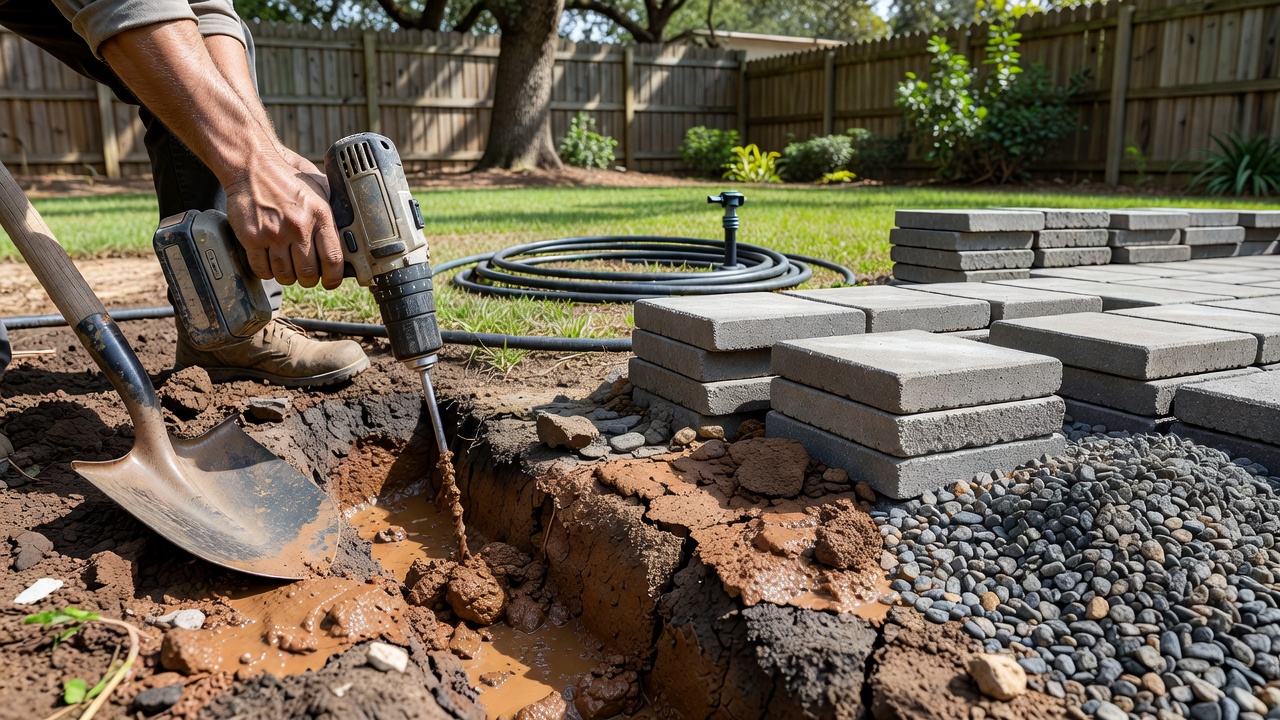
Clay soil in the greater Houston area holds water and drains slowly. This forces you to plan sprinkler zones around longer soak times and extra drainage features to avoid runoff or root rot.
Start by mapping your yard's slope and soil tests before you size any zones. Backyard Planner gives rough 2026 ranges tuned for local clay and MUD or HOA rules.
Key takeaways
- Clay soil needs 20-30% longer run times than sandy soil.
- Divide zones by sun exposure and drainage speed, not just square footage.
- Add check valves and French drains where MUD permits allow.
- Use native Texas plants to cut irrigation demand by half.
- Always treat the output as a planning estimate — not a quote.
Clay Soil Drainage Problems in Houston Yards
Houston clay expands when wet and cracks when dry. Sprinkler water pools on the surface instead of soaking in.
Test your soil with a simple jar test first. Then note low spots that collect water after rain. Yards in Cypress and Katy often show standing water within hours of a summer storm.
Common fixes include:
- Raising spray heads 2-3 inches above grade
- Installing pressure-regulated heads to prevent misting
- Sloping zones away from the house foundation
- Adding gravel trenches along fence lines
- Testing percolation rates in each proposed zone
Heavy clay also means you must space heads closer together. Overlap increases by 10-15% compared with sandy lots.
How to Divide Zones for Clay Soil
Run times per zone should stay under 15 minutes on clay to limit runoff. Group areas with similar sun and slope together.
Follow these steps:
- Sketch your lot on paper or in the tool.
- Mark existing trees and beds that need separate drip zones.
- Measure each section and note sun hours.
- Add 10% extra length for clay absorption.
- Check MUD or HOA setbacks before final layout.
Do this:
- Place rotors on slopes over 4%
- Use drip lines around native Texas plants
- Split front and back yards into separate valves
Not this:
- Run pop-ups in heavy shade for over 10 minutes
- Ignore side-yard drainage that feeds into neighbors
- Combine sunny lawn with shaded beds in one zone
Adding Drainage Features to Sprinkler Zones
Clay soil demands extra drainage work before any heads go in. Without it, water backs up and damages turf or foundations.
Install these features in order:
- Dig shallow French drains along low edges
- Place check valves at every zone valve
- Slope main lines toward street or approved outfall
- Backfill with gravel and filter fabric
- Connect to existing swales where MUD allows
Test each new drain with a hose before covering. Walk the yard after a simulated 30-minute run to spot puddles.
Houston Public Works requires positive drainage away from structures on most permits. Confirm your plan meets that rule.
2026 Cost Ranges for Greater Houston Area
Expect $1,800–$4,200 for a basic four-zone system on a typical lot. Clay prep adds $400–$900 for extra base material and drainage pipe.
| Zone Type | Typical Size | Clay Adjustment | 2026 Range |
|---|---|---|---|
| Front lawn rotors | 800 sq ft | +2 min soak time | $450–$750 |
| Side drip beds | 300 sq ft | French drain needed | $300–$550 |
| Back slope sprays | 600 sq ft | Check valve required | $400–$650 |
| Tree ring drip | 200 sq ft | Native plants only | $250–$400 |
These are planning estimates — not a quote. Get local bids from TDLR licensed pros.
Permit and MUD Rules You Must Check
Many MUD districts in Katy, Pearland, and Cypress require backflow preventers and rain sensors. Submit plans early.
- Call your MUD office for irrigation rules
- Verify HOA restrictions on head placement
- Confirm TDLR licensing for any installer
- Check TCEQ backflow requirements
- Note easement setbacks on your survey
Review Katy MUD shed drainage rules before you dig near utility easements. Check TCEQ irrigation licensing requirements to confirm any contractor holds current credentials.
Native Texas Plants That Reduce Water Use
Switching to native Texas plants cuts zone count and run times. They handle clay better than turf.
List of low-water choices:
- Blackfoot daisy
- Turk's cap
- Cedar sage
- Lindheimer muhly
- Texas lantana
- Gulf muhly
- Purple coneflower
See how one Katy yard paired natives with sprinklers in this Katy sprinkler native plants plan. Review Texas A&M clay soil irrigation guidelines for plant spacing on heavy soils.
Tools and Exports from Backyard Planner
Export a PDF with materials lists, cutting schedules, and permit notes. The file includes clay-soil aware steps for drainage.
You can also download an Excel sheet that breaks out labor and base prep costs for your neighborhood.
Compare sprinkler versus pond options if your lot has poor drainage.
Common Mistakes to Avoid
- Skipping soil tests before zone layout
- Placing heads too close to fences or sidewalks
- Running zones during peak afternoon heat
- Ignoring slope that sends water into the street
- Forgetting rain sensors required by most MUDs
- Overlapping zones that create soggy corners
Fix these before you call contractors.
Next Steps
- Run your lot through Backyard Planner for a clay-soil aware estimate
- Export the PDF and take it to three TDLR licensed companies
- Confirm MUD or HOA approval on paper
- Schedule soil amendments and drainage work first
- Plant native Texas plants in new zones to lower future water needs
- Re-test drainage after first heavy rain
Start your planning estimate — not a quote with local 2026 ranges.
FAQ
How many zones does a typical Houston lot need?
Most 6,000–8,000 sq ft yards use four to six zones when clay drainage is factored in.
Do I need a permit for a new sprinkler system?
Yes in most MUD districts. Check with your local utility before installation.
Can native Texas plants replace turf zones?
Yes. They need far less water and handle clay soil without extra drainage work.
What extra cost does clay soil add?
Plan on $400–$900 more for base material and French drains compared to sandy soil yards.
Who should install the system?
Only TDLR licensed irrigators who know greater Houston area MUD rules.