October 13, 2026
Cypress Shed Drainage Clay Soil Planning 2026
Plan cypress shed drainage clay soil projects with 2026 ranges for greater Houston area yards. Review MUD permit notes, clay-soil aware steps, and TDLR checks
Cypress Shed Drainage Clay Soil Planning 2026
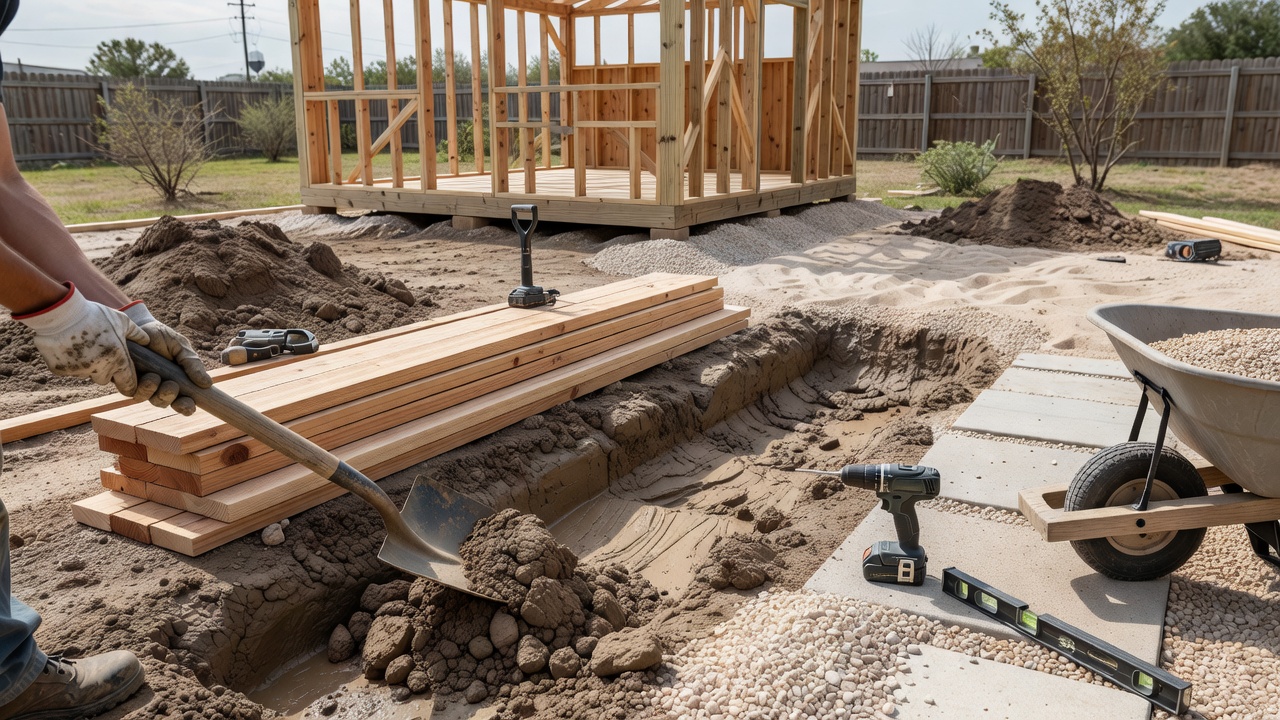
Start with clay soil checks before any shed build in Cypress. Drainage failures show up fast in greater Houston area yards when base prep skips local soil realities.
Key takeaways
- Clay soil holds water and shifts, so drainage must come first.
- Run a planning estimate — not a quote — then compare multiple licensed bids.
- MUD and HOA rules often dictate exact outlet points and pipe sizes.
- Native Texas plants reduce runoff around the finished shed.
Check MUD and HOA Rules Before Design
Cypress MUD offices require drainage plans for any new structure. Call your district first to confirm outlet rules and pipe specs. Many districts follow TCEQ stormwater permitting guidelines that affect how roof and surface water must exit your lot.
- Confirm if your lot drains to a street curb or swale.
- Ask about backflow preventers on downspouts.
- Note any required separation from neighboring lots.
- Record the exact permit number they assign.
Review the full Cypress Gazebo Shed MUD Costs 2026 Clay Soil Checks guide for matching permit language. Some HOAs add extra setbacks that force the shed farther from property lines than MUD rules alone require.
Test Clay Soil Drainage on Site
Dig two test holes at the planned shed corners. Fill them with water and time how long each takes to empty. Houston clay often needs 24 hours to reveal true percolation rates.
- Mark the lowest corner of the future slab.
- Add 4 inches of gravel base below the slab edge.
- Slope the final grade 6 inches away from the door in the first 10 feet.
- Install a French drain if water stands longer than 30 minutes.
Clay-soil aware estimates always flag this extra base work. Repeat the test after heavy rain to see seasonal differences.
Build a Clay-Soil-Aware Base
Standard shed kits fail on Houston clay without added steps. Increase the gravel pad thickness and add a vapor barrier. Compaction matters more here than in sandy soils because clay expands and contracts with moisture changes.
- Use 6 inches of crushed limestone instead of sand.
- Compact in two lifts with a plate compactor.
- Place 6-mil poly sheeting under the floor joists.
- Anchor the skids with 18-inch rebar driven into the clay.
Check the Sugar Land Gazebo Shed Clay Soil Prep Steps 2026 article for similar base details that apply directly to Cypress lots.
Route Water Away from the Structure
Direct roof runoff and surface flow before the shed is framed. Poor routing turns the pad into a mud pit within one season. Extend every downspout and add a cleanout at the first elbow so you can clear roots later.
- Extend downspouts at least 6 feet from the foundation.
- Install a 4-inch perforated drain line along the uphill side.
- Tie the line into an existing swale or approved MUD outlet.
- Cover the pipe with filter fabric and 12 inches of gravel.
See Clay Soil Drainage for Multiple Backyard Features in Houston for diagrams that cover combined shed and fence layouts.
2026 Planning Ranges for Cypress Sheds
Public 2026 data shows these rough planning ranges for greater Houston area clay soil sheds. All figures assume 120 square feet and basic gravel prep. Labor rates in Cypress run higher than national figures because of the extra excavation needed for clay.
| Item | Low Range | High Range | Notes |
|---|---|---|---|
| Gravel base only | $1,200 | $1,800 | Clay prep included |
| Gravel + French drain | $2,400 | $3,600 | MUD outlet connection extra |
| Full concrete pad | $3,800 | $5,200 | Requires TDLR licensed mason |
| Permit and inspection | $350 | $650 | Varies by MUD |
These remain planning estimates — not a quote. Always obtain written bids from TDLR licensed contractors.
Plan for Seasonal Rainfall Patterns
Greater Houston area rainfall peaks in spring and fall, so design the shed drainage to handle 2-inch-per-hour storms without pooling. Clay soil sheds water slowly, which means even moderate rain can overwhelm a small swale if the outlet is undersized.
- Size the French drain for at least 0.5 gallons per minute per square foot of roof.
- Add a second outlet pipe if the primary swale sits lower than the slab.
- Install a pop-up emitter only where the MUD allows surface discharge.
- Slope all yard grading toward the street rather than side yards when possible.
Add Native Texas Plants for Runoff Control
Planting around the shed reduces erosion on clay slopes. Choose species that tolerate both wet winters and dry summers. Place plants after final grading so roots do not disturb the compacted base.
- Muhly grass along the north edge
- Blackfoot daisy in the gravel transition zone
- Texas sage on the sunny south side
- Avoid turf within 3 feet of the slab
The Cypress Pond Native Texas Plants Steps for 2026 Clay Soil guide lists additional species that work well next to structures.
Permit and Licensing Checklist
- Verify TDLR license numbers for any concrete or electrical work at the official TDLR license search page.
- Submit site plan to your MUD before ordering materials.
- Schedule the pre-pour inspection after base compaction.
- Keep photos of every drainage pipe before backfill.
- File final as-built drawing with the HOA if required.
Compare Shed Drainage to Nearby Projects
Many Cypress homeowners run the same numbers for patios or ponds at the same time. The Using Planning Estimates to Compare Local Bids article walks through side-by-side comparisons that include clay-soil prep costs.
Next Steps
- Pull your MUD drainage map today.
- Run the clay-soil aware planning estimate at Backyard Planner.
- Export the PDF materials list and permit notes.
- Schedule two licensed bids this week using the exported cut list.
- Plant native Texas plants after the final inspection passes.
This is a planning estimate — not a quote. Always verify current MUD rules and obtain multiple written bids from TDLR licensed pros familiar with greater Houston area clay soil.
FAQ
How deep should the gravel base go for a Cypress shed on clay?
Six inches of compacted crushed limestone is the minimum. Add another two inches if the test holes drain slower than 30 minutes.
Do I need a MUD permit for a small storage shed?
Most Cypress MUD districts require a permit once the structure exceeds 100 square feet or includes electrical. Check your specific district first.
Can native Texas plants replace a French drain?
No. Plants slow surface water but do not move subsurface flow. Use them together with proper grading and pipe.
What TDLR license covers shed concrete work?
A TDLR concrete contractor license or irrigator license for any attached drainage is required. Verify the number on the state site before signing.
How often should I re-grade around the shed?
Inspect the slope each spring. Add gravel or reshape clay as soon as water begins to pool within 5 feet of the slab.