October 6, 2026
Clay Soil Drainage for Multiple Backyard Features in Houston
Plan clay soil drainage for multiple backyard features like paver patios, sprinklers and ponds in the greater Houston area with 2026 clay-soil aware ranges an
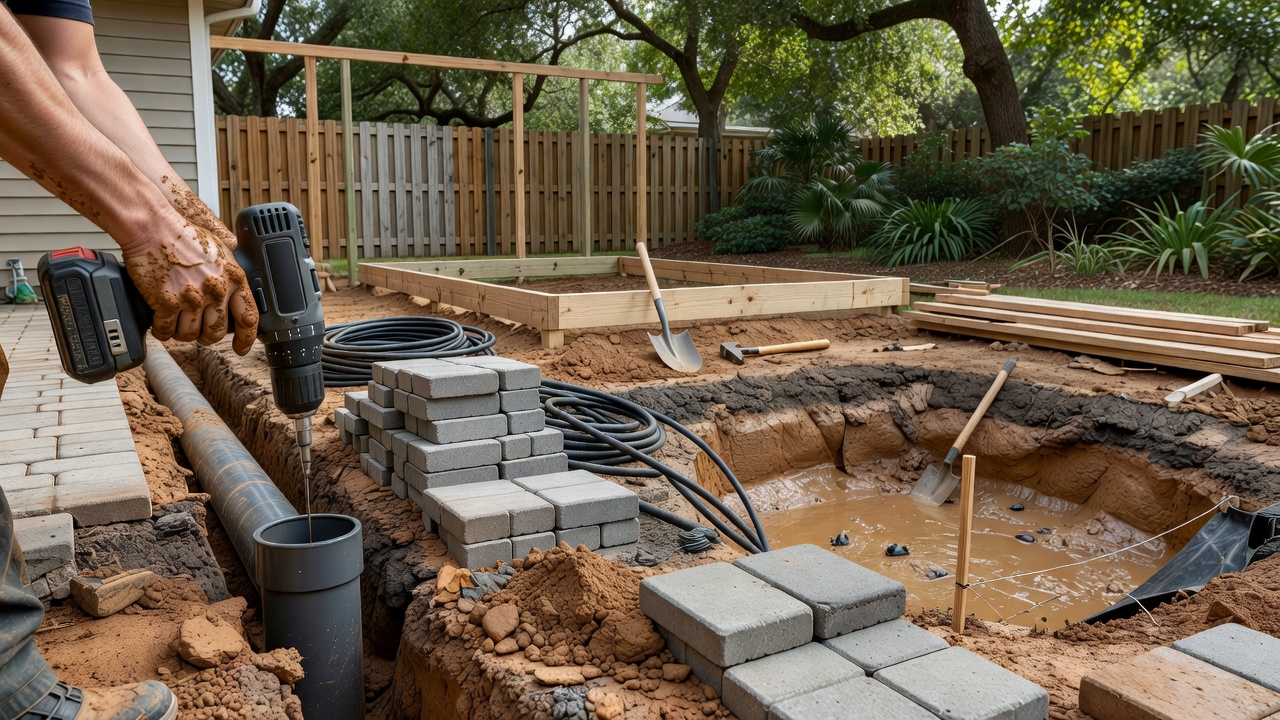
Clay Soil Drainage for Multiple Backyard Features in Houston
Clay soil drainage for multiple backyard features starts with testing your yard slope and soil type before any Paver Patio or Sprinkler System work. Greater Houston area homeowners face heavy clay that holds water and shifts, so drainage must come first for every project.
Run a clay-soil aware planning estimate first. This gives rough ranges and flags extra base prep or French drains needed in Cypress, Katy or Sugar Land. Planning estimate — not a quote. Always get multiple written bids from TDLR or TCEQ licensed pros who know your MUD or HOA rules.
Key takeaways
- Test drainage before adding Paver Patio, Sprinkler System, Fence, Pond or Gazebo features
- Clay requires 4–6 inches extra base in most yards
- MUD and HOA checks prevent rework
- Native Texas plants reduce irrigation load
- Sequence grading before hardscape to avoid rework costs
Check Your Yard Slope and Soil First
Walk your lot after rain and note standing water spots. Mark low areas near planned Paver Patio or Pond locations.
- Dig three test holes 12 inches deep
- Fill with water and time drainage
- Clay that holds water over 30 minutes needs added drains
- Note fence lines that may block flow
- Record sprinkler head zones that could flood
- Measure distance to street or ditch for outlet routing
- Photograph wet spots for permit applications
Use the same test results when you plan a Sprinkler System or Pond later. Local clay often needs amendment or raised beds near structures.
Drainage Rules for Paver Patio and Sprinkler System
Paver Patio and Sprinkler System share the same base problem in clay. Both need positive slope away from the house.
- Slope patio surface 1/8 inch per foot
- Install 4-inch perforated pipe along low edges
- Add 6 inches of crushed limestone base under pavers
- Route sprinkler valves to separate drain lines
- Avoid running heads into patio joints
- Compact base in 2-inch lifts to prevent settling
Do this
- Grade soil before laying base
- Use geotextile fabric under gravel
- Extend drains past fence lines
Not this
- Skip slope and hope for the best
- Place heads that spray onto pavers
- Connect everything to one line
See how Woodlands paver patio projects handle shared drainage at Woodlands Paver Patio vs Fence clay soil options. Follow EPA residential stormwater tips when routing water to public ditches.
Pond and Water Feature Drainage Steps
Ponds hold water by design, yet clay around them still needs an overflow route. Without it, water backs up into fences or sheds.
- Dig a 12-inch deep swale to the street or approved outlet
- Line the pond with bentonite or EPDM plus clay liner
- Add a 4-inch overflow pipe 2 inches below rim
- Plant native Texas plants on banks to slow runoff
- Check Cypress MUD rules before digging
- Install cleanouts every 20 feet on long runs
- Slope overflow at 1 percent minimum grade
Cypress pond clay soil drainage steps show the permit sequence most Houston yards follow. Review TCEQ construction stormwater requirements for any pond larger than 400 square feet.
Fence and Gazebo Drainage Considerations
Fences and gazebos block flow when posts sit in clay. Water ponds behind them during storms.
- Set posts on gravel bases with weep holes
- Slope ground 2 inches away from each post
- Leave 6-inch gaps at fence bottoms near low spots
- Route gutter downspouts past the structure
- Add French drain parallel to long fence runs
- Backfill post holes with 3 inches of gravel at bottom
Drainage Prep for Gazebo and Shed Additions
Gazebos and sheds add roof runoff that clay cannot absorb quickly. Plan extra swales or downspout extensions before pouring slabs.
- Position structures on the high side of the lot when possible
- Install 6-inch gutters with 4-inch leaders tied to French drains
- Raise shed floors 4 inches above grade on gravel pads
- Slope concrete aprons 1/4 inch per foot away from walls
- Add 10-foot splash blocks at each downspout
- Check Pearland HOA rules for shed setbacks from property lines
These steps keep water moving past the structure and reduce foundation heave common in Houston clay.
Compare Drainage Needs Across Features
| Feature | Extra Base Depth | Drain Pipe Needed | Permit Risk | Native Plants Help |
|---|---|---|---|---|
| Paver Patio | 6 inches | Yes | Medium | Low |
| Sprinkler System | 4 inches | Yes | Low | High |
| Pond | 8 inches | Yes | High | Medium |
| Fence Extension | 4 inches | Sometimes | Low | Low |
| Gazebo / Shed | 6 inches | Yes | Medium | Low |
Sequence Projects to Protect Drainage
Order matters when clay soil drainage for multiple backyard features is the goal. Start with grading and main drains, then add hardscape.
- Run planning estimate for full list of features
- Install main French drains and swales
- Build Paver Patio base
- Add Sprinkler System laterals
- Finish Pond and Fence
- Plant native Texas plants last
- Re-test drainage after first heavy rain
Decide project order for Houston clay yards before you break ground.
Use Planning Estimates to Compare Bids
Export the PDF with materials, labor and cutting lists. Compare line items against bids you receive.
- Check that every bid lists clay base prep
- Confirm MUD or HOA drainage notes appear
- Verify TDLR licensing on sprinkler or pond work
- Reject bids missing overflow routes
- Compare base depth and pipe size across three bids
- Note any line items for native plant beds
Compare local bids with planning estimates.
Native Texas Plants That Reduce Runoff
Choose plants that handle clay and cut irrigation needs.
- Turk's cap for shady wet spots
- Gulf muhly on slopes
- Black-eyed Susan in full sun
- Inland sea oats near ponds
- Frogfruit as ground cover
- Lindheimer muhly along fence lines
Plan native Texas plants with your sprinkler layout.
Conclusion
Test your clay, set drainage first, then layer features in the right order. Export a clay-soil aware planning estimate from Backyard Planner at https://backyardplanning.app and take it to three licensed local contractors for written bids.
FAQ
How much extra drainage cost does clay add to a paver patio?
Expect $3–$6 per square foot more for base and pipe work in greater Houston area yards.
Do I need a permit for a backyard pond in Cypress?
Yes. Most MUD districts require drainage plans and TDLR review before excavation.
Can native Texas plants fix poor drainage?
They reduce runoff but do not replace French drains or proper grading in heavy clay.
Should sprinklers and ponds share the same drain line?
No. Keep them separate to avoid valve damage and overflow issues.
What happens if I skip slope on a fence project?
Water collects behind posts, rots wood and may violate HOA rules in Pearland or Katy.