September 5, 2026
Pearland Pond Native Plants Planning Steps for Clay Soil
Plan your Pearland pond water feature with native Texas plants using clay-soil aware steps and 2026 rough planning ranges. Review MUD rules and drainage needs
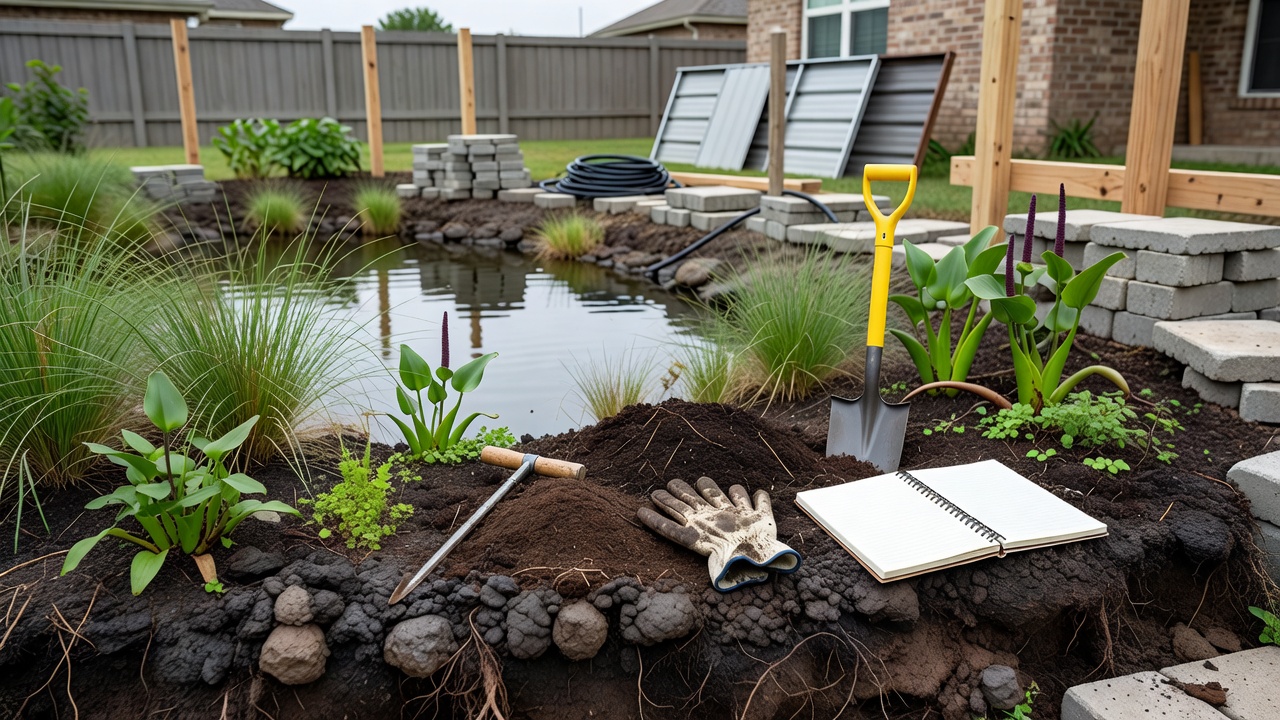
Pearland Pond Native Plants Planning Steps for Clay Soil
Start by mapping your Pearland yard drainage and clay soil before adding any pond water feature. Native Texas plants reduce long-term maintenance when you match them to local conditions.
This planning estimate — not a quote; always get multiple written local quotes. Backyard Planner gives rough ranges only for greater Houston area projects.
Key Planning Takeaways Before You Begin
- Clay soil prep and drainage tests come first
- Native Texas plants cut future maintenance
- MUD and HOA checks prevent costly changes
- 2026 ranges stay rough until bids arrive
- Always confirm TDLR licensing on any crew
Check Pearland MUD and HOA Rules First
Contact your local MUD office early. Many Pearland neighborhoods require permits for water features that alter drainage.
- Confirm pond size limits
- Verify electrical rules for pumps
- Note setback distances from property lines
- Ask about native plant preferences
- Record approval timelines
- Request written variance procedures if needed
Review similar projects in Sprinkler System vs Pond in Pearland Clay Soil Yards to see how MUD rules affect both options.
Test Clay Soil Drainage on Your Site
Clay soil holds water but drains poorly. Dig test holes at the planned pond location.
- Dig three holes 12 inches deep
- Fill each with water and time the drain rate
- Record results over 24 hours
- Note any standing water after rain
- Mark high and low spots on a simple sketch
- Repeat after a heavy storm if possible
Poor drainage means extra base work or a raised pond design.
Select Native Texas Plants That Fit Pearland Conditions
Choose plants that handle clay and periodic flooding. These species support local wildlife without constant irrigation.
- Pickerelweed for shallow edges
- Blue flag iris in wet zones
- Gulf muhly on drier banks
- Cardinal flower in partial shade
- Texas star hibiscus near water
- Inland sea oats for ground cover
- Switchgrass for erosion control on slopes
Match plant zones to your drainage test results.
Design Overflow and Liner Protection for Clay Soil Yards
Pearland storms drop heavy rain quickly. Clay soil amplifies runoff, so overflow planning prevents liner damage and neighbor complaints.
- Calculate overflow pipe size for 2-inch hourly rain events
- Route discharge to a French drain or street
- Install a 6-inch gravel collar around the liner edge
- Add a pre-filter basket at the pump intake
- Slope the surrounding grade 1 inch per foot away from the pond
- Test the overflow during a simulated fill
See Pond Water Feature vs Gazebo Shed Houston Clay Soil for trade-offs on drainage integration.
Compare 2026 Rough Planning Ranges
Pond water features in Pearland run $4,500–$18,000 depending on size and liner type. Clay soil prep adds 15–25% to base costs.
| Feature Size | Basic Range | Clay Soil Add-on | Native Plants | Notes |
|---|---|---|---|---|
| 100 sq ft | $4,500–$7,000 | +$800–$1,500 | $300–$600 | Small edge planting |
| 250 sq ft | $8,000–$12,000 | +$1,500–$3,000 | $600–$1,200 | Includes pump and filter |
| 400 sq ft | $13,000–$18,000 | +$2,500–$4,500 | $900–$1,800 | Larger drainage work |
These are planning estimates — not quotes.
Follow Clay-Soil-Aware Installation Steps
Work in order to avoid rework on heavy clay.
- Mark final outline with spray paint
- Excavate to planned depth plus 6 inches
- Add 4 inches of crushed limestone base
- Compact in two layers
- Install liner and underlayment
- Place edging stones or pavers
- Backfill with amended soil around edges
- Plant natives in wet and dry zones
- Test pump and overflow before filling
- Add a 3-inch layer of river rock in high-flow areas
See Sugar Land Pond Water Feature Clay Soil Drainage Steps 2026 for similar drainage details.
Avoid Common Pearland Pond Mistakes
- Skipping soil tests before digging
- Using non-native plants that need extra water
- Ignoring MUD electrical permits
- Placing the pond in a low spot without overflow
- Under-sizing the pump for clay runoff
- Forgetting seasonal algae control in full sun
Fix drainage first or the feature will silt up quickly.
Review TDLR and TCEQ Licensing Notes
Hire only TDLR-licensed irrigators for any connected systems. Check TCEQ water rights page for larger ponds that may need registration. Also consult the Lady Bird Johnson Wildflower Center plant database when finalizing your native list and the Texas Parks & Wildlife native aquatic plants guide for regional suitability.
Next Steps After Planning
- Export the PDF checklist from Backyard Planner
- Gather three written bids from licensed local crews
- Confirm final MUD approval in writing
- Schedule soil amendment delivery before excavation
- Re-test drainage after any major rain before final planting
Run the numbers for your exact address at https://backyardplanning.app before calling contractors.
FAQ
How deep should a Pearland pond be for native plants?
Keep the main basin 18–24 inches deep with shallow shelves at 6–12 inches for edge plants. Clay soil needs extra base material under the liner.
Do I need a permit for a small pond in Pearland?
Most MUDs require permits once the feature exceeds 100 square feet or includes electrical pumps. Check your specific neighborhood rules first.
Which native plants handle Pearland clay best?
Pickerelweed, blue flag iris, and Gulf muhly tolerate heavy clay and seasonal wet-dry cycles common in the greater Houston area.
How much extra does clay soil prep add to pond costs?
Expect 15–25% more for base work and drainage adjustments compared to sandy sites. Always treat these as planning estimates.
Can I link a pond to my existing sprinkler system?
Yes, but only with TDLR-licensed work and proper backflow prevention. Compare options in the Pearland sprinkler-versus-pond guide first.