September 8, 2026
Paver Patio vs Fence Extension Houston Clay Soil
Compare paver patio vs fence extension Houston options with clay soil drainage in mind. Get 2026 rough planning ranges, MUD and HOA checks, and clay-soil awar
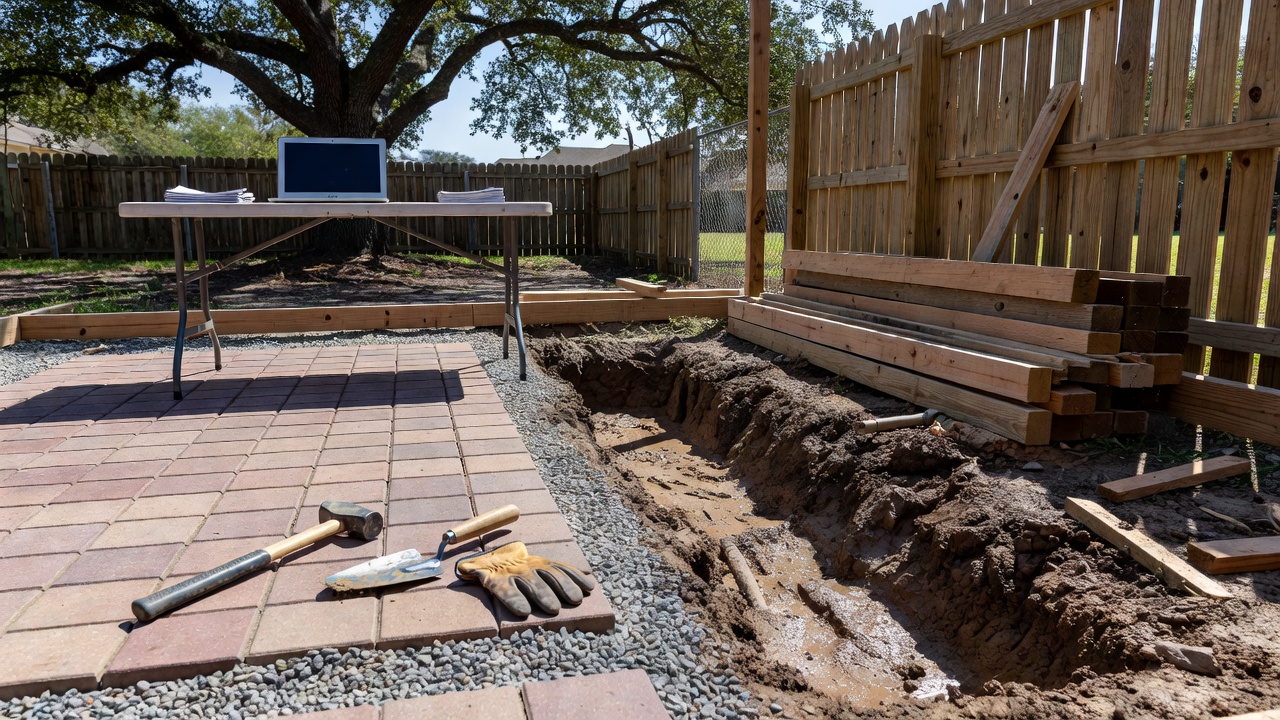
Paver Patio vs Fence Extension Houston Clay Soil
Deciding between a paver patio and fence extension in the greater Houston area starts with clay soil drainage. Backyard Planner delivers rough planning ranges, not quotes, so you can compare both projects against your yard's realities.
Clay soil in Cypress, Katy, and Sugar Land demands extra base prep and water management on every project. Run the numbers first, then gather multiple written bids from licensed pros.
Key takeaways
- Clay soil adds base depth and drainage work to both projects
- Paver patios need 4-6 inches of compacted gravel plus sand
- Fence extensions focus on post stability in wet clay
- Always verify MUD and HOA rules before digging
- Export a planning estimate with materials lists for your neighborhood
- Test soil moisture levels before excavation begins
- Factor in seasonal rain patterns that affect clay expansion
- Compare access routes for equipment on narrow lots
Check Local Permits and HOA Rules
Start with your MUD or HOA before choosing either option. Most greater Houston area neighborhoods require permits for both paver patios and fence extensions.
- Review property lines and setback distances
- Confirm TDLR licensing needs for any related irrigation work
- Submit drainage plans if your lot slopes toward neighbors
- Check material color or height restrictions in HOA documents
- Gather neighbor notifications if required by local ordinance
- Schedule pre-construction site visits with inspectors
Houston Permitting Center lists current requirements by address. Do the same check for your specific MUD district. Cross-reference with TCEQ stormwater guidelines for drainage compliance steps that apply across the region.
Clay Soil Drainage Realities
Greater Houston clay holds water and expands. Both projects must address this or water will pool and shift materials.
- Paver patios require a sloped base and edge drains
- Fence posts need deeper holes with gravel backfill
- Add French drains if your yard already floods after rain
- Native Texas plants around either project improve long-term drainage
- Monitor soil heave during wet winters and dry summers
- Install moisture barriers along shared property lines
Review clay soil properties from the Texas A&M AgriLife Extension. See how Paver Patio Costs Sugar Land 2026 Clay Soil Prep handles base prep details for similar lots.
Cost Planning Ranges for Greater Houston Area
Use these 2026 rough planning ranges as starting points only. Actual bids vary by lot size, access, and soil conditions.
| Aspect | Paver Patio | Fence Extension |
|---|---|---|
| Soil prep depth | 6-8 inches gravel + sand | 24-36 inch post holes |
| Drainage add-on | Edge drains and slope | Gravel backfill and weep holes |
| Typical range | $12-$28 per sq ft | $18-$35 per linear ft |
| Permit notes | MUD drainage review | HOA height and material check |
| Equipment access | Skid steer needed on most lots | Hand tools or small auger sufficient |
| Timeline impact | 3-5 days for base alone | 1-2 days per 50 linear feet |
These figures come from public 2026 data adjusted for local clay. They remain planning estimates — not a quote. Factor in potential overtime for rain delays common in spring.
Paver Patio Clay Soil Prep Steps
Follow this sequence when your lot has heavy clay.
- Test soil compaction with a simple probe
- Excavate to required depth plus 2 inches for slope
- Install geotextile fabric before gravel
- Compact gravel in 2-inch lifts
- Add 1 inch of leveling sand last
- Verify final slope with a laser level before paver placement
Export the full materials list from Backyard Planner before ordering. Add extra gravel if your lot sits in a low-lying Cypress or Pearland neighborhood prone to standing water.
Fence Extension Drainage Checks
Fence work in clay focuses on post longevity.
- Dig holes 6 inches wider than posts
- Place 4 inches of gravel at the bottom of each hole
- Set posts on gravel and backfill with concrete mix plus clay
- Slope soil away from the fence line
- Add weep holes every 8 feet if water stands nearby
- Treat post bases with sealant rated for wet clay exposure
Review the steps in Katy Fence Extension Clay Soil MUD Checks 2026 for MUD-specific notes.
Slope and Water Flow Assessment
Measure your yard's natural slope before selecting either project. Clay soil amplifies small drainage problems into larger issues.
- Walk the lot after heavy rain and note pooling spots
- Use a string level to check fall from house to property line
- Mark low areas that may need regrading
- Plan swales or catch basins if slope is under 2 percent
- Coordinate with neighbors on shared drainage paths
- Document findings with photos for permit submissions
This assessment often reveals whether a paver patio's larger surface or a fence extension's linear footprint creates fewer long-term headaches.
When to Choose Paver Patio Over Fence Extension
Pick the patio when you need usable outdoor space and already have boundary fencing. Choose the fence extension when privacy or pet containment is the main goal and the existing fence is sound.
- Patio wins on entertaining value
- Fence extension costs less per linear foot
- Both need clay drainage work
- Combine them later if budget allows phased work
- Evaluate sun exposure for patio comfort in summer heat
Compare similar decisions in Fence Extension vs Gazebo Shed Houston Clay Soil 2026.
Common Mistakes in Houston Yards
Avoid these errors reported by local homeowners.
- Skipping the MUD drainage review
- Using thin gravel base under pavers
- Setting fence posts without gravel drainage
- Ignoring HOA color rules on either project
- Assuming national averages apply to clay soil here
- Underestimating equipment access on fenced lots
- Neglecting post-season soil settlement checks
Export Your Planning Estimate
Backyard Planner builds a PDF with materials, labor breakdowns, and permit reminders tailored to your address. It stays a planning estimate — not a quote. Always get multiple written local quotes from TDLR-licensed contractors.
Start Your Comparison Today
Run both scenarios for your lot in Backyard Planner. Adjust the clay soil prep toggles, add your MUD notes, then export the PDF. Take that document to three licensed pros for written bids. This sequence keeps decisions grounded in your actual yard conditions.
Next steps
- Enter your address and project sizes
- Toggle clay soil drainage options
- Review MUD and HOA checklist items
- Export PDF and compare against real bids
- Schedule soil tests during dry periods
- Photograph current drainage patterns after next rain
FAQ
How much extra does clay soil add to either project?
Expect 15-25% more base work and drainage materials compared with sandy soils. The exact amount depends on your lot's slope and existing drainage.
Do both projects need MUD approval?
Most greater Houston area MUDs require drainage review for patios and any fence work that changes grade. Check your district rules before ordering materials.
Can I combine a paver patio with a fence extension?
Yes. Many homeowners phase the work. Start with the fence for privacy, then add the patio once drainage patterns are confirmed.
What TDLR rules apply here?
TDLR licensing covers any irrigation changes. Fence or patio work alone usually does not, but related sprinkler adjustments do.
Where do I find 2026 cost data?
Public 2026 data from local suppliers and permit offices feeds the rough planning ranges in Backyard Planner. These remain estimates only.