September 2, 2026
Fence Extension vs Gazebo Shed Houston Clay Soil 2026
Compare fence extension vs gazebo shed options in greater Houston area clay soil. Review 2026 rough planning ranges, drainage steps, MUD rules, and clay-soil
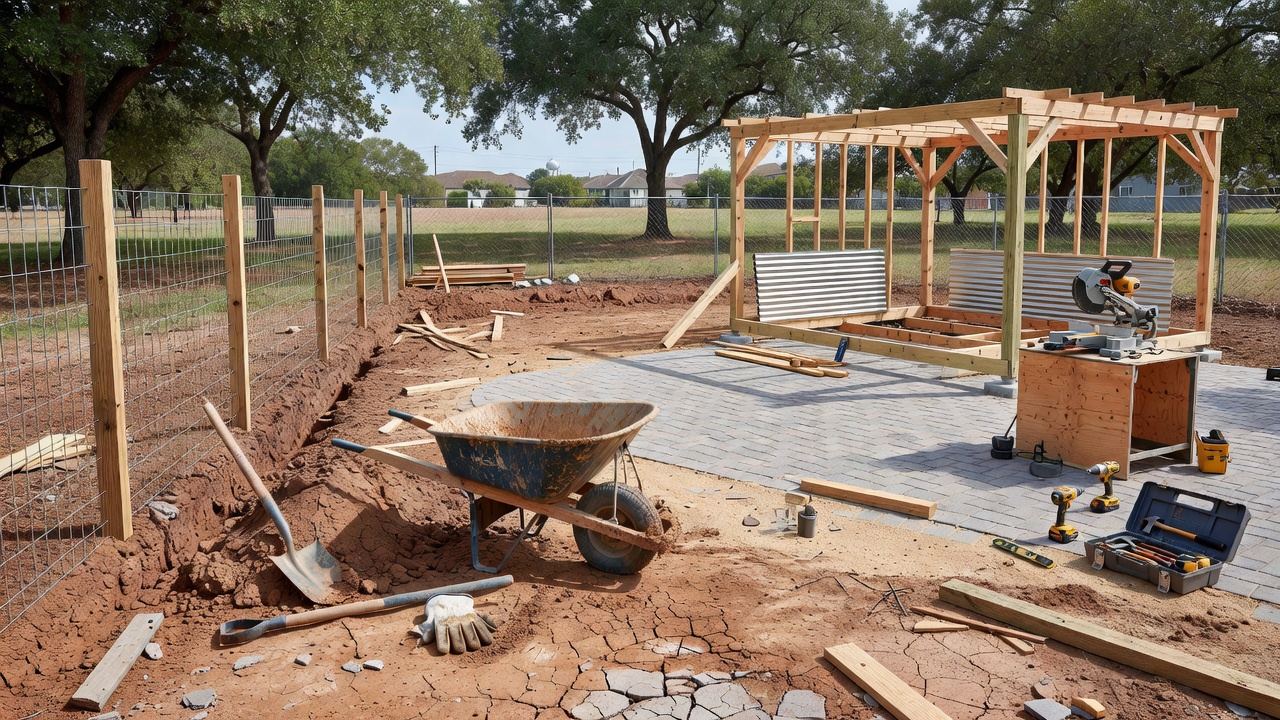
Fence Extension vs Gazebo Shed in Greater Houston Clay Soil
Start with your clay soil before choosing between a fence extension and a gazebo shed. Greater Houston yards need extra base prep and drainage work that raises costs and time. Backyard Planner delivers 2026 rough planning ranges tuned for local conditions.
Key takeaways
- Clay soil demands deeper bases and French drains on both projects.
- MUD and HOA rules often block fence extensions more than sheds.
- 2026 ranges start at $25 per linear foot for fences and $8,000 for basic sheds.
- Always treat these numbers as a planning estimate — not a quote; always get multiple written local quotes.
Run Clay Soil Checks Before Any Decision
Test your soil drainage first. Clay holds water and shifts, so both fence posts and shed foundations fail without extra gravel and compaction. Homeowners in Cypress and Katy routinely discover that skipping this step leads to leaning posts within two seasons.
- Dig three test holes 12 inches deep in different yard spots.
- Fill each with water and time how long it drains.
- Note any standing water after 30 minutes.
- Add 4 inches of crushed limestone base where water lingers.
- Slope final grade 1 inch per foot away from structures.
- Record soil color and texture at each depth for your permit file.
- Repeat tests after heavy rain to confirm seasonal behavior.
These steps appear in every clay-soil aware plan for the greater Houston area. Review USDA soil drainage guidance for national clay soil benchmarks that match local conditions.
Review HOA and MUD Rules Early
Check your deed restrictions and MUD district before drawing plans. Many neighborhoods limit fence height or ban sheds in side yards. Katy and Pearland MUDs often require separate drainage plans even for small additions.
- Call your MUD office for current permit lists.
- Read HOA covenants on structure setbacks.
- Confirm TDLR licensing for any irrigation tie-ins.
- Document every approval in writing.
- Skip work until you hold signed permits.
- Submit revised drawings if the first plan is rejected.
Plan your Katy fence extension clay soil project with MUD checks before ordering materials.
2026 Cost Ranges for Fence Extensions
Fence extensions in clay soil run higher than flat-ground jobs because of post depth and drainage. Wood fences need pressure-treated posts sunk below the active clay zone, while vinyl requires extra bracing.
- Basic 6-foot wood extension: $25–$40 per linear foot.
- Vinyl with extra base: $35–$55 per linear foot.
- Steel posts in clay: add $8 per post.
- Drainage trench along new fence: $1,200–$2,400 per 50 feet.
- Permit and inspection fees: $150–$400.
- Post concrete collars: $75 per post in shifting clay.
These figures come from public 2026 data for Cypress, Katy, and Sugar Land yards.
2026 Cost Ranges for Gazebo Sheds
Gazebo sheds need a stable pad and roof drainage that clay soil complicates. Larger models require engineered footings once the pad exceeds 150 square feet.
- 10x12 wood shed with gravel pad: $8,000–$14,000.
- Larger 12x16 model with concrete: $16,000–$24,000.
- Extra clay-soil base prep: $1,800–$3,200.
- Gutter and French drain system: $900–$1,800.
- Electrical run for lighting: $600–$1,200.
- Roof tie-downs for wind: $400–$700.
Review gazebo shed drainage steps for Cypress clay soil to adjust these ranges for your lot.
Drainage Steps Required for Both Projects
Clay soil forces the same core drainage moves on fences and sheds. Standing water expands the clay and lifts footings, so every project needs a continuous outlet path.
- Install 4-inch perforated pipe at lowest point.
- Wrap pipe in filter fabric before backfill.
- Direct outlet to street or approved swale.
- Compact base in 6-inch lifts.
- Top with 2 inches of decomposed granite for shed pads.
- Install cleanouts every 50 feet for future maintenance.
Skip any step and water pools against posts or foundations within one season.
Permit and Licensing Requirements
Greater Houston projects trigger multiple checks. TDLR oversees irrigation and certain structural licenses while MUD districts control drainage discharge.
- Submit site plan to your MUD or city permitting office.
- Verify contractor holds current TDLR or TCEQ license.
- Schedule pre-pour inspection for concrete pads.
- Record final drainage as-built drawing.
- Keep copies for HOA compliance files.
- Re-inspect after first heavy rain season.
Check Pearland fence extension drainage requirements for district-specific forms. Confirm current TDLR licensing rules.
Material Choices for Clay Soil Durability
Select materials that resist moisture and movement common in Houston clay. Pressure-treated lumber rated for ground contact lasts longer than standard pine when posts sit in wet clay.
- Choose galvanized or stainless fasteners to prevent rust.
- Use composite decking on shed floors instead of plywood.
- Specify Class 3 or better vinyl for fence panels in high-wind zones.
- Add root barriers along fence lines near existing trees.
- Seal all cut ends of pressure-treated wood before installation.
- Plan for annual inspections of post collars and shed footings.
These choices reduce replacement frequency by five to seven years in local conditions.
Side-by-Side Comparison
| Factor | Fence Extension | Gazebo Shed |
|---|---|---|
| Clay soil prep cost | $1,200–$2,400 per 50 ft | $1,800–$3,200 for pad |
| Typical HOA pushback | High on height and material | Medium on setbacks |
| Drainage add-on | Trench along line | Full French drain loop |
| Permit timeline | 2–4 weeks | 3–6 weeks |
| Maintenance impact | Annual staining or painting | Roof and gutter cleaning |
| Expected lifespan | 12–18 years with proper base | 15–25 years with sealed pad |
Decide Based on Your Yard Use
Match the project to how you actually use the space. A fence extension adds privacy or pet area. A gazebo shed gives storage and shade. Measure daily sun exposure and list items that need cover versus open air.
- Measure daily sun on the target zone.
- List items that need cover versus open air.
- Walk the lot line with a tape to confirm setbacks.
- Price both options with the same three licensed local builders.
- Choose the lower total after drainage and permit costs.
- Factor in future tree growth that may affect either structure.
Compare similar decisions in Houston clay soil to see how drainage affects other backyard choices.
Next Steps
- Run the clay soil test holes this weekend.
- Pull your MUD and HOA documents today.
- Export a planning estimate from Backyard Planner with materials and permit notes.
- Schedule three on-site visits with licensed contractors.
- Compare written bids that include clay-soil base and drainage line items.
- Revisit the lot after a rain event to confirm drainage paths.
FAQ
How deep do fence posts need to go in Houston clay?
Set posts 30–36 inches with 6 inches of gravel at the base. Add a concrete collar only after drainage pipe is in place.
Do gazebo sheds require a concrete pad in MUD districts?
Most MUDs accept a compacted gravel pad with proper edging. Confirm with your district before pouring concrete.
Which project faces more HOA restrictions?
Fence extensions usually hit height and material limits first. Sheds face setback rules more often.
Can I tie new drainage into my existing sprinkler system?
No. Keep irrigation and storm drainage separate. Check Cypress sprinkler system clay soil steps for correct separation methods.
What happens if I skip the drainage trench?
Water pools against posts and foundations. Clay expansion cracks concrete and rots wood within two years.