August 29, 2026
Woodlands Shed Planning Steps for Clay Soil 2026
Woodlands shed planning starts with clay soil prep and drainage checks. Get 2026 rough planning ranges, MUD permit notes, and clay-soil aware steps before you
Woodlands Shed Planning Steps for Clay Soil 2026
Woodlands shed planning begins with clay soil realities. You must address drainage and base prep before any structure goes in the ground. This article gives practical steps tuned to local conditions.
Run the numbers first with a planning estimate — not a quote. Export details from Backyard Planner then compare against bids from licensed contractors who know your MUD or HOA rules.
Clay Soil Challenges in Woodlands Yards
Clay holds water and expands. That movement cracks foundations unless you add extra base depth and drainage. Woodlands lots often sit on heavy Houston clay that swells after rain and shrinks in dry spells, shifting footings over time.
- Check your lot slope before layout
- Test soil drainage with a simple hole test
- Plan for 6–12 inches of compacted base minimum
- Factor seasonal rain events common in greater Houston area
- Measure shrink-swell potential with a basic jar test
- Note nearby trees that pull moisture from clay
Do this first. Skip it and you risk settling sheds or ponding water against the structure. Local builders report that ignoring expansion leads to door misalignment within two seasons.
Drainage Prep Steps for Shed Foundations
Drainage comes before footings. Clay soil demands these exact actions. Start by observing water flow after a heavy rain to map problem spots.
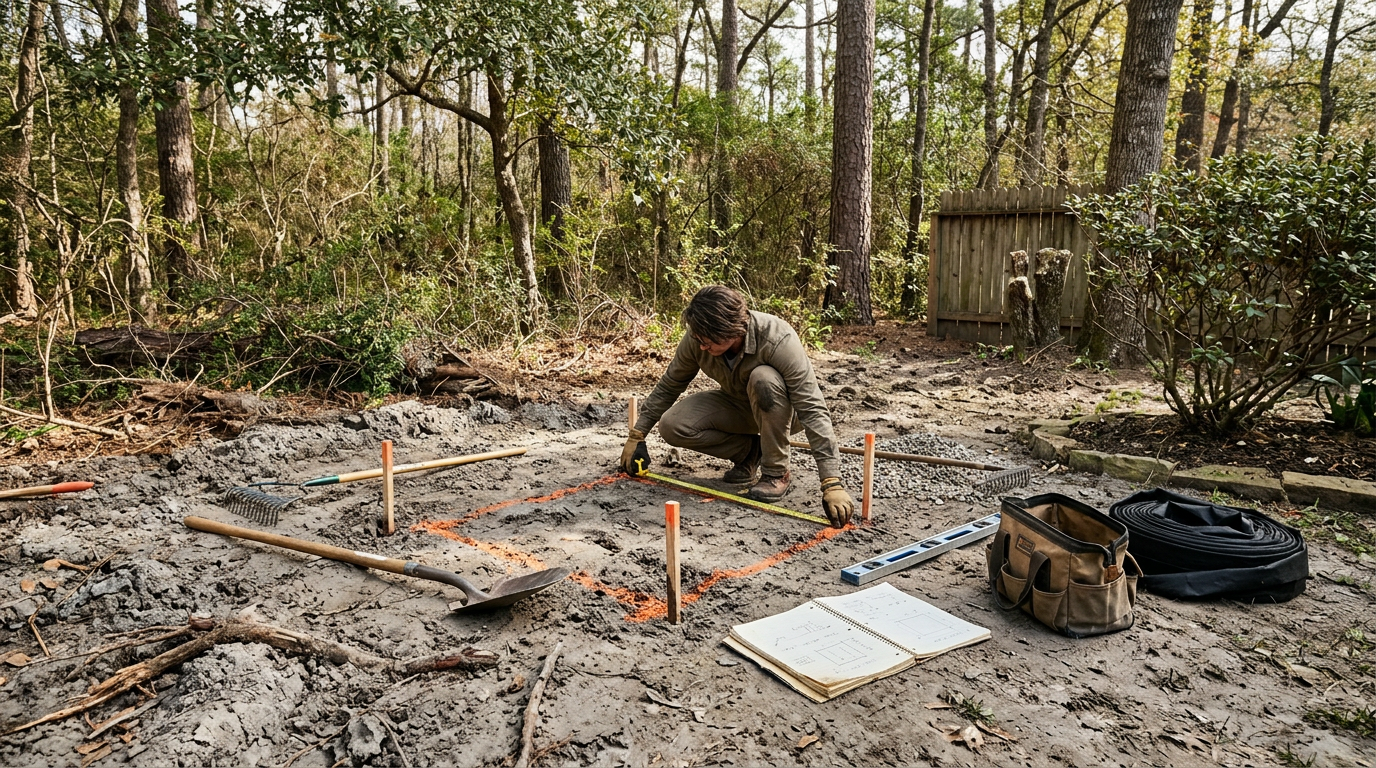
- Mark the footprint and dig test holes at corners
- Install French drains or swales if water pools
- Add geotextile fabric under the base layer
- Compact gravel in lifts no thicker than 4 inches
- Slope final grade away from the shed at 2 percent minimum
- Connect downspouts to daylight or dry wells
These steps repeat across Woodlands projects because clay does not drain fast. Follow Texas A&M AgriLife Extension clay soil guidance for region-specific compaction tips that match greater Houston area conditions.
Site Layout and Slope Calculations
Accurate layout prevents future drainage conflicts with neighbors. Measure twice and mark utilities before any digging.
- Establish finished floor height 6 inches above grade
- Calculate roof runoff direction away from house
- Allow 3-foot buffer for maintenance access
- Align doors with existing paths to avoid new concrete
- Verify no low spots form behind the shed
Poor slope planning forces expensive re-grading later. Walk the yard during rain to confirm your numbers.
2026 Planning Ranges for Gazebo / Shed Projects
Public 2026 data shows rough planning ranges for greater Houston area sheds on clay soil. Expect $35–$85 per square foot installed depending on size and finishes.
- Small 8x10 shed: $2,800–$6,800 total
- Medium 10x12 with doors: $4,200–$10,200 total
- Larger 12x16 with windows: $6,700–$16,300 total
Add 15–25 percent for extra clay soil prep and drainage. These are planning estimates — not a quote. Factor in rising lumber and gravel prices reported for 2026.
Permit and MUD Notes for Woodlands
Woodlands requires permits for most sheds over 120 square feet. Check your specific MUD first. Electrical or plumbing additions trigger extra reviews.
- Verify TDLR licensing for any electrical or plumbing tie-ins
- Submit site plans showing drainage paths
- Confirm HOA setbacks and material rules
- Obtain MUD approval before breaking ground
Handle Woodlands gazebo shed MUD permits in 2026 with clay-soil aware steps. Never assume county rules cover your neighborhood. Review current Texas Department of Licensing and Regulation requirements for contractor licensing before signing any agreement.
Choosing Native Plants Around Your Shed
Native Texas plants reduce irrigation needs and help manage runoff on clay. They establish faster than imports and resist local pests.
- Muhly grass for borders that tolerate wet feet
- Black-eyed Susan for sunny edges
- Texas lantana for low-water color
- Yaupon holly for evergreen screening
Place plants 3 feet from the foundation to avoid root damage to drainage lines. Consult the Lady Bird Johnson Wildflower Center native plant database for Woodlands-specific cultivars that thrive in heavy clay.
Materials and Labor Breakdowns
Break costs into categories so you can adjust scope.
| Category | Clay Soil Add-on | Standard Base Cost | Notes for Woodlands |
|---|---|---|---|
| Base gravel | +$1.50 per sq ft | $0.80 per sq ft | Extra depth required |
| Drainage pipe | +$450–$900 per run | $0 | French drain typical |
| Labor | +15 percent | Base rate | Slower compaction work |
| Permits | $150–$400 | $100–$250 | MUD review fees |
Use these ranges only as a starting point for your own bids. Gravel prices fluctuate with local quarry output, so confirm current rates.
Common Mistakes to Avoid
Homeowners repeat the same errors on clay lots.
- Skipping the percolation test
- Using only sand under pavers or sheds
- Ignoring neighbor drainage flow
- Starting without MUD sign-off
- Planting non-native grass that needs constant water
- Underestimating expansion joint needs
Fix these early or pay for repairs later. Many Woodlands projects require re-work because owners rushed the base layer.
Long-Term Maintenance on Clay Soil Sites
Clay continues to move after construction. Schedule annual checks to catch issues early.
- Inspect foundation edges each spring for cracks
- Clear French drains of debris after leaf fall
- Re-grade low spots that collect water
- Monitor native plant zones for erosion
- Re-seal wood sheds every two years in humid conditions
These habits keep repair costs low compared with reactive fixes. Track changes in a simple notebook tied to your export from the planner tool.
Key Takeaways
- Clay soil prep adds cost and time in Woodlands
- Drainage must slope away from the structure
- Always pull permits through your MUD and HOA
- Native plants lower long-term maintenance
- Compare multiple written bids after you export your planning estimate
Next Steps
- Run your specific lot through Backyard Planner for a customized export
- Review Pond Water Feature Woodlands clay soil drainage planning for related water management ideas
- Check Cypress fence extension 2026 clay soil ranges to see how fence rules compare
- Gather three written quotes from TDLR-licensed pros
- Submit plans to your MUD before ordering materials
FAQ
How deep should the base go for a shed on Woodlands clay soil?
Plan for at least 8–12 inches of compacted gravel plus fabric. Test your actual drainage first.
Do I need a permit for a small shed in The Woodlands?
Most sheds over 120 square feet require permits. Confirm with your MUD and HOA before you start.
What native plants work best around sheds in greater Houston area?
Muhly grass, black-eyed Susan, Texas lantana, and yaupon holly handle clay and local rainfall well.
How much extra does clay soil prep add to 2026 shed costs?
Expect 15–25 percent more for base and drainage compared with standard soil. These remain planning estimates — not a quote.
Can I skip MUD approval for a backyard shed?
No. Most Woodlands MUDs require review for any structure that affects drainage or setbacks.