October 16, 2026
Pearland Sprinkler Clay Soil Prep Planning 2026
Pearland sprinkler clay soil prep requires extra base work and drainage checks in 2026. Run clay-soil aware planning estimates for your greater Houston area y
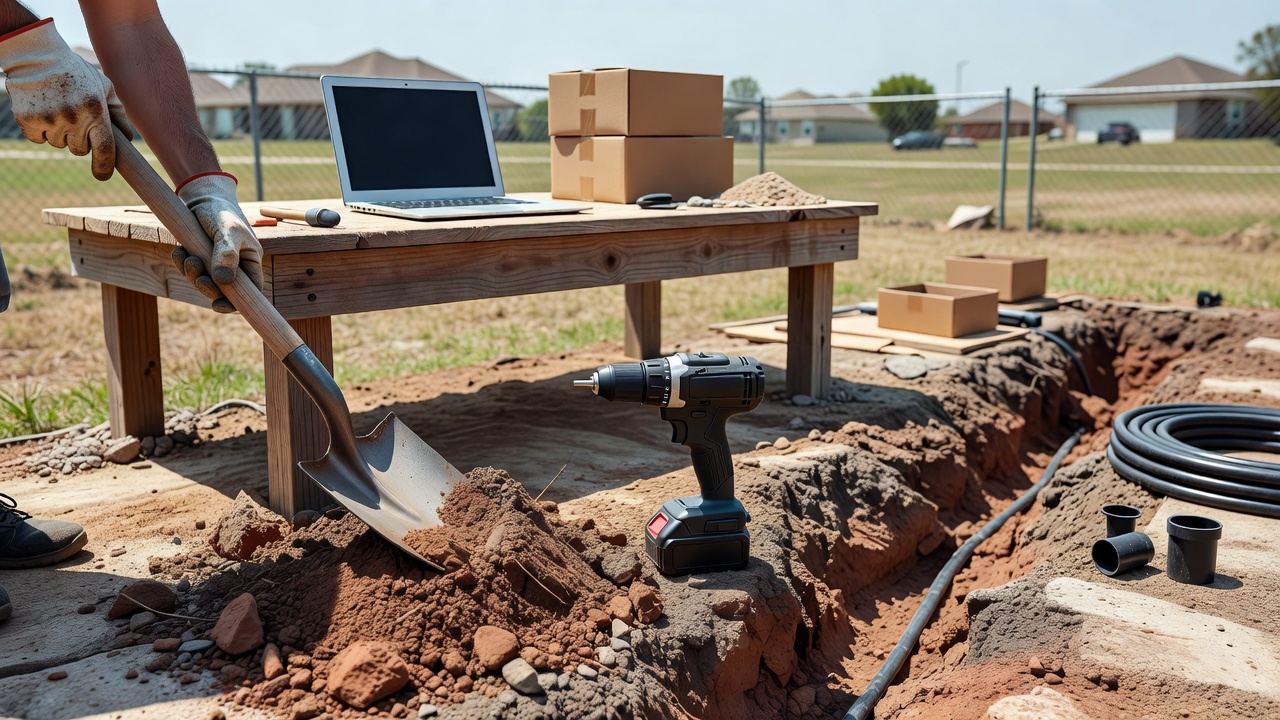
Pearland Sprinkler Clay Soil Prep Planning 2026
Pearland sprinkler clay soil prep starts with the heavy clay under most yards. You must add deeper base layers and plan drainage routes before any pipe goes in.
Backyard Planner gives 2026 rough planning ranges tuned to local soil and MUD rules. These numbers are planning estimates — not a quote; always get multiple written local quotes.
Key takeaways
- Clay holds water and shifts, so base depth matters more than pipe type.
- Test soil and slope before buying parts.
- Check Pearland MUD or HOA rules early.
- Native Texas plants reduce long-term water use.
- Extra gravel lifts prevent future settling in local yards.
Check Local Pearland Rules First
Contact your MUD or HOA before you dig. Many require drawings that show drainage away from foundations.
- Verify lot elevation against street drains.
- Confirm TDLR licensed irrigator rules apply.
- Note any shared drainage easements.
- Review recent subdivision changes that affect runoff.
- Ask about required setbacks from property lines.
Run the numbers with Backyard Planner to see clay-soil aware ranges for your address.
Soil Test Steps for Clay Yards
Dig three test holes at least 12 inches deep in different zones. Record how fast water drains after you fill each hole.
- Note standing water after 30 minutes.
- Measure clay depth with a soil probe.
- Mark low spots that collect runoff.
- Photograph each hole for your records.
- Send samples to a local lab for compaction data.
- Compare results against typical Pearland clay profiles.
Texas A&M AgriLife offers free guidance on interpreting these tests for irrigation work. See their resources on managing clay soils in Texas.
Drainage Steps Before Pipe Install
Clay soil drains slowly, so every sprinkler zone needs a clear exit path for excess water.
- Slope laterals 1 percent toward the street.
- Add French drains along fence lines where water pools.
- Use pop-up emitters at low points.
- Separate irrigation valves from storm drains.
- Install check valves on every head to stop backflow.
- Route excess water to approved outfalls only.
See how other Houston yards handle the same issue in this clay soil drainage guide.
2026 Planning Ranges for Pearland
Use these rough ranges only to compare bids. Prices reflect extra base prep clay demands.
| Component | Low End | High End | Notes |
|---|---|---|---|
| Base gravel and fabric | $1.80/sq ft | $3.20/sq ft | Deeper lifts needed in clay |
| Pipe and heads | $2.10/sq ft | $4.50/sq ft | Rotor zones cost more |
| Drainage add-ons | $800 | $2,400 | French drain or swale |
| Permit and inspection | $150 | $450 | MUD review fees |
| Native plant integration | $300 | $900 | Zone adjustments for drought zones |
Permit and Licensing Checklist
Pearland requires licensed irrigators on every job. Keep these items ready before you call contractors.
- TDLR license number for the installer.
- Site plan showing backflow preventer location.
- Drainage plan that meets MUD slope rules.
- HOA approval letter if required.
- Soil test summary.
- Proof of insurance from the crew.
Compare your plan with a Katy sprinkler clay soil example.
Zone Layout and Head Placement in Clay
Clay expands when wet and cracks when dry, so head spacing must account for movement. Place rotors farther apart than in sandy soils.
- Start layout at the highest point and work downhill.
- Keep heads 6 inches from hardscape edges.
- Use swing joints on every riser to absorb shifts.
- Group heads by sun exposure to match native plant zones.
- Avoid placing valves in known low spots.
- Test spray patterns after base compaction.
Lady Bird Johnson Wildflower Center provides native plant recommendations that pair well with these layouts in greater Houston area clay.
Native Plants to Pair with Sprinklers
Native Texas plants cut water use by 30-50 percent once established. Place them in zones with lower pressure heads.
- Blackfoot daisy along borders.
- Gulf muhly in sunny strips.
- Cedar sage under trees.
- Lindheimer muhly near fences.
- Texas lantana in full sun beds.
- Mealy sage for shaded transitions.
Common Mistakes to Avoid
Do this instead of common shortcuts that fail in clay.
- Do: Add 4-6 inches of gravel base under every zone.
- Not this: Lay pipe directly on native clay.
- Do: Slope every lateral line toward an outlet.
- Not this: Let heads drain into the same trench.
- Do: Use swing joints on every head.
- Not this: Glue heads rigid to risers.
- Do: Verify drainage after first heavy rain.
- Not this: Assume the system will self-correct.
Next Steps After You Plan
Export the PDF from Backyard Planner with your materials list and permit notes. Then collect at least three written bids from TDLR licensed pros who know Pearland MUD rules.
- Compare base depth and drainage items line by line.
- Ask each bidder how they handle clay expansion.
- Verify the plan still meets HOA drainage rules.
- Schedule soil work only after permits clear.
- Re-test drainage after base installation.
- Adjust head spacing if native plants change zone sizes.
Sprinkler versus fence trade-offs can help you decide order of work.
FAQ
How deep should the gravel base go under Pearland sprinkler zones?
Most clay yards need at least 4 inches of compacted gravel plus fabric. Some low spots require 6 inches.
Do I need a separate drainage permit for a sprinkler system?
Pearland MUDs often require a drainage sketch even for irrigation. Check before any trenching starts.
Can native plants replace part of the sprinkler system?
Yes. Zones planted with native Texas plants can run on half the water once roots establish.
What happens if I skip the soil test?
Clay pockets can shift pipe and create low spots that flood. A quick test prevents later repairs.
Who must install the backflow preventer?
Only a TDLR licensed irrigator can install and test the device under current rules.