August 29, 2026
Woodlands Fence Extension 2026 Ranges for Clay Soil
Get 2026 woodlands fence extension ranges tuned for clay soil in the greater Houston area. Review drainage steps, MUD permit notes, and TDLR licensing before
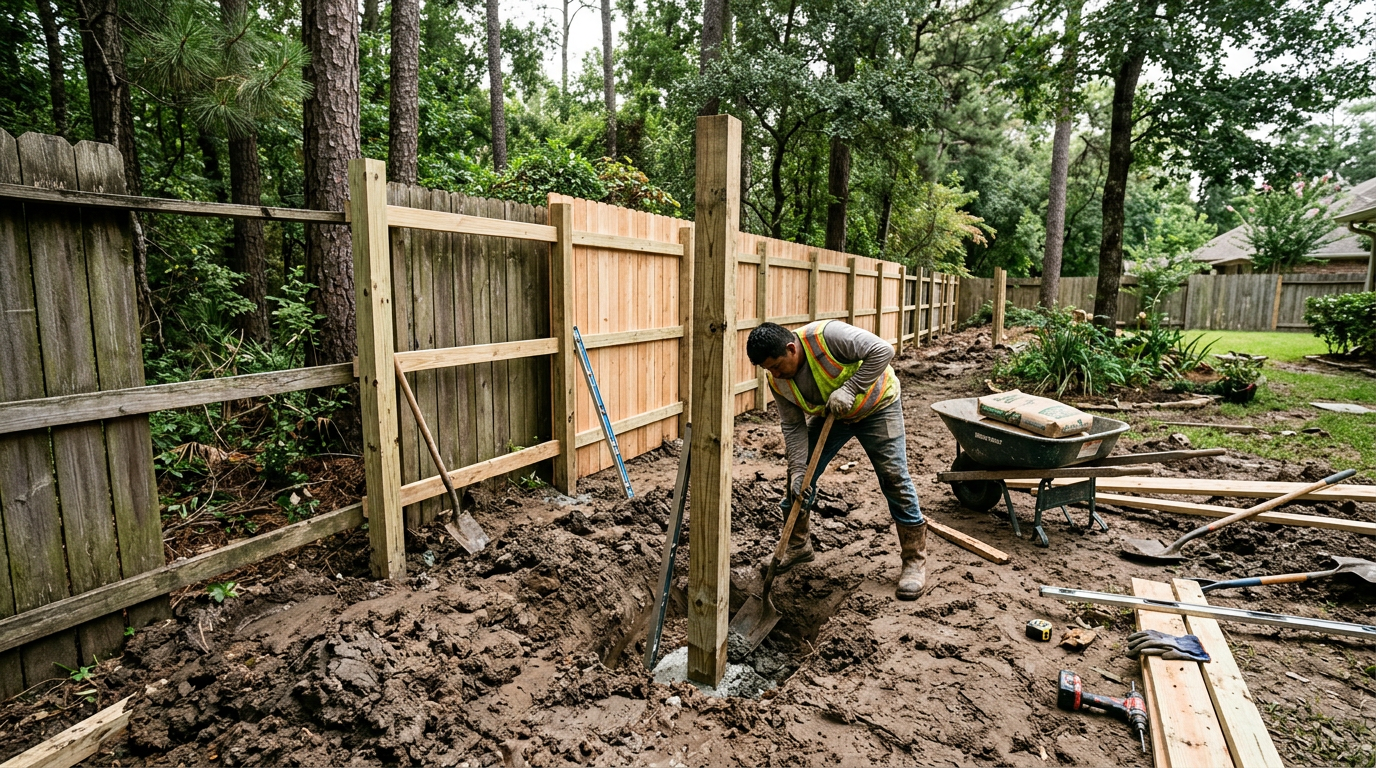
Woodlands Fence Extension 2026 Ranges for Clay Soil
Woodlands fence extension 2026 ranges start at $18 per linear foot for basic wood and climb past $45 with extra base work and drainage fixes. Clay soil in the greater Houston area demands deeper footings and proper grading or water pools against the new fence.
Key takeaways
- Clay soil requires 12–18 inches of compacted base before posts go in.
- MUD and HOA rules often add 4–8 weeks to timelines.
- These numbers are planning estimates — not a quote.
- Export the PDF from Backyard Planner for your exact lot size.
Clay Soil Realities in Woodlands Yards
Woodlands clay holds water and shifts with seasons. Posts sink or lean without extra prep. Add 6 inches of gravel plus geotextile fabric under every run. Skip this step and you redo the fence in three years.
Check your lot slope before ordering materials. Low spots need French drains tied to the fence line. Local crews who know greater Houston area drainage charge more but finish once. Review the Texas soil survey data for your specific Woodlands address to confirm expansion rates before digging.
Heavy rains common in the greater Houston area turn clay into a sponge. Without slope correction, runoff from neighboring lots pushes against new posts and creates soft spots that crack concrete collars within one season. Test soil moisture at 12 inches deep the day before installation. If it feels like modeling clay, delay the job until it firms up.
2026 Rough Planning Ranges
Expect these per-linear-foot figures for a 6-foot privacy fence in Woodlands clay:
- Basic pressure-treated pine: $18–$24
- Cedar with steel posts: $28–$35
- Vinyl with reinforced base: $38–$45
- Add $4–$7 per foot for extra drainage and 18-inch footings
Labor runs 45 percent of the total. Materials lists in the Backyard Planner export break this down by post spacing and gate count. Factor in seasonal price swings for lumber that hit greater Houston area yards hardest during spring demand peaks.
MUD and HOA Permit Notes
Most Woodlands MUDs require a permit for any fence over 4 feet. Submit site plans showing drainage arrows. HOA review adds another layer of height and style rules.
- Gather lot survey first
- Mark existing utilities
- Include clay-soil prep notes in the application
- Budget $150–$400 in fees
See the Woodlands Gazebo Shed MUD Permits 2026 Guide for sample forms that pass review faster. Many MUDs also require proof that the fence will not block existing swales. Attach photos of current drainage paths to avoid rejection letters that reset the clock.
TDLR Licensing Requirements
Hire only TDLR-licensed fence contractors. Verify the license number on the state site before signing. Unlicensed crews skip proper footings and leave you liable for drainage issues.
TDLR contractor search shows active licenses and complaint history. Cross-check against your MUD records for past violations. Confirm the contractor carries liability insurance that covers clay-soil settlement claims before work begins.
Drainage Steps for Clay Soil
Follow this sequence every time:
- Stake the line and check slope with a laser level
- Dig 18-inch holes at 6–8 foot centers
- Add 6 inches of crushed limestone and compact
- Install perforated pipe at the base if grade drops toward the house
- Backfill with native clay mixed 50/50 with sand
- Slope final grade 1 inch per foot away from posts
Do this and water moves instead of pooling. Skip it and neighbors complain about standing water. Add a second inspection after backfill to catch any low spots that appear once the soil settles.
Material Durability in Houston Clay
Pressure-treated pine holds up when posts sit on gravel but rots faster where water sits against the base. Cedar resists insects yet still needs steel reinforcement in shifting clay. Vinyl expands and contracts less but shows every post lean caused by poor compaction.
- Choose galvanized hardware on all gates
- Use 8-foot posts even for 6-foot fences to gain extra embedment
- Seal cut ends of cedar immediately after cutting
- Plan for annual inspection of collars after the first winter
These choices add $2–$4 per foot but extend service life by five years or more in Woodlands conditions.
Common Pitfalls with Woodlands Fence Extensions
Homeowners repeat the same errors each season. Avoid these issues by planning ahead:
- Installing without a current lot survey that shows easements
- Using 12-inch holes instead of 18 inches in high-expansion clay
- Ignoring HOA color and style restrictions until after materials arrive
- Placing gates on the low side of the slope where water collects
- Hiring crews without TDLR verification or local MUD experience
- Skipping the final grade inspection after backfill settles
Each mistake turns a planning estimate into repeated repair costs.
Integrating Drainage with Nearby Sprinkler Systems
Fence lines often run parallel to existing sprinkler zones. Route new French drains so they do not cross valve boxes or main lines. Raise sprinkler heads 2 inches above the new fence grade to prevent overspray onto posts.
Check the TCEQ stormwater guidance for rules on redirecting runoff in MUD zones. Coordinate the fence crew with your sprinkler contractor so both systems work together instead of fighting each other during heavy rains.
Materials and Labor Breakdown
| Item | Low Range | High Range | Notes for Clay Soil |
|---|---|---|---|
| Posts (4x4 pressure-treated) | $6 each | $9 each | 18-inch concrete collar required |
| Rails and pickets | $9/ft | $14/ft | Cedar lasts longer in wet clay |
| Concrete per post | $4 | $7 | 3000 psi mix with gravel base |
| Drainage pipe & fabric | $3/ft | $5/ft | Mandatory on flat Woodlands lots |
| Labor | $8/ft | $15/ft | Includes permit pull and inspection |
Compare these line items against bids from Katy or Cypress crews who already work the same soil.
Compare Woodlands to Nearby Areas
Cypress fence extension 2026 clay soil ranges run $2–$4 lower because lots often have better natural drainage. Katy fence extension drainage 2026 clay soil checks add similar base costs but stricter MUD rules on fence height.
Review the Cypress Fence Extension 2026 Clay Soil Ranges for side-by-side numbers. Check Katy Fence Extension Drainage 2026 Clay Soil Checks if your property borders both areas. See Fence Extension Permits Sugar Land HOA Rules Guide for additional HOA examples that apply across the greater Houston area.
Steps to Export Your Planning Estimate
- Enter lot dimensions and gate count in Backyard Planner
- Select clay-soil prep option
- Add MUD permit checklist
- Export PDF with cutting list and TDLR notes
- Compare the PDF against three local written bids
This remains a planning estimate — not a quote. Always get multiple written local quotes from licensed pros.
Next Steps
- Pull your lot survey today
- Verify TDLR licenses for two contractors
- Run the numbers in Backyard Planner for your exact address
- Schedule site visits only after the PDF export shows realistic drainage costs
- Submit MUD paperwork before ordering materials
FAQ
How deep do fence posts need to be in Woodlands clay?
Eighteen inches minimum with a 6-inch gravel base. Shallower holes fail within two winters.
Do I need a permit for a fence extension in the Woodlands?
Yes if the fence exceeds 4 feet or crosses a drainage easement. MUD review takes 10–20 business days.
What TDLR license covers fence work?
Residential fence contractors fall under the Irrigator or Structural license categories. Confirm the exact category on the TDLR site.
Can I use the same ranges for Sugar Land?
Sugar Land lots often have different MUD rules and slightly lower clay expansion. Adjust the drainage line item upward by 10 percent.
Is the Backyard Planner export accepted by HOAs?
It supplies the materials list and clay-soil notes HOAs request. Attach it to your application but keep the final stamped plans from a licensed pro.