November 7, 2026
Pearland Paver or Shed Order in Clay Soil 2026
Pearland paver or shed order decisions start with clay soil drainage steps. Review 2026 rough planning ranges, permit notes, and sequencing for backyard proje
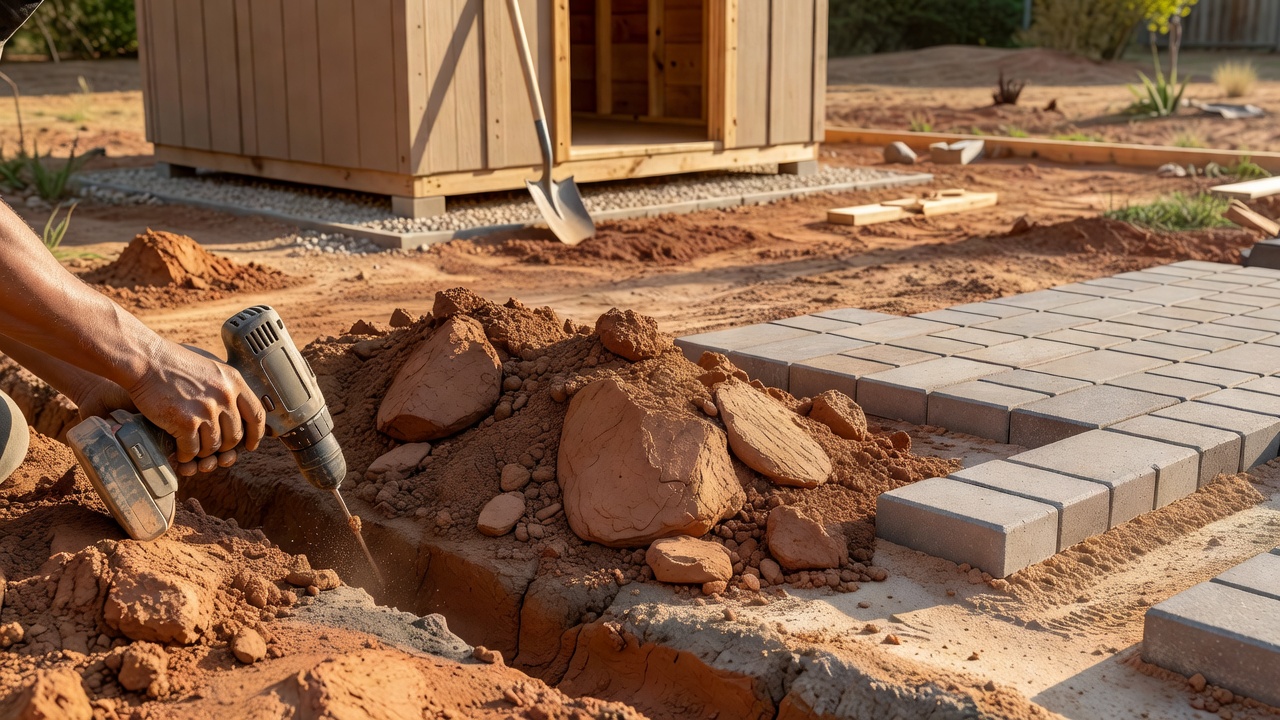
Pearland Paver or Shed Order in Clay Soil 2026
Start with drainage tests before choosing paver patio or shed order in Pearland. Clay soil holds water and shifts, so the project that solves runoff first usually comes first. Run a planning estimate — not a quote — through Backyard Planner to map your yard's slope and MUD rules.
Key takeaways
- Clay soil in Pearland requires extra base depth for both projects.
- Drainage steps often dictate whether paver patio or shed goes first.
- MUD and HOA permits add 4–8 weeks before work starts.
- Native Texas plants reduce irrigation needs after either build.
- Always compare three written bids from TDLR licensed pros.
Run Drainage Tests Before Any Order
Test your soil's percolation rate in three spots around the planned area. Dig 12-inch holes, fill with water, and time how long it takes to drain. Slow drainage under 1 inch per hour means you must add French drains or swales first. Pearland clay often tests below that threshold after heavy rains, forcing extra excavation.
- Measure slope with a 4-foot level and string line.
- Note low spots where water pools after rain.
- Check distance to nearest MUD storm inlet.
- Flag any existing sprinkler heads that block flow.
- Record results on a simple site sketch for permit submissions.
These results decide the sequence. Poor drainage pushes paver patio work later because pavers sit on a thick gravel bed that can correct grade. Consult the USDA Web Soil Survey for Pearland clay types to confirm local soil behavior before finalizing order.
Map Clay Soil Heave Risks
Clay in Pearland expands when wet and contracts when dry, creating up to 2 inches of movement that cracks paver joints or shifts shed skids. Map heave zones by checking moisture levels at 6-inch and 12-inch depths during a dry week.
- Identify areas within 10 feet of downspouts that stay wet longest.
- Avoid placing shed corners on high-heave spots without extra foam isolation.
- Plan paver expansion joints every 10 feet to absorb movement.
- Add 2 inches of extra gravel in heave zones for both projects.
- Re-test moisture after installing drainage to confirm reduced risk.
Heave mapping often flips the order when one corner shows extreme expansion. Sheds tolerate minor shifts better than pavers, so high-heave zones favor shed-first sequencing.
Paver Patio First When Drainage Needs Fixing
Place the paver patio first if your tests show standing water near the house foundation. The patio base creates a stable plane that directs water away before you add a shed. Extra base work in clay prevents future settling that could tilt the shed floor.
- Excavate 8–12 inches of clay and replace with compacted gravel.
- Install 4-inch perforated drain pipe at the low edge.
- Slope the finished surface 1/4 inch per foot away from structures.
- Use polymeric sand between pavers to limit weed growth.
- Backfill edges with native Texas plants to absorb remaining runoff.
Verify paver patio estimates Houston clay soil 2026 for local base-depth examples. Review TCEQ stormwater permitting basics to align your drainage plan with MUD expectations.
Shed First When Utility Access Matters
Build the shed first when it must sit on the only dry corner and electric or water lines run nearby. Shed base prep in Pearland clay soil needs its own drainage ring before pavers go down. Utility trenches add their own heave risk if not backfilled with proper compaction.
- Compact 6 inches of crushed limestone under the shed footprint.
- Add 2-inch rigid foam under the floor for moisture control.
- Route conduit before final grading.
- Leave 3-foot clearance on all sides for future paver work.
- Seal all trench edges with fabric to block clay migration.
See Shed Base Prep Pearland Clay Soil: 2026 Steps for exact layer thicknesses.
Compare Sequencing Trade-offs
| Order | Drainage Fix | Permit Timeline | Total 2026 Range | Follow-up Work |
|---|---|---|---|---|
| Paver first | Immediate swale and pipe | 6–10 weeks | $12–$22 per sq ft | Shed base on stable grade |
| Shed first | Ring drain only | 4–8 weeks | $8–$15 per sq ft base | Extra paver edge work |
| Both same season | Combined French drain | 8–12 weeks | Add 15% overlap cost | Native Texas plants along edges |
The table uses public 2026 data for greater Houston area clay-soil projects. Your numbers will vary with lot size and MUD requirements. Paver-first sequencing reduces long-term heave repairs but lengthens the initial permit window.
Permit and HOA Steps in Pearland
Submit site plans to your MUD and the City of Pearland before ordering materials. Most Pearland neighborhoods fall under at least one MUD that reviews drainage impact. Include heave mitigation notes and native plant buffers in every submission.
- Locate all underground utilities through 811.
- Draw existing and proposed grades on a simple sketch.
- List TDLR license numbers for all contractors.
- Include native Texas plants in the planting plan to meet irrigation limits.
- Attach percolation test logs to the drainage section.
Katy MUD Utility Checks Before Shed Build 2026 shows similar paperwork steps that apply in Pearland.
Materials and Labor Checklist
Use these quick lists to prepare your export.
Paver patio materials
- 6-inch compacted base rock
- 1-inch leveling sand
- 2-3/8 inch concrete pavers
- Polymeric joint sand
- 4-inch drain pipe and fabric
Shed materials
- 4x4 pressure-treated skids
- 3/4-inch tongue-and-groove floor
- Metal or shingle roof panels
- 6-mil vapor barrier
- 2-inch foam board insulation
Labor sequence
- Day 1: Mark utilities and excavate
- Day 2: Install drainage and compact base
- Day 3: Lay pavers or set shed skids
- Day 4: Backfill and grade edges
Integrate Native Texas Plants for Edge Drainage
Plant native Texas plants along paver and shed edges to stabilize soil and cut future irrigation. These species handle clay expansion while absorbing runoff that would otherwise pool against structures.
- Select drought-tolerant varieties suited to Pearland rainfall patterns.
- Space plants 18 inches apart in 6-inch amended soil pockets.
- Mulch with 2 inches of shredded hardwood to retain moisture during dry spells.
- Avoid invasive species that could clog drainage pipes.
- Water only during the first growing season.
Choose varieties from the Lady Bird Johnson Wildflower Center database to match local clay conditions.
Export Planning Lists Before Calling Bids
Download the Excel file with cutting lists, permit notes, and clay-soil drainage steps. Compare the totals against three local bids that include TDLR numbers. Add heave and percolation data to every exported sheet so contractors see the exact site constraints.
Export Excel Lists for Houston Backyard Planning gives you the exact columns needed for Pearland lots.
Common Order Mistakes to Avoid
- Skipping the percolation test and later adding pumps.
- Placing the shed on uncompacted clay that settles 2–3 inches.
- Running sprinklers before pavers and then cutting through finished work.
- Ignoring HOA fence and shed color rules that affect final drainage slope.
- Forgetting heave joints in paver layouts on high-expansion clay.
Next Steps
- Pull your lot survey and mark the two possible locations.
- Run the Backyard Planner tool for your exact square footage.
- Schedule utility locates this week.
- Contact your MUD for current drainage review fees.
- Compare bids that list separate line items for clay-soil prep.
- Re-test percolation after drainage installation to confirm order choice.
Visit Backyard Planner to generate the PDF with your neighborhood's 2026 ranges.
FAQ
Does paver patio or shed order change total cost in Pearland?
Yes. Placing the paver patio first often saves on shared drainage work, but the shed-first route shortens permit time when utilities are the bottleneck.
How deep must the base go in Pearland clay soil?
Most lots need 8–12 inches of compacted gravel under pavers and 6 inches under sheds. Add 2 extra inches if tests show percolation slower than 1 inch per hour.
Which permits apply to both projects?
Pearland MUD drainage review plus city building permits cover both. TDLR licensing applies to any irrigation or electrical work added later.
Can I plant native Texas plants around either project?
Yes. Place them in the final grade to absorb runoff and meet HOA irrigation caps.
Is the planning estimate the same as a contractor quote?
No. The numbers are rough planning ranges only. Always obtain multiple written bids from licensed local contractors before signing any contract.