September 15, 2026
Investigating Pond Costs Woodlands MUDs 2026
Investigating pond costs woodlands MUDs starts with clay soil drainage checks and 2026 planning ranges for greater Houston area yards. Review permit notes bef
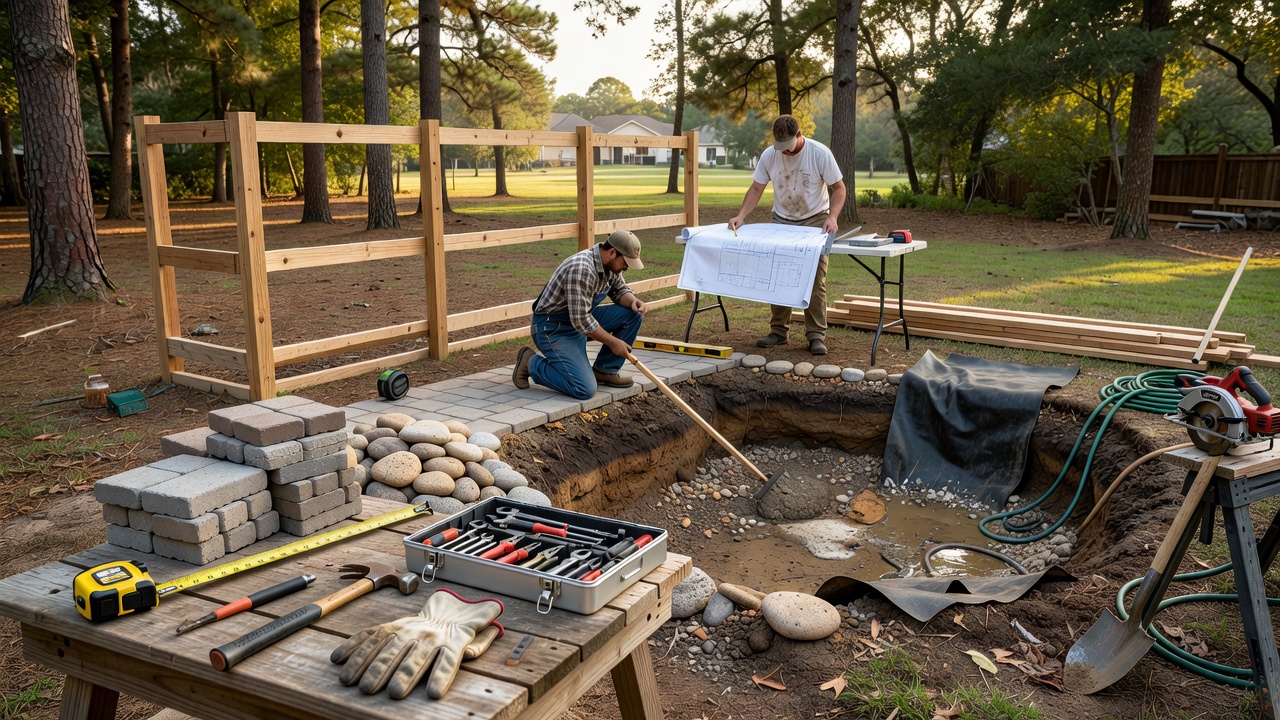
Investigating Pond Costs Woodlands MUDs 2026
Woodlands MUD rules and clay soil change how you plan a Pond / Water Feature. Start by checking drainage and base prep needs before any contractor visit. This produces a planning estimate — not a quote.
Key takeaways
- Clay soil demands extra excavation and drainage layers in every Woodlands yard.
- 2026 ranges vary by feature size and native Texas plants selection.
- MUD or HOA permits add review time and specific material rules.
- Export a PDF with materials lists and permit notes from Backyard Planner.
Clay Soil Drainage Realities in Woodlands Ponds
Clay holds water and shifts with seasonal rain. Every Woodlands pond needs a compacted base plus a French drain tie-in. Skip these steps and you risk liner failure within two seasons.
- Test soil percolation at three spots before design.
- Add 4–6 inches of gravel under the liner.
- Slope the yard 2 percent away from the house foundation.
- Route overflow to the street or approved swale.
- Use geotextile fabric to separate clay from drainage rock.
- Dig test pits to confirm no underground springs or high water table.
- Install a 6-mil vapor barrier where clay meets the liner edge.
Local drainage patterns in the Woodlands often funnel runoff toward low-lying lots. You must map these flows on paper before choosing a pond location. Heavy clay also means slower infiltration, so every design needs an active overflow pipe sized for a 25-year storm event.
2026 Rough Planning Ranges for Pond Projects
Public 2026 data shows small water features run $4,500–$9,000. Larger ponds with filtration and native Texas plants reach $12,000–$22,000. These figures include clay-soil aware base prep and basic permitting.
- Small 8×10 ft pond: $4,500–$7,500
- Medium 12×16 ft with skimmer: $8,000–$14,000
- Large 16×20 ft with plants and lights: $15,000–$22,000
Ranges shift when you add aeration or a small waterfall. Expect another $2,000–$4,000 for the pump and vault in clay soil because extra excavation is required to keep the vault level.
MUD and HOA Permit Notes Specific to Woodlands
Woodlands MUDs require drainage calculations and liner specs before approval. HOA review often adds 30–45 days. Submit plans that reference clay soil prep and TDLR / TCEQ licensing for any electrical work.
- Confirm your exact MUD district online first.
- Include a site plan showing overflow path.
- List all native Texas plants to avoid invasive flags.
- Pay permit fees at the MUD office before excavation.
- Provide a signed statement that the liner meets ASTM standards for puncture resistance.
Check the Texas Commission on Environmental Quality construction general permit page for any dewatering requirements during excavation.
Native Texas Plants for Clay Soil Ponds
Native Texas plants reduce maintenance and survive wet clay better than imports. Choose species that tolerate both standing water and summer drought.
- Pickerelweed for edge zones
- Texas sedge for shallow shelves
- Gulf coast iris near the liner edge
- Cardinal flower for color spikes
- Switchgrass for background screening
- Soft rush in deeper saturated zones
- Buttonbush for wildlife cover along the bank
These plants also help meet MUD rules that discourage non-native species. Local extension offices publish updated lists each year that reflect what survives best in greater Houston area clay.
Electrical Requirements and TDLR Licensing for Pond Pumps
Pumps and lights need licensed electricians who carry TDLR credentials. Clay soil makes trenching harder because it sticks to equipment and collapses easily. Plan conduit runs before the liner goes in.
- Size the pump for the pond volume plus 10 percent head loss from clay friction.
- Bury conduit at least 18 inches deep with warning tape above it.
- Use GFCI protection on every circuit feeding the feature.
- Label the disconnect switch clearly for MUD inspectors.
- Keep the transformer for low-voltage lights outside the wet zone.
Review TDLR licensing rules for sprinkler systems in greater Houston area. The same licensing board covers pond electrical work. Always verify the license number on the Texas Department of Licensing and Regulation lookup tool before signing any agreement.
Steps to Prepare Your Site Before Quotes
Run these checks yourself so bids reflect real conditions.
- Mark property lines and MUD easements.
- Dig three test holes 18 inches deep.
- Note water table depth after 24 hours.
- Photograph existing drainage swales.
- List required native Texas plants.
- Export the PDF materials list from the tool.
- Measure the longest slope for overflow pipe sizing.
Comparing Pond Feature Types
Different features carry different clay-soil and permit loads.
| Feature Type | Clay Prep Needed | Typical 2026 Range | MUD Review Time |
|---|---|---|---|
| Simple liner pond | Extra gravel base + drain | $4,500–$9,000 | 2–4 weeks |
| Pond with waterfall | Reinforced walls + pump vault | $9,000–$15,000 | 4–6 weeks |
| Ecosystem pond | Bio-filter + native plants | $12,000–$22,000 | 6–8 weeks |
The table shows how adding moving water increases both cost and review time because of extra electrical and drainage details.
Common Drainage Mistakes to Avoid
- Placing the pond in the lowest yard corner without an overflow route.
- Using cheap underlayment that tears on clay edges.
- Ignoring HOA plant lists and planting non-native species.
- Skipping electrical permit for pumps and lights.
- Assuming one contractor handles both excavation and MUD paperwork.
- Failing to compact the clay subgrade in 6-inch lifts.
Maintenance Planning for Clay Soil Ponds
Clay soil changes how often you must service the feature. Sediment builds faster because clay particles stay suspended longer than sandy soils.
- Schedule quarterly skimmer cleaning during the first two years.
- Inspect the liner edge every spring for clay heave damage.
- Flush the French drain outlet twice a year.
- Divide native Texas plants every three seasons to keep oxygen flowing.
- Keep a spare pump impeller on hand because clay grit shortens motor life.
These steps keep long-term costs inside the 2026 planning ranges instead of turning into surprise repairs.
Next Steps
- Run your address through the planner at Backyard Planner for a clay-soil aware PDF.
- Compare the exported materials list against three licensed bids.
- Verify TDLR licensing on every electrical subcontractor.
- Schedule MUD pre-application meeting before final design.
Frequently Asked Questions
How long does a Woodlands MUD pond permit take?
Expect 30–60 days once drainage plans and liner specs are submitted.
Do native Texas plants lower long-term pond costs?
Yes. They need less fertilizer and survive clay soil swings better than non-natives.
What extra cost does clay soil add to a pond?
Plan on 15–25 percent more for deeper excavation and drainage layers.
Can I skip the MUD review if the pond is small?
No. Most Woodlands MUDs require review for any water feature over 100 gallons.
Where do I find 2026 planning ranges updated for local conditions?
Use the Backyard Planner tool for greater Houston area clay-soil aware estimates.