September 12, 2026
Gazebo Drainage Katy Clay Soil Planning 2026
Plan gazebo drainage in Katy clay soil with 2026 rough planning ranges, MUD permit notes, and clay-soil aware steps for greater Houston area yards before you
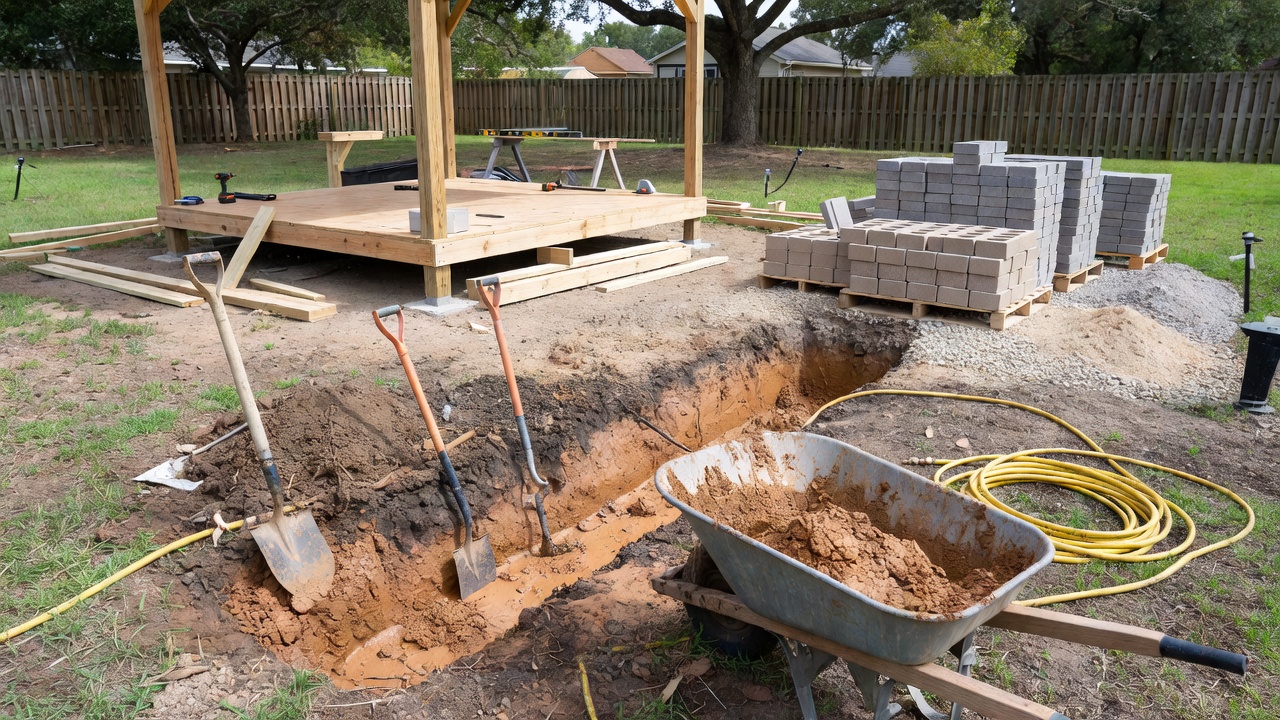
Gazebo Drainage Katy Clay Soil Planning 2026
Katy clay soil holds water and shifts under load, so gazebo drainage must start with base prep and slope planning. Run the numbers on your lot first, then export a materials list from Backyard Planner to compare against local bids.
Key takeaways
- Clay soil in Katy demands extra base depth and drainage checks before any Gazebo / Shed install.
- MUD and HOA rules often require permits for structures over certain sizes.
- 2026 ranges stay rough planning estimates — not a quote.
- Always verify TDLR / TCEQ licensing on any crew you hire.
- Soil variability across Katy neighborhoods changes the exact base thickness needed.
- Integrate drainage with any existing sprinkler system to avoid future conflicts.
Check Your Katy Lot Drainage First
Walk the site after a heavy rain. Note where water pools near the planned gazebo location.
- Measure existing slope with a simple level and string line.
- Flag low spots that need French drains or swales.
- Confirm your MUD district rules on stormwater discharge.
- Photograph current drainage patterns for your permit file.
- Test soil infiltration by digging a small hole and timing water absorption.
- Mark utility lines before any excavation begins.
Review similar steps for Cypress yards in the Gazebo Shed Drainage Steps Cypress Clay Soil 2026 article.
Clay Soil Prep Steps for Gazebo Base
Katy clay expands when wet and cracks when dry, so the base must isolate the structure.
- Excavate 8–12 inches below finished grade.
- Install geotextile fabric over the clay.
- Add 6 inches of crushed limestone base in two compacted lifts.
- Slope the base 1/4 inch per foot away from the gazebo posts.
- Install perimeter drain tile tied to a daylight outlet or dry well.
- Compact each lift to 95 percent standard Proctor density.
- Verify final grade with a transit before setting posts.
See the full sequence used in Woodlands yards in the Gazebo Shed Clay Soil Prep Steps Woodlands 2026 guide.
Evaluating Clay Soil Variability in Katy Neighborhoods
Not all Katy clay behaves the same. Neighborhoods near the Grand Parkway often sit on heavier Houston Black clay while areas closer to I-10 show more sandy loam pockets.
- Request a free soil survey report from the USDA Web Soil Survey for your exact address.
- Note shrink-swell potential ratings above 0.5 require deeper base sections.
- Heavy clay zones need an extra 2 inches of base material.
- Test for sulfate levels that can attack concrete piers.
- Adjust drain tile spacing to 4 feet on center in high-swell areas.
Check the official USDA Web Soil Survey before finalizing your base design.
2026 Rough Planning Ranges
Public 2026 data shows these ballpark figures for greater Houston area projects that include clay-soil aware drainage.
| Item | Low Range | High Range | Notes |
|---|---|---|---|
| Concrete pier footings | $1,200 | $2,800 | Includes rebar and clay-soil formwork |
| Gravel base and drainage | $800 | $1,900 | 6-inch compacted base plus perimeter tile |
| Gazebo kit or built shed | $3,500 | $9,500 | Wood or metal, sized 10x12 to 12x16 |
| Permit and MUD fees | $150 | $450 | Varies by Katy MUD and HOA |
| Extra sulfate-resistant concrete | $300 | $700 | Required in high-sulfate clay pockets |
These remain planning estimates — not a quote. Export the PDF from Backyard Planner for your exact lot size.
MUD Permit Notes for Katy Yards
Most Katy MUDs require permits for any structure that alters drainage.
- Submit site plan showing new slopes and drain outlets.
- Provide engineered calculations only if the MUD requests them.
- Schedule inspection after base compaction but before decking.
- Keep records of TDLR licensed contractors on the job.
- Include photos of the fabric and base layers for the inspector.
Verify contractor credentials through the official TDLR licensing database before signing any agreement.
Compare your MUD requirements against Katy fence projects in the Katy Fence Extension Clay Soil MUD Checks 2026 article.
Drainage Options Comparison
Choose the method that matches your lot slope and HOA rules.
- French drain along two sides — Best for flat lots under 2% slope.
- Swale with riprap — Works when you can daylight to the street.
- Dry well with overflow — Needed when no outlet exists downhill.
- Raised platform on piers — Reduces excavation but raises finished height.
- Perimeter curtain drain — Useful when neighboring lots slope toward your site.
Coordinating Drainage with Existing Sprinklers and Fences
Many Katy yards already have sprinkler systems or fence extensions. New gazebo drainage must not disrupt them.
- Locate all sprinkler heads and valve boxes before digging.
- Route perimeter drains below sprinkler lines where possible.
- Maintain 18-inch clearance from fence posts to avoid undermining.
- Add cleanouts at every 50 feet of drain line for future maintenance.
- Test the full sprinkler zone after drainage install to confirm coverage.
Review TDLR licensing rules that apply to any sprinkler adjustments in the TDLR Licensing for Houston Sprinkler Systems 2026 article.
Common Mistakes to Avoid
- Skipping the fabric layer lets clay mix into the base.
- Leveling the pad instead of sloping it traps water at posts.
- Ignoring MUD setbacks can stop the project mid-build.
- Hiring unlicensed crews risks failed inspections.
- Placing drain outlets uphill of neighboring properties creates liability.
- Forgetting to compact in lifts leaves soft spots under the structure.
Next Steps Before You Call Contractors
- Measure your exact lot dimensions and note the nearest MUD drain inlet.
- Run the Backyard Planner estimate for your neighborhood and export the materials list.
- Gather three written bids from TDLR licensed builders who know Katy clay.
- Submit permit paperwork at least four weeks before planned start.
- Review the full TCEQ stormwater management guidelines for any discharge requirements.
FAQ
How deep should the gravel base go in Katy clay?
Plan on 6 inches of compacted crushed limestone over fabric. Some lots need 8 inches when the clay is very active.
Do I need a permit for a gazebo in Katy?
Most MUDs require one for structures larger than 120 square feet or any build that changes drainage. Check your specific district first.
What slope should the finished pad have?
Maintain at least 1/4 inch per foot away from the posts to move water toward the perimeter drain.
Can native Texas plants help with runoff?
Yes. Bermudagrass or native sedges along the swale edges slow flow and reduce erosion without extra irrigation.
Is Backyard Planner a contractor referral service?
No. It supplies clay-soil aware planning estimates and exportable lists so you can compare real local bids yourself.